Quick Take
- Narration: Virtual Voice AI narration delivers practical content accurately but lacks the warmth and enthusiasm that would help a beginner feel genuinely encouraged about the gardening process.
- Themes: Raised bed construction, organic growing, space-efficient food gardening
- Mood: Practical and instructional, optimistic about beginners’ ability to succeed
- Verdict: A solid, well-organized beginner’s guide to raised bed gardening that covers genuine ground, the AI narration and marketing-heavy synopsis should not put you off the substantive content underneath.
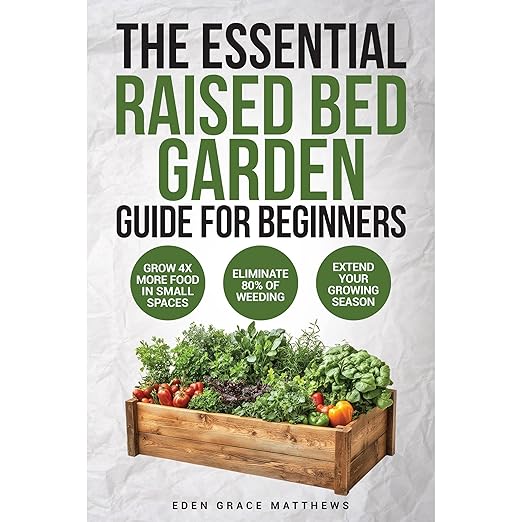
It was mid-March when I listened to this one, the time of year when everyone I know starts talking about their garden plans and I start imagining that I too could grow something more intentional than the herbs I keep on the windowsill. Eden Grace Matthews’s The Essential Raised Bed Garden Guide for Beginners arrived at the right moment, short enough to finish in an afternoon, structured enough to actually serve as a reference, and honest enough about the learning curve that I did not feel patronized.
The synopsis, I should say upfront, is written in the breathless promotional register that characterizes a certain kind of self-published practical guide. Strip that away and what you find is a genuinely useful compendium of beginner-accessible advice on building raised beds, selecting soil, planning planting calendars, managing pests organically, and thinking intelligently about small-space growing. Reviewers with actual gardening experience confirmed that the content holds up, one avid gardener described it as comprehensive, practical, and easy to understand. A beginner who was intimidated by their empty raised beds found it gave them real pointers for the season ahead.
Our Take on The Essential Raised Bed Garden Guide
The book’s organizational logic is one of its genuine strengths. Matthews moves through the subject in a sensible sequence: understanding what raised beds offer over in-ground growing, then bed construction and material selection, then soil composition, then plant selection and companion planting charts, then seasonal calendars, then pest management and watering systems. Each section builds on the previous one, which means a beginner is not confronted with companion planting charts before they understand why soil drainage matters. That sequencing discipline is harder to achieve than it looks in a practical guide of this type.
The companion planting material is particularly useful, knowing which plants support each other and which compete is one of those pieces of knowledge that can transform a garden’s productivity, and Matthews presents it with enough specificity to be actionable. The seasonal calendar framework, tailored to regional climate variation, addresses one of the most common beginner frustrations: not knowing when to plant what. A listener in a short-season northern climate and a listener in a long-season southern one will have different needs, and Matthews builds that differentiation into the advice.
Why Listen to The Essential Raised Bed Garden Guide
The Virtual Voice narration delivers the content competently. For a practical guide organized around discrete instructional sections, AI narration is less of a liability than it would be for memoir or literary nonfiction, you are here for information, and the information comes through clearly. The three-and-a-half-hour runtime is well-matched to the content: long enough to cover genuine ground, short enough to revisit specific sections without searching through hours of material.
Reviewers mentioned returning to the book as a seasonal reference rather than a one-time listen. That use case actually suits audio: a listener who wants to review the companion planting section before spring planting, or the frost protection material before autumn, can navigate back to those sections more easily than they might with a physical book that requires finding the right page.
What to Watch For in The Essential Raised Bed Garden Guide
Experienced gardeners will find the material too introductory. One reviewer who identified as an avid gardener said the book is precisely what it describes itself as: a beginner guide. Intermediate and advanced growers should look for something more technically demanding. The marketing register of the synopsis, and the book occasionally dips into the same register in its framing, can set an expectation of revelation that the actual content, while solid, does not quite match. Manage those expectations and the substance is genuinely there.
The Virtual Voice narration also means there is no inflection of enthusiasm or encouragement that a skilled human narrator would naturally provide. Gardening instruction benefits from a voice that conveys genuine interest in the subject. Matthews’s writing does carry some of that enthusiasm through, but it is muted in translation through the AI voice.
Who Should Listen to The Essential Raised Bed Garden Guide
Anyone starting their first raised bed garden will find this a trustworthy guide. Apartment dwellers curious about balcony growing, homeowners who have assembled beds but do not know what to do next, and anyone who has found other gardening resources too technical will get practical, confidence-building information from this title. Experienced gardeners and those seeking advanced growing techniques should look elsewhere. The AI narration is worth knowing about, but it should not prevent beginners from accessing genuinely useful content.
Frequently Asked Questions
Is this guide useful if I already have a raised bed but have never planted in it successfully?
Yes, this is precisely the audience Matthews seems to be writing for. Several reviewers described returning to the book after struggling with their beds in previous seasons and finding the structured approach genuinely helpful.
How does the Virtual Voice narration hold up for a practical, instructional book?
Better than it would for narrative content. When a listener is absorbing discrete instructional information rather than following an emotional arc, AI narration is less disruptive. The content comes through clearly, though the lack of warmth is noticeable.
Does the book address gardening in small spaces like balconies or patios specifically?
Yes. Matthews includes dedicated material on space-efficient designs and container integration, addressing gardeners who do not have a yard but want to grow food in limited outdoor space.
Will experienced gardeners find anything useful here, or is it entirely for beginners?
Reviewers with gardening experience consistently describe it as introductory. It is well-executed for that level, but experienced growers should look for titles with more technical depth on soil science, pest biology, or advanced growing methods.