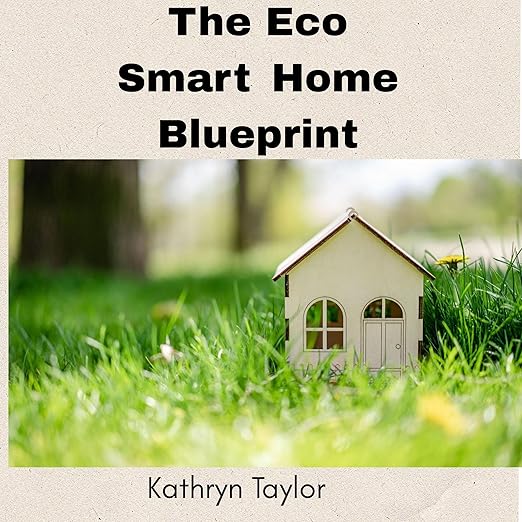
Five promises are itemized on the listing for this audiobook, and the recording has seventy minutes in which to keep them. Smart home design principles that cut energy waste. Heat retention through insulation, materials and passive design. Building layouts that catch sunlight and move air without machinery. Cost savings that do not sacrifice comfort. Sustainable materials that future-proof the place. Kathryn Taylor wrote it and published it, David Reynolds reads it, and it appeared in March 2026. Neither column under this listing has anything in it yet.
One Disclaimer Separates This From Gadget Books
Disclaimers are usually noise, and this description holds the exception: one sentence that gives away what the book is not. This blueprint, it says, is not about expensive gadgets, and that single disclaimer does more to place the title than everything above it. Two entirely different books share the phrase smart home. One of them is about thermostats, sensors, apps and a hub in the closet. This is the other one, where intelligence means orienting a room toward the winter sun and putting mass where the heat needs to sit.
Which makes the title an active liability. Anyone searching for connected-device advice will land here and be disappointed, and anyone wanting passive design will scroll straight past a phrase that reads like consumer electronics. The description knows the difference and the title does not, and the two do not even spell it the same way: the copy hyphenates the compound and the title field on this record leaves it open. Small, but it means the book and its own listing disagree about its name.
Planning Ahead Is the Audience Books Usually Skip
Seventy minutes is short and that is not automatically a flaw. Most introductions to sustainable building fail in the opposite direction, running to four hundred pages of standards, codes and regional requirements before a reader has grasped why the shell of a building matters at all. A brisk overview covering orientation, insulation, heat retention and material choice is a real service to somebody at the stage of asking their first questions, and at this length the whole thing fits inside a single commute or a long afternoon of measuring rooms.
Audience definition is unusually sharp for a self-published title. The copy addresses three situations by name: building from scratch, renovating, and simply planning ahead. That third case is the one most books in this area ignore, and it is where a short recording earns its keep, because a person eighteen months away from a decision needs vocabulary and priorities, not specifications. Knowing what to ask an architect is worth more at that stage than knowing what to buy, and the questions are cheap while the mistakes are not. A window placed on the wrong wall stays on the wrong wall for the life of the building.
Reynolds Keeps a Steady, Unhurried Explanatory Voice
David Reynolds carries the reading, and the material suits a single unhurried voice better than it would suit a dramatized production. The subject rewards clarity over character, and seventy minutes of steady explanation is the format this content wants. If the promise of a step-by-step guide is met, the pacing should let a listener follow a chain of reasoning from site orientation through to a heating bill without needing to stop and rewind.
Fourteen Minutes Per Topic, No Diagrams Included
Do the arithmetic before you buy. Five substantial subject areas across seventy minutes leaves about fourteen minutes each, and insulation alone is a topic where fourteen minutes buys you a definition and a rule of thumb. What the description calls a comprehensive breakdown of complex concepts is going to be, at this scale, an orientation. That is a legitimate product and it is not a blueprint, whatever the title says, so calibrate the word before you spend anything.
The visual problem is more serious than the length. Layouts that maximize sunlight and airflow, insulation strategies, and material assemblies are all things that a single drawing explains faster than a thousand spoken words, and this listing shows no accompanying drawings, no diagram pack and no supporting file. A listener will be building floor plans in their head from verbal description, which is possible and tiring, and considerably harder while driving. Anyone who has tried to follow a spoken account of where the low winter sun falls across a room knows how quickly that becomes abstract.
Then note who stands behind it. The author field and the publisher field carry the same name, so no house, editor or technical reviewer has been through this text on the way to release. On a subject with real consequences, where bad advice about insulation or airflow can cause expensive damage to an actual building, the absence of an editorial layer matters more than it would on a memoir. Treat the recommendations as a starting point for questions, not as specifications.
Daydreaming-Stage Planners Are the Ideal Buyers
Somebody at the daydreaming stage of a build or a major renovation is the ideal buyer. Seventy minutes and a low commitment is exactly right for working out whether passive design is the direction you want before you start paying professionals to explain it. The same applies to anyone who has heard the phrase passive design in a conversation about heating bills and would rather not admit they do not know what it means.
Anyone already deep in a project should look elsewhere, and so should anyone who wanted the connected-devices version of a smart home. Nothing has been graded or written about this recording by a buyer, the file is short, the credits are one person, and the visual material a subject like this needs is absent. Take it as a briefing, ask better questions afterward, and keep the actual decisions for a source that can show you a drawing.
A Few Questions About The Eco Smart Home Blueprint
Who is this audiobook actually for, someone building or someone renovating?
The description names three groups and treats them equally: people building from scratch, people renovating, and people simply planning ahead. In practice the length favors the third group, since seventy minutes buys vocabulary and priorities rather than the technical detail an active project demands.
Does the audiobook come with diagrams or a companion document?
Nothing of the kind is listed on this record. Given that the subject includes building layouts, sunlight and airflow, that absence is worth planning around. A listener will be constructing the floor plans mentally from spoken description alone.