Quick Take
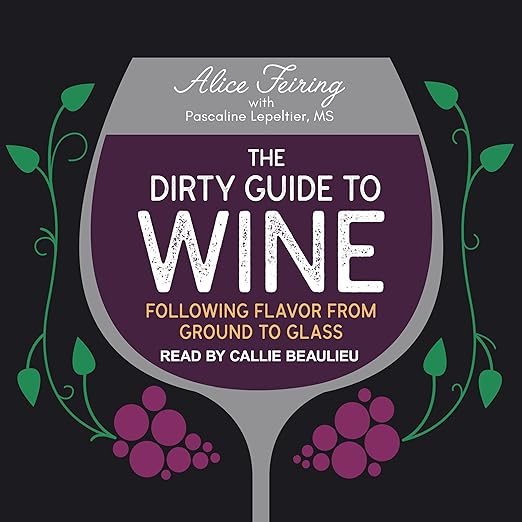
- Narration: Callie Beaulieu reads with genuine warmth and a conversational ease that suits Alice Feiring’s voice perfectly, making the terroir-based framework feel like an invitation rather than a lecture.
- Themes: Soil as the key to wine flavor, natural wine philosophy, demystifying sommelier culture
- Mood: Convivial and curious, like a long wine-focused dinner conversation
- Verdict: The most original wine audiobook I have encountered in years, and one that will genuinely change how you approach a wine list.
I had a bottle of Beaujolais open on the kitchen counter the evening I finished this one. It was one of those light-skinned granite-soil wines that the book specifically discusses, and I found myself thinking about what was underneath the vineyard in an entirely different way than I had before pressing play that morning. That shift in attention, from grape and region to geology, is what Alice Feiring and Master Sommelier Pascaline Lepeltier are after, and they achieve it with an efficiency that I did not expect from a seven-hour audiobook.
I should say that I am not a wine professional. I have been drinking seriously for about twelve years, I read the labels, I know the major appellations, I have preferences. But I had been stuck in something of a rut: the familiar regions, the familiar grapes, the familiar producers. The Dirty Guide to Wine gave me a new organizational principle, and that is the most practically useful thing a wine book can do.
Our Take on The Dirty Guide to Wine
Feiring’s framework is genuinely novel in the popular wine literature: instead of organizing knowledge by grape variety, region, or Old World versus New World, she organizes it by soil type. Granite, limestone, schist, clay, volcanic soils, each chapter examines how a particular geological substrate expresses itself in the wine grown above it and then provides examples drawn from multiple countries and regions that share that substrate.
The practical implication of this system is transformative. If you love Chablis, which grows on Kimmeridgian limestone, you might also love Assyrtiko from Santorini, which grows on volcanic soils but with a mineral tension that points toward similar pleasures. The book opens wines to cross-regional comparison in a way that makes exploration feel logical rather than random. Reviewer B. Meike, a dedicated wine reader who describes The Dirty Guide as their “new favorite” wine book, notes that it “totally reshaped” their thinking about wine, and that outcome is the book’s core ambition.
The foreword and contributions from Pascaline Lepeltier add a layer of technical credibility that grounds Feiring’s more impressionistic writing. Lepeltier is precise where Feiring is evocative, and the combination produces a book that works simultaneously as inspiration and as practical reference.
Why Listen to The Dirty Guide to Wine
Callie Beaulieu’s narration is one of the audiobook’s genuine pleasures. She reads Feiring’s voice with an ease that suggests genuine affinity with the material, and the sections where the book becomes more personal, the travel stories, the encounters with winemakers, the descriptions of specific vineyards and regions, sound like storytelling rather than information delivery. That distinction matters for a book that works partly through seduction: you have to want to taste these wines, and Beaulieu’s reading makes you want to.
Reviewer S. Berkowitz, who has read all of Feiring’s books, notes that The Dirty Guide contains “information about how the wine is made, the winemakers and stories about her experiences in many of the places where the wines are made.” Those narrative elements translate well to audio. The more systematized content, the soil type chapters with their producer recommendations and regional examples, is clear and well-organized in Beaulieu’s reading, though listeners may want to bookmark specific sections for later reference in print.
Reviewer Rachael Pony’s description of the book as “perfect vacation reading to make you dream of your next vacation” applies equally to the audio format. This is an ideal travel companion listen: engaging enough to hold attention, instructive enough to be worth the time, and inspiring enough to make you want to go somewhere and drink something.
What to Watch For in The Dirty Guide to Wine
Reviewer David B. Erickson notes accurately that the book is “not scientific” in a strict geological sense, and Lepeltier herself acknowledges in her introduction that even if scientists dispute the mechanisms by which soil influences wine flavor, the experiential reality of terroir is undeniable to anyone who drinks attentively. That caveat is worth holding: the soil-type framework is an organizing intuition rather than a peer-reviewed theory, and the book does not pretend otherwise.
Some listeners will also notice that Feiring has strong opinions, particularly about natural wine and about industrial winemaking practices, and those opinions shape the book’s producer recommendations. She is not a neutral guide. Her aesthetic commitments lean toward low-intervention wines made by small producers, and the audiobook reflects that sensibility throughout. Listeners who prefer highly polished, technically precise wines may find her enthusiasms occasionally misaligned with their own preferences, though her framework remains useful regardless.
The audio format also makes the specific producer and wine recommendations harder to note in the moment. Listeners planning to use the book as a buying guide may want to supplement with the print version or a notebook.
Who Should Listen to The Dirty Guide to Wine
This audiobook is ideal for wine enthusiasts who have moved past the basics and are ready for a new conceptual framework for exploration. Listeners who know what they like but are not sure how to branch out in a principled way will find the soil-type approach genuinely liberating. It also works for anyone who has found conventional wine writing overly technical or pretentious: Feiring and Lepeltier write for people who love wine and are curious about it, not for people who want to feel superior about it.
Listeners who are complete beginners to wine may find the book more rewarding after a few months of exploratory drinking. It assumes a baseline familiarity with major wine regions and some willingness to engage with viticultural concepts that will be new to the totally uninitiated.
Frequently Asked Questions
Do I need to know wine regions and grape varieties before listening to The Dirty Guide to Wine?
A basic familiarity with major wine-producing regions will help you follow the regional examples Feiring and Lepeltier use throughout. The book does explain its framework from the ground up, but listeners who can situate Burgundy, Rioja, and the Mosel geographically will get more from the cross-regional comparisons.
Is Alice Feiring’s perspective on natural wine a significant presence in the book, or is it more neutral?
Feiring is one of the most prominent advocates for natural and low-intervention wine in the English-language wine press, and that perspective is visible in The Dirty Guide. Her producer recommendations lean toward small, artisanal, low-intervention producers. She does not hide this orientation, and it gives the book a coherent point of view, but listeners should know it shapes which wines she champions.
How does organizing wine by soil type differ from organizing by grape or region, and is it practically useful?
Organizing by soil type allows cross-regional comparison in a way that grape-variety or region-based frameworks do not. If you like the mineral tension in a Chablis, the soil-type approach can direct you toward wines from entirely different countries that share a limestone foundation and may produce similar qualities. Many listeners report that the framework opens wine exploration considerably.
Does Callie Beaulieu’s narration make the more technical wine and geology content accessible?
Yes. Beaulieu handles the geological terminology without making it feel clinical, and she gives the personal storytelling sections a warmth that suits Feiring’s voice. The technical content is the most concise part of the book, and Beaulieu paces it well. The narration overall makes the book feel like a conversation rather than a lecture.