Quick Take
- Narration: Jay Myers keeps the tone conversational and light, the right fit for a book that deliberately avoids lecturing its listener.
- Themes: Intentional living, decluttering, digital and mental simplicity
- Mood: Gently comic and motivating, like advice from a friend who has done the work
- Verdict: At two and a half hours, this is the quickest and most painless entry point into minimalism as a practice, best for listeners who want inspiration without a lifestyle overhaul manifesto.
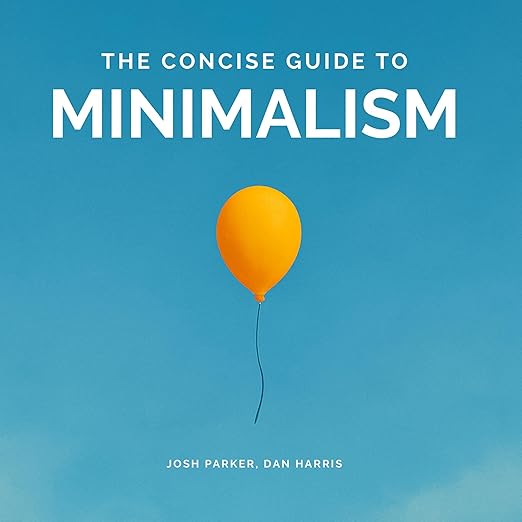
I picked up The Concise Guide to Minimalism on a Sunday morning when I was staring at a corner of my study that had gradually become an archaeological dig of things I no longer needed. I wanted something to nudge me, not a 400-page treatise on Zen Buddhism and the philosophy of stuff. Josh Parker's book is specifically designed for that moment, short, practical, and self-aware about the absurdity of minimalism as a genre that has itself accumulated excess.
At two hours and thirty-five minutes, it moves quickly. Jay Myers narrates with an easy, conversational rhythm that suits the book's tone, Parker explicitly positions this as a chat with a wise friend rather than a lecture, and the narration honors that framing.
Our Take on The Concise Guide to Minimalism
The book makes its intentions clear early. Parker is not asking you to sell everything and live in a studio apartment with a single plant. He's writing what the synopsis calls minimalism-by-choice, which means the book is about identifying what actually matters to you and clearing space for it, rather than conforming to an aesthetic ideal. That distinction matters because minimalism as a cultural movement has developed its own particular orthodoxy, and Parker consciously distances from it.
The scope is broader than most decluttering books. Parker moves through physical space, mental clutter, digital life, calendar overwhelm, and what he calls relapse management, the acknowledgment that you will buy something unnecessary again and the question is how you respond to that. That last section is particularly honest. Most minimalism writing avoids discussing the fundamentally cyclical nature of the problem. Parker addresses it directly and without shame, which is part of what makes this feel less like a prescription and more like a conversation.
Why Listen Instead of Read
The audio format genuinely suits this content. The book's primary mode is motivational, it's building a case for a way of living rather than delivering procedural instructions. Listening while you're actually in the act of decluttering makes excellent sense, using the audio to sustain momentum rather than sitting down to read. Jay Myers's pacing gives the humor room to land. The jokes about closets breeding cardboard boxes and phones packed with apps land better spoken aloud than they might on the page.
The single review available comes from an Amazon Customer who called it a book that helped me rethink my priorities, including my relationships. That's a slightly broader claim than Parker makes for it, but it reflects what happens when a book about physical clutter gets you thinking about the choices behind accumulation. The extension from stuff to relationships is natural and the book implicitly invites it.
What to Watch For
Two and a half hours is genuinely concise. This means the book gestures toward topics, Zen Buddhism, Bauhaus design, digital minimalism, without going deep on any of them. Listeners who want serious engagement with the philosophy behind minimalism should look at something like Cal Newport's work on digital minimalism, which treats its subject with greater rigor. This is an entry point, not a comprehensive treatment.
The synopsis mentions a 2025 updated edition, though the Audible release date is February 2021. It's worth checking whether the version you're accessing reflects the updates or the original, particularly for any digital minimalism advice, where the platform landscape has shifted considerably.
Who Should Listen to The Concise Guide to Minimalism
Listeners who are minimalism-curious but have been put off by the more evangelical versions of the genre will find this accessible and non-threatening. It's also a good re-entry point for people who have tried to declutter before and fallen off the wagon, Parker's approach to relapse is unusually useful. If you want a book that will transform your relationship to consumption at a philosophical level, this isn't quite that. But if you want something that will get you started on a Sunday afternoon, it does that job with warmth and without condescension.
Frequently Asked Questions
Is The Concise Guide to Minimalism specifically about home decluttering, or does it cover other areas of life?
It covers physical space, digital life, mental clutter, calendar management, and social relationships, Parker takes a holistic view of what minimalism means across different domains of daily life.
How does Parker's approach differ from the KonMari method or other popular minimalism frameworks?
Parker explicitly positions against lifestyle-prescription minimalism. His approach is choice-based rather than method-based, he's not asking you to follow a specific process but to clarify your own values and clear what doesn't serve them. The tone is lighter and more self-deprecating than Kondo's earnest transformation narrative.
Is two and a half hours long enough to actually deliver useful content?
The single reviewer confirmed it packs more than expected into the runtime. The brevity is intentional and suits the medium, this is motivational and orienting content, not a technical manual. Think of it as a strong first conversation rather than a complete course.
Does Jay Myers's narration add anything to the listening experience, or is this a case where the text could stand alone?
Myers suits the material. The book's humor relies on delivery and timing, and Myers handles that. For motivational content with a conversational tone, the narration does real work. A flat or over-formal delivery would undercut the whole register Parker is working in.