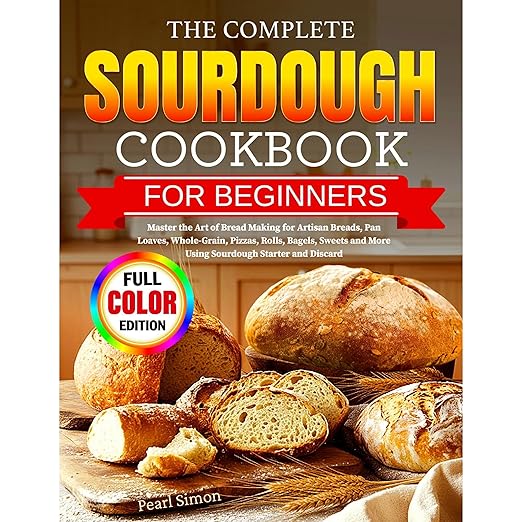
Sourdough baking is a skill that resists purely auditory instruction. I think about this every time a baking book arrives in audiobook format, because the physical language of bread, the look of a starter that is ready, the feel of properly developed dough, the sound of a hollow knock on a baked loaf, is fundamentally non-verbal. That said, I approach these titles as orientation tools: not as substitutes for being in the kitchen, but as a way to absorb the logic and vocabulary of a process before your hands take over. The Complete Sourdough Cookbook for Beginners by Pearl Simon is ambitious in this respect, and its reviewer base, 144 ratings averaging 4.6 stars, suggests the content is genuinely hitting its mark.
The book's scope is real. Reviewers mention a full-color visual guide, difficulty level indicators, troubleshooting sections, and recipes that extend beyond classic boules into pizza, bagels, and sourdough discard applications. One reviewer described reading through the starter creation and maintenance section, pages 10 through 18, as alone worth the purchase. The Audible edition ships with a PDF companion that contains the visual material, which matters considerably for a baking book.
Learnable Steps Replace Sourdough's Mystique
The content Simon is delivering is solid beginner pedagogy. She structures the sourdough process as a sequence of learnable steps rather than presenting it as an art form that requires intuition. That is the right pedagogical choice for beginners, because the mystification of sourdough is precisely what stops people from attempting it. The book covers creating and maintaining a starter, understanding fermentation timing, managing different hydration levels for different textures, and troubleshooting common failures including sluggish starters and dense crumb structures. These are the core competencies a beginning sourdough baker needs, and the organizational logic works.
One reviewer noted that the book explains what sourdough is, what the best ingredients are for different textures and flavors, and how to approach the process without overwhelming technical language. That balance, technical enough to be useful, accessible enough not to intimidate, is harder to achieve than it sounds in instructional writing. The reviewer community's enthusiasm suggests Simon achieves it.
Listen First to Decide if Sourdough Is Worth It
The honest reason to listen rather than read in print is convenience during the planning and orientation phase. If you are deciding whether sourdough is a project you want to take on, listening to this audiobook while doing something else is a low-friction way to assess the commitment involved. The audio covers the philosophy and process in enough detail that you will understand what you are getting into before you invest in a kitchen scale and specialty flour.
The PDF companion is where the actual kitchen utility lives. Audible's delivery of this file alongside the audio creates a split-format experience that makes practical sense for a cookbook: listen for orientation, consult the visual guide in the kitchen. Reviewers who mention the photos consistently describe them as helpful for verifying that their starter looks right at each stage, which is a real functional need that text alone cannot meet.
Synthetic Encouragement Wears Thin by Hour Five
The Virtual Voice narration is the primary listening caveat. Instructional baking content benefits from a human narrator who can modulate between encouragement and precision, who can make you feel that a failure is recoverable and a success is worth celebrating. Synthetic narration delivers the text accurately but cannot provide that emotional texture. At five and a half hours, the monotony of the delivery becomes noticeable in a way it would not over a shorter listen.
Experienced bakers are not this book's audience, and the framing makes that clear from the beginning. If you have already been baking sourdough for a year or more, the fundamental content will feel familiar. The recipe variety is broad but not deeply specialized. Simon is optimizing for confidence-building rather than technical depth, which is the right call for the target reader but means advanced practitioners will quickly outgrow the framework.
Anxious Beginners Become Competent, One Loaf Later
Complete beginners to sourdough who have been intimidated by the process are exactly the audience this book serves. The organizational logic, the troubleshooting sections, and the clear progression from starter creation through advanced recipes are designed to move someone from anxious to competent. Listeners who want to use the audio as an orientation before engaging with the PDF companion in the kitchen will get the most out of both formats.
Those looking for advanced technique, regional sourdough traditions, or deep fermentation science will need a more specialized resource. And anyone who finds Virtual Voice narration distracting over longer listens should consider the print or e-book version of this title instead, where the visual guide and the text work together without the synthetic delivery. Given the strong review base and the breadth of content, this is clearly a well-built beginner resource; the question is simply whether audio is the right format for accessing it.
At a Glance
- Voice: Virtual Voice - AI narration that reads accurately but cannot convey the warmth and encouragement this kind of instructional baking content genuinely benefits from.
- Big ideas: Fermentation basics, building confidence in bread baking, sourdough troubleshooting
- Atmosphere: Instructional and enthusiastic, though the narration flattens the enthusiasm somewhat
- Worth it?: A highly regarded beginner's sourdough resource that works better in its PDF or print form - worth considering if you primarily want the companion visual guide alongside the audio orientation.