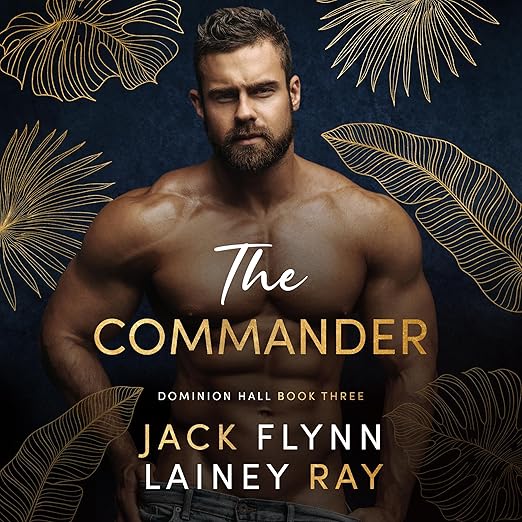
- Performance: Jacqui Winters handles the tonal split between Anna's guarded interiority and Atlas's low, controlled dialogue convincingly, a real test for a single narrator production.
- What it covers: grumpy sunshine pairing, possessive protector romance, found family brotherhood
- Feel: Tense, steamy, and emotionally heavier than the cover alone suggests
- Our call: A satisfying spice forward entry for established Dominion Hall readers, and workable as a standalone for new listeners who know what they are signing up for.
Atlas Dane Watches a Cellist's Hands
Atlas Dane watches Anna's hands on the strings before he ever speaks to her, and that image, a hulking bodyguard type in a tuxedo studying a cellist's fingers like he already knows what they are capable of, sets the tone for everything that follows in this audiobook. The Commander is book three in Jack Flynn's Dominion Hall series, though it reads cleanly as a standalone for anyone walking in cold: Anna came to Charleston for a few months of paid performance work, no attachments, no complications, and then Atlas Dane, silent and watchful and built like exactly the kind of trouble she came here to avoid, will not stop noticing her.
Flynn builds the Dominion Hall premise around seven men bound by brotherhood rather than blood, operating out of a Charleston mansion built in the shadows of war and wealth. The series formula is stated outright in the synopsis itself: possessive, jealous, obsessive billionaires who do not share, they claim, and women who arrive determined not to fall for exactly that. Atlas gets his turn here as the grumpy half of a grumpy sunshine pairing, an antihero the synopsis itself calls morally gray, and the book leans fully into protector romance and possessive hero tropes rather than softening them for a wider audience.
The detail about Anna playing for people who sip champagne and pretend to understand Bach does real characterization work in a single line. It marks her instantly as a performer among patrons, someone paid to be present at a world she does not belong to and does not particularly respect, which reframes Atlas noticing her hands specifically as a rare moment of someone actually paying attention to her skill rather than her presence. That small class tension, the hired musician against the tuxedoed wealth around her, gives the eventual pairing more friction than a simple opposites-attract premise would supply on its own.
The series name itself, Dominion Hall, does quiet thematic work before a single page of any book begins. Dominion implies territory and control, exactly the register the synopsis leans into when it promises men who claim rather than share, and naming the mansion itself rather than any single brother centers the found family structure as the series' real organizing principle, with each book's romance functioning as one chapter within a larger, shared architecture.
Anna's own arc, arriving in Charleston with an explicit plan to stay uninvolved and leave on schedule, follows a familiar and durable romance structure: the guarded traveler who insists the stay is temporary right up until it very much is not. What keeps that familiar shape from feeling rote here is how specifically Flynn ties her resistance to her profession, a musician who has likely built emotional walls around temporary gigs and temporary towns long before Atlas ever entered the picture.
Jacqui Winters Carries Anna's Nervous Interiority
Jacqui Winters narrates, and the role asks a lot of range from one performer: a cellist's nervous, self protective interiority against a mountain of a man whose dialogue runs low and measured by design. The synopsis describes Atlas speaking in low, measured words that make Anna's breath catch, which only works as a listening experience if the narrator can actually drop her register convincingly for his lines without losing Anna's own voice in the process. Reviewers respond specifically to the vulnerability underneath Atlas's controlled exterior, one calling him her favorite of the brothers so far precisely because of it.
One reviewer's comment stands out for anyone tracking the series across multiple books: this entry has more meat to the story than the one before it, with the overarching Dominion Hall mystery pushed forward rather than parked in the background while the romance plays out. That is a meaningful signal for series readers specifically, since book three risks feeling like pure repetition of the formula if the plot machinery does not also move.
Grumpy sunshine has become one of romance's most reliable pairing labels for a reason, and Flynn leans into exactly what makes it work: Atlas's silence and control read as armor rather than coldness once Anna's warmth starts to crack it, and the trope succeeds or fails entirely on whether a listener believes the guarded character is protecting something real underneath. The reviewer who singles out Atlas's vulnerability as the reason he outranks his brothers so far is responding directly to how well that specific trope mechanic lands in this installment.
Charleston's Old Wealth and Older Secrets
The content warning on this one is direct and worth repeating clearly: explicit sexual content, profanity, and a morally gray antihero, recommended for eighteen and older. This is not a closed door or sweet romance dressed up with spicy marketing, the heat level is a stated feature of the book rather than an incidental scene or two, and listeners sensitive to possessive or jealousy driven relationship dynamics specifically should know that going in, since the entire Dominion Hall premise is built around exactly that register.
Starting the series here at book three is workable, per both the synopsis's own standalone claim and a reviewer's note that the book does not lean heavily on prior events, but you will meet Ryker and Marcus, the other brothers, as established figures whose own books already happened. Listeners who want the full brotherhood arc in order will get more emotional payoff starting from book one.
Charleston itself functions as more than backdrop across the Dominion Hall series generally, a city whose old wealth and old secrets suit a brotherhood built on both. Listeners who enjoy Southern gothic atmosphere layered under contemporary romance, mansions with real history rather than generic luxury, will notice Flynn using the setting deliberately rather than interchangeably with any other wealthy city.
Best for Grumpy Sunshine and Found Family
Recommended for readers already invested in grumpy sunshine pairings, possessive protector heroes, and romance series built around a found family brotherhood premise. Fans of dangerous love stories where the hero's control barely masks real vulnerability underneath, exactly the combination one reviewer highlighted about Atlas specifically, will find this a satisfying entry.
Listeners who enjoy series romance built around a tight ensemble of central couples, where every book adds to a larger shared world rather than standing in total isolation, will find the Dominion Hall structure rewarding to follow across multiple entries. The found family framing around seven bonded men gives each subsequent book built-in emotional stakes beyond just the newest couple's arc.
Skip it if explicit content and possessive, jealousy forward relationship dynamics are not your preferred romance register, or if you strongly prefer reading series strictly in order and are not willing to start mid series even with the standalone framing intact.
Do I need to listen to the first two Dominion Hall audiobooks before this one?
Not strictly. The synopsis frames it as a standalone, and a reviewer confirms it does not lean heavily on prior events, though you will meet the other brothers as established figures.
Who narrates The Commander audiobook?
Jacqui Winters, who handles both Anna's guarded first-person voice and Atlas's low, controlled dialogue across the single-narrator production.
Does this audiobook focus more on romance or on the Dominion Hall series mystery?
Romance leads, but a reviewer notes this entry pushes the overarching series mystery forward more than the previous book, giving it more plot momentum alongside the central relationship.