In Brief
- Voice: Joe Knezevich reads Dr. Barnard's clinical prose cleanly and without condescension, he keeps the material accessible without softening its more uncomfortable claims.
- Big ideas: Food addiction and industry manipulation, plant-based dietary change, the politics of nutrition science
- Atmosphere: Alarming but not preachy, methodical and occasionally wry
- Worth it?: A well-structured argument against a product most people have never thought critically about, useful whether you intend to act on it or simply understand the science.
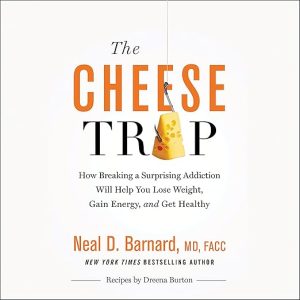
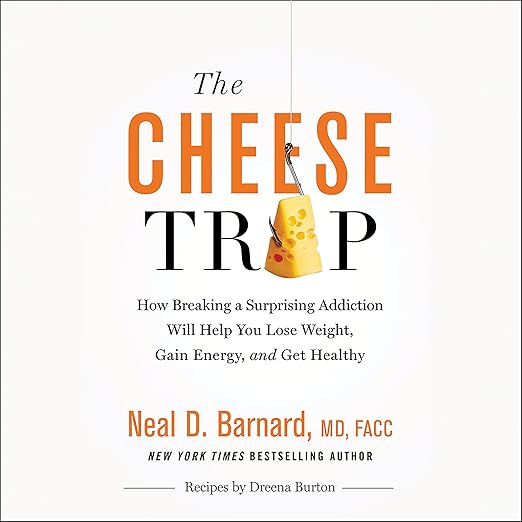
I picked up The Cheese Trap during a stretch when I was trying to understand why certain foods felt compulsive in a way that vegetables, however virtuous, simply did not. I was skeptical of the premise. Cheese as a subject of medical analysis seemed like an unlikely candidate for serious scrutiny. Six hours later, I was reconsidering a great many things about my kitchen.
Dr. Neal Barnard is a physician and researcher with decades of clinical work in nutrition, and he writes with the authority of someone who has spent years watching dietary patterns affect patient outcomes. The Cheese Trap is part dietary science, part industry critique, and part practical guide. What holds it together is Barnard's refusal to be simply alarmist. One reviewer noted that this is an empowering book rather than a scary one, and that distinction is accurate and important.
The most provocative claim in The Cheese Trap is that cheese contains mild opiates, specifically casomorphins derived from casein proteins, that activate the same brain receptors as morphine and heroin. This is the sentence that makes readers either lean in or put the book down. Barnard is not claiming cheese is pharmacologically equivalent to narcotics. He is arguing that the neurochemical mechanism shares a family resemblance, and that this partially explains why cheese specifically, among high-fat foods, tends to appear in cravings at a disproportionate rate.
The claim has been contested in nutritional science circles, and Barnard acknowledges the complexity. But he is careful with his sourcing, and reviewers with scientific backgrounds have noted that his summary of the research is accurate within its scope. The casomorphin discussion is one component of a larger argument about why dietary change is harder for cheese than for other animal products, and it is more nuanced than the marketing language surrounding the book suggests.
The Strengths
The section of the book dealing with the dairy industry's relationship to government dietary guidelines and agricultural policy is the part that reviewers found most troubling. Barnard traces the mechanisms by which the USDA has simultaneously promoted dairy consumption and ostensibly overseen nutritional recommendations, and he draws explicit parallels to the tobacco industry's decades-long campaign against the link between smoking and lung cancer.
One reviewer compared the forces resisting this information to those that once fought cigarette science, and Barnard makes that analogy himself with documentation rather than rhetoric. Whether or not you accept every point in his argument, the structural conflict of interest he describes is a matter of public record. The book is strongest here precisely because Barnard does not need to editorialize. The history makes the case.
Weak Spots in The Cheese Trap
The final portion of The Cheese Trap is a program book, complete with recipes and strategies for breaking cheese dependence. This section is less intellectually interesting than the research and industry analysis that precede it, but it is clearly the part Barnard considers most important. He includes detailed meal frameworks, cheese substitutes, and craving management strategies, all delivered without the moralizing tone that afflicts a lot of dietary change literature.
Joe Knezevich's narration handles the recipe sections without becoming a food podcast. He reads them matter-of-factly, which is the right approach. The more engaging challenge he faces is maintaining momentum through the densely referenced scientific passages, and he does this competently without adding theatrical inflection that would undermine Barnard's clinical register.
Recommended For
The Cheese Trap is most useful for listeners who have noticed an inconsistency between their general eating intentions and their specific relationship with dairy, or who are curious about how the food industry shapes nutritional advice in ways that benefit producers rather than consumers. It works both as a standalone dietary argument and as a gateway to Barnard's broader body of work on plant-based health. Listeners familiar with his other books, including Power Foods for the Brain, will find updates to the research and new clinical case studies.
If you are looking for a book that will reinforce a cheese-inclusive diet or that treats current nutritional guidelines as settled science, this one will not satisfy you. Barnard is explicitly arguing against the consensus on dairy, and he does so with enough documentation to make that position uncomfortable to dismiss outright. The Cheese Trap is not comfortable listening. It is, however, honest listening, and that is worth something.
Is the claim that cheese triggers opioid receptors scientifically supported, or is it overstated?
The casomorphin research Barnard references is real, though the scientific community debates how significant the effect is in normal dietary consumption. Barnard presents it as one contributing factor in cheese's addictive quality rather than a singular explanation, and reviewers with research backgrounds have found his summary accurate within its stated scope.
Does the audiobook include the recipes and meal plans from the print version?
Yes, the program and recipe sections are included in the audio version. Joe Knezevich reads them clearly, though listeners who want to follow the meal plans practically will likely want access to the print book or ebook version as well.
How does The Cheese Trap differ from Barnard's other nutrition audiobooks?
This book focuses specifically on cheese as its subject and includes an extended analysis of the dairy industry's political and economic influence on dietary guidelines, which is more developed here than in his earlier works. It also updates the scientific data with more recent research than his prior titles.
Is the tone of the audiobook judgmental toward people who eat cheese?
No. Multiple reviewers specifically noted that Barnard avoids scare tactics and moralizing. The book acknowledges why cheese is difficult to give up and frames the program as empowerment rather than condemnation. The clinical and occasionally humorous tone is maintained throughout.