The Short Version
- Read by: Zara Ramm reads with the warm, slightly dry wit the material demands, giving the three leads genuinely distinct personalities across ten hours.
- At its heart: Amateur sleuthing and community belonging, retirement and renewed purpose, cozy British village dynamics
- Vibe: Light, genial, and quietly suspenseful
- Short version: Peter Boland's debut cozy mystery is a reliable entry in the tradition, character-driven and pleasingly specific in its English seaside atmosphere.
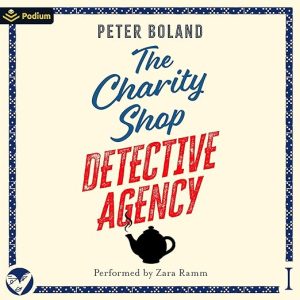
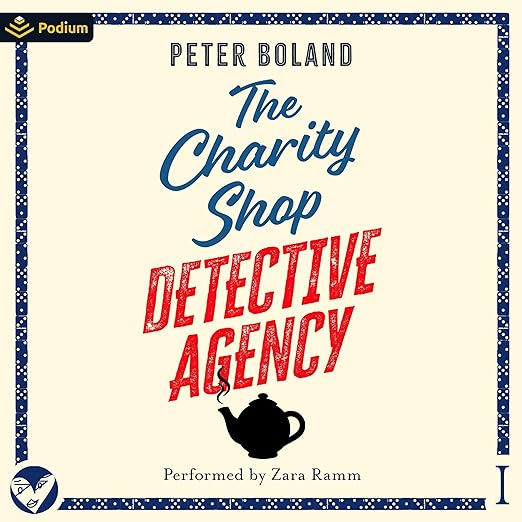
Peter Boland's The Charity Shop Detective Agency opens with something peculiarly specific: an eighty-six-year-old woman found murdered in her hallway by her delivery man, a domino clutched in her hand with a name scratched into it. The domino detail is the kind of image that cozy mysteries succeed or fail on. Distinctive enough to feel original, macabre enough to carry the genre's light-dark tonal balance, grounded enough to resist the flights of fancy that can make the form feel arbitrary. At ten hours and seven minutes, Zara Ramm navigates the English seaside setting with the brisk pleasure that good cozy narration requires, and by the time the audiobook establishes its central trio of retired volunteers, the rhythm of this particular world is already comfortable and inviting.
How The Charity Shop Detective Agency Holds Up
Fiona, Sue, and Daisy are retired ladies in their mid-seventies who volunteer at a charity shop called Dogs Need Nice Homes in a sleepy seaside town. Their daily life involves tea, pastry from the local bakery run by Oliver and his son Stewart, and a low-level running rivalry with their counterparts across the street at the Cats Alliance charity shop. Sue goes by the nickname Partial Sue, a detail that the audiobook earns with some humor and which becomes one of the ensemble's warmest running jokes. Into this comfortable domestic world comes murder: Sarah Brown dead with a domino in her hand, a second victim following with the same strange marking, and the police making no visible progress on either case.
The comparison to The Thursday Murder Club is earned and precise. Like Richard Osman's series, Boland's novel takes older protagonists seriously as investigators without making their age the punchline. Fiona's scruffy-haired terrier cross serves the same kind of narrative function that pets often do in cozy mysteries: a grounding presence that licenses the amateur investigators' involvement in public spaces without requiring elaborate plot mechanics to justify their access. The Charity Shop Detective Agency is born from necessity rather than ambition, which is the right origin for this kind of group.
Zara Ramm's reading of the ensemble captures the warmth of that dynamic. She differentiates the three leads without resorting to exaggerated character voices, sustaining their distinct comic registers through the ensemble scenes rather than flattening them into a single narrator's delivery. The Cats Alliance rivalry, which functions as both comic relief and minor plot engine, is handled with the right amount of affectionate absurdity.
Why The Charity Shop Detective Agency Works as an Audiobook
Cozy mysteries are a format that benefits significantly from audio performance in ways that are worth being specific about. The gentle pace, the accumulation of small social details, the pleasure of inhabiting a particular milieu with recurring characters: all of these play more naturally through a human voice than in silent reading, where the absence of narrative momentum can make the between-mystery sections feel slow. Ramm's narration provides exactly the through-line that keeps the tea-and-cake atmosphere from feeling like stalling, and the squabbling dynamic between the charity shops is funnier in audio than it might be on the page simply because timing matters to comedy.
Boland has been compared to Janice Hallett, Simon Brett, and Sarah Yarwood-Lovett, all of whom operate in the cozy crime space with a similar sensibility: British, community-focused, character-driven, and more interested in the social texture of everyday life than in forensic procedural detail. Reviewers describe this as a light, pleasant listen that kept them guessing until the end while also delivering genuinely funny moments. Brian Henry's observation that certain scenes were laugh-out-loud alongside the mystery is the right note: Boland balances both registers without letting either undermine the other, which is the cozy form's central technical challenge and a meaningful achievement for a debut.
Weak Spots in The Charity Shop Detective Agency
The book is first in the Charity Shop Detective Agency Mysteries series, and like most series openers, some of the ten-hour runtime is invested in world-building and character establishment rather than pure plot momentum. Listeners who want the mystery to accelerate from the first chapter without pause for the pleasures of setting and ensemble development may find the early sections slower than they'd prefer. That investment pays off in the back half, where the established rhythms and character relationships give the tension somewhere to land with genuine effect.
The English seaside setting is deliberately specific rather than generic English-countryside. The charity shop context, with its particular social hierarchies, volunteer politics, and regular customers, gives the amateur detective premise a believable operational base that the Dogs Need Nice Homes framing reinforces with warmth. For listeners who enjoy British small-town atmosphere as a positive quality rather than an incidental backdrop, the specificity here is part of the appeal. Those who prefer faster-paced American crime traditions or Scandinavian noir will find Boland's register a deliberate contrast, which is precisely what the cozy form is designed to offer.
The Right Listener for The Charity Shop Detective Agency
Fans of The Thursday Murder Club and other British cozy mysteries centered on older protagonists who are taken seriously as agents in their own stories will find this a natural next listen. Listeners who enjoy small-town English atmosphere, dry humor, and mysteries where the social dynamics of a community matter as much as the crime itself will be well-served by Boland's debut. The audiobook is appropriate for all ages and is particularly well-suited to listeners who find harder crime fiction too grim but still want the intellectual pleasures of the mystery genre. Those expecting police procedural pace or extended forensic detail should calibrate expectations accordingly, as the pleasures here are atmospheric and character-driven rather than technically procedural.
Before You Listen
Is this audiobook the first in a series, and do I need to start here?
Yes, this is the first book in the Charity Shop Detective Agency Mysteries series. Starting here is the right call both for character introduction and for following how the agency itself comes to exist. The ensemble, setting, and recurring details established in this volume are the foundation for subsequent entries.
Is this audiobook appropriate for listeners who don't typically enjoy cozy mysteries?
It depends on the specific objection. If the concern is violence or darkness, this is firmly appropriate: deaths happen off-page and the tone stays warm. If the concern is pacing or stakes, Boland delivers a genuine mystery with a conclusion that multiple reviewers found genuinely surprising. The cozy pleasures are central, but the mystery element is real rather than decorative.