Quick Take
- Narration: Virtual Voice AI narrator, serviceable and clear, but noticeably synthetic; one reviewer found it well-done for AI, others may want a human voice for devotional listening.
- Themes: Apocryphal apocalypticism, heavenly journeys, the cosmology of Second Temple Judaism
- Mood: Scholarly and reverent, ancient in texture, accessible in language
- Verdict: A worthwhile modernized translation with useful footnotes, though the AI narration limits the devotional experience.
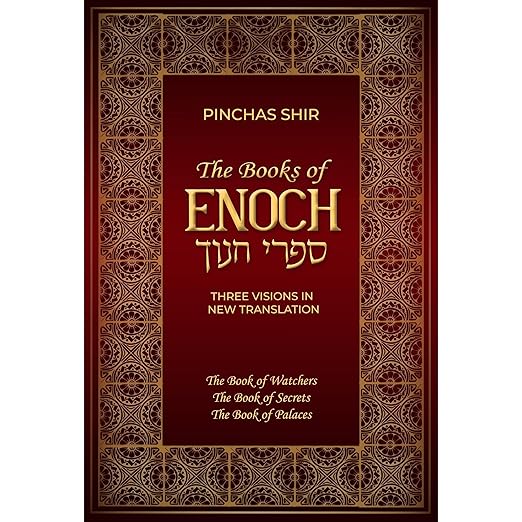
I came to this collection with a specific question in mind: what does it actually feel like to listen to ancient apocryphal literature through a modern translation? The Enoch texts are not obscure to scholars of Second Temple Judaism, but for general listeners who have only encountered passing references to fallen angels and heavenly visions in popular culture, they remain genuinely unfamiliar territory. Pinchas Shir’s three-volume collection, The Book of Watchers (1 Enoch), The Book of Secrets (2 Enoch), and The Book of Palaces (3 Enoch), aims to bring all three into one accessible package, and largely succeeds on the translation front.
The AI narration is worth addressing directly. This is a Virtual Voice production, published independently in March 2025. One reviewer noted it is "done very, very well" for AI narration, and that assessment is fair, the voice is clear and properly paced, with none of the more distracting artifacts that can undermine less polished AI recordings. But listeners who approach these texts devotionally, or who find AI narration pulls them out of the material, should factor that in. This is a seven-hour audiobook, and a synthetic voice over ancient scripture is a specific kind of listening experience.
Our Take on The Books of Enoch
Shir’s translation choices prioritize clarity over archaism, which is the right call for audio. Older translations of the Enoch literature, Charles’s 1917 version being the most widely referenced, use language that feels deliberately archaic, which can be atmospheric in print but becomes a comprehension obstacle in audio. Here the language flows, and the study footnotes that accompany the text add contextual grounding without slowing the narrative significantly. One reviewer specifically praised the author’s "commentaries and honesty with the translations," which suggests Shir is transparent about interpretive choices, a significant virtue in a field where translation decisions carry substantial theological weight.
The three books cover quite different ground. First Enoch (the Watchers) is the most narratively dramatic, the fallen angels, the Nephilim, the divine judgment. Second Enoch covers Enoch’s celestial journey in a more mystical register. Third Enoch, the latest of the three and from a different textual tradition entirely, moves into Merkabah mysticism and the divine throne room. Collecting all three in one audio package gives listeners a genuine arc through the development of Enoch literature across several centuries.
Why Listen to The Books of Enoch
The practical case for audio here is stronger than it might initially seem. The Enoch texts were originally oral traditions before they were written, and listening to them, even through a modern translation and AI voice, recovers something of that reception context. One reviewer described the experience of listening as producing conviction and humility in ways that page-reading had not. That is a real phenomenon with this kind of literature, and it speaks to audio’s particular fitness for ancient sacred texts.
Shir’s edition is positioned as part of a series on Second Temple Era Jewish Literature, which signals scholarly intention. The footnotes are described by reviewers as genuinely useful rather than purely academic, they aid curious general readers as well as students working in the field.
What to Watch For in The Books of Enoch
Listeners approaching this as devotional content should be aware this is an independently published translation. Shir’s interpretive choices may differ meaningfully from other scholars’ readings, and the text has not gone through the vetting process of major academic presses. That does not make the translation unreliable, the reviewer praise for its accuracy and readability is worth something, but context matters.
The very low review count (fourteen reviews at time of writing) makes it difficult to assess the full range of listener response. The ratings skew strongly positive, but this is a niche text with a self-selecting audience.
Who Should Listen to The Books of Enoch
Strong choice for listeners curious about the literature that circulated in the centuries between the Hebrew Bible and the New Testament, and for anyone whose interest in fallen angels, divine hierarchies, or apocalyptic cosmology goes beyond surface-level familiarity. Also useful as a companion to study of early Christian and Jewish mysticism, where the Enoch tradition had considerable influence.
Not the right starting point for listeners seeking an academic critical edition, for that, the scholarly apparatus in Nickelsburg’s Hermeneia commentary on 1 Enoch offers far more depth. And those who require human narration for devotional listening should note the AI voice clearly before purchasing.
Frequently Asked Questions
How does this translation compare to older Enoch translations like R.H. Charles’s version?
Shir’s translation prioritizes modern English clarity over the archaic register of the Charles edition, which makes it considerably easier to follow in audio format. Scholars may still prefer Charles for technical work, but for general listeners this approach is significantly more accessible.
Is the AI narration distracting for a text like this?
Reviewers are divided. Some found it surprisingly effective and even enjoyable; others who approach these texts devotionally may find a synthetic voice pulls them out of the material. It is clear and properly paced, which is the baseline requirement.
Do you need a background in biblical studies to follow the content?
No. Shir’s study footnotes are designed to support curious general readers as well as students of the field. The introductory framing orients listeners who are coming to the Enoch literature for the first time.
What is the difference between the three books collected here?
First Enoch (the Watchers) is the most narrative, fallen angels, giants, divine judgment. Second Enoch covers Enoch’s heavenly journey in a mystical register. Third Enoch, from a different and later tradition, enters Merkabah mysticism and the divine throne room. Together they trace several centuries of Enoch literature’s development.