Quick Take
- Narration: Joe Hempel is a reliable presence in the Pacific Northwest crime thriller space and brings the right grounded quality to Thomas Austin, capable and character-consistent rather than showy.
- Themes: Buried secrets, dual investigation, the Pacific Northwest as landscape and character
- Mood: Atmospheric Pacific Northwest crime, rain, wine country, and something underneath both
- Verdict: A well-crafted twelfth entry in a beloved regional series that will satisfy established readers, newcomers should start at Book 1 to get the full benefit of the character relationships.
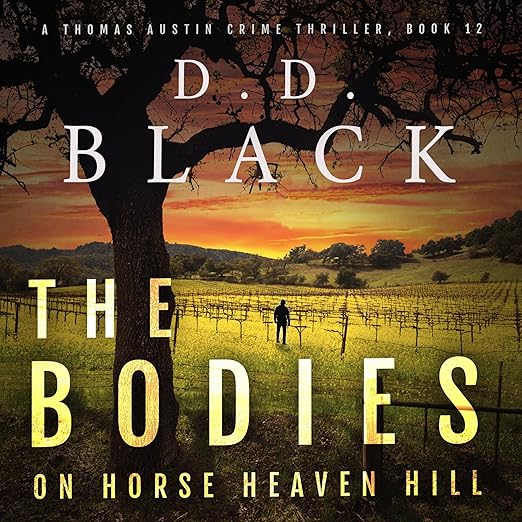
I have a particular affection for crime fiction that knows its geography the way a local would. D.D. Black’s Thomas Austin series has built its identity around specific Pacific Northwest locations, Kitsap County, Puget Sound, the Olympic Peninsula, with the kind of detail that makes readers who have been to those places feel recognized, and makes readers who have not feel genuinely transported. The Bodies on Horse Heaven Hill is the twelfth entry in that series, and it arrives with the confidence of a writer who knows his territory, his detective, and his audience.
The setup this time splits Austin between two investigations. In Washington’s Horse Heaven Hills wine country, the sunbaked eastern Washington ridgeline south of Yakima known for Cabernet Sauvignon, skeletal remains surface on the property of one of the region’s prestigious wineries. Across the Puget Sound, a woman vanishes from a cruise ship departing Seattle with no witnesses and no sign of struggle. The two cases read as unrelated until Austin finds the thread connecting them, which is the structural spine that Black has used effectively across the series.
Our Take on The Bodies on Horse Heaven Hill
What readers consistently cite about this series, and the reviews here confirm it, is the balance between mystery and character. The detective procedural elements are competent and the plotting is clean, but the reason readers have followed Austin through twelve books is the warmth of the supporting ensemble. The characters reviewers mention by name, Run, Ralph, the various team members, have accumulated enough history that their interactions carry weight beyond plot function. One reader specifically mentioned not wanting to summarize the plot because they could not do justice to what makes it work, which is an honest assessment of what character-driven series fiction offers.
The Pacific Northwest setting is not incidental. Black clearly knows the difference between Kitsap County and the Horse Heaven Hills, the geography shifts register between the misty Sound shoreline and the agricultural high desert of eastern Washington, and the novel uses that contrast deliberately. The wine country setting adds a layer of social texture (wealth, prestige, the particular anxieties of an agricultural industry facing economic pressure) that the earlier Seattle-area books did not have available.
Why Listen to The Bodies on Horse Heaven Hill
Joe Hempel has narrated this series consistently, and his familiarity with Austin’s voice shows. The character sounds like himself across twelve books, grounded, wry, not prone to melodrama, and Hempel has earned the authority of long-term association. For series listeners who have been with Hempel through the earlier books, the continuation is seamless. The regional flavor he brings to the Pacific Northwest setting feels authentic rather than generic.
At just over seven hours, this is also a well-proportioned listen for a procedural, substantial enough to develop both investigations properly without outlasting its welcome. The dual-case structure maintains pace without sacrificing resolution.
What to Watch For in The Bodies on Horse Heaven Hill
The series list at the back of the synopsis comes with the author’s own note that books can be listened to in any order. One reviewer firmly disagrees, recommending starting at Book 1 to get the full benefit of the character development. Both are technically true: the mystery plot in each book is self-contained, but the relationships between Austin, his team, and the recurring supporting characters will mean considerably more if you have followed them from the beginning. For maximum satisfaction, start at The Bones at Point No Point.
A reviewer also noted some inaccurate medical conditions and terminology, which cost the book a star in their assessment. This is a minor weakness in what is otherwise careful regional research, but listeners who bring medical knowledge to their crime fiction will notice it.
Who Should Listen to The Bodies on Horse Heaven Hill
Established fans of the Thomas Austin series will find this a satisfying continuation with a fresh geographical setting. Pacific Northwest readers will get the additional pleasure of recognizing specific locations and communities. New-to-series listeners who enjoy regional procedural fiction should start at Book 1 rather than here, the payoff on character relationships simply will not be present yet. Those looking for a literary or experimental approach to crime fiction should look elsewhere; this is craft-focused genre fiction that respects its conventions while working comfortably within them.
Frequently Asked Questions
Can I start with Book 12 if I have not read the earlier Thomas Austin novels?
The mystery plot is self-contained and will make sense as a standalone. However, the character relationships, particularly within Austin’s team and the recurring figures that fans mention by name, will lack the resonance they carry for readers who have followed the series. Most engaged readers recommend starting at The Bones at Point No Point.
How does the Horse Heaven Hills setting compare to the earlier Pacific Northwest locations in the series?
This entry takes Austin further from the familiar Kitsap County and Puget Sound territory into the wine country of eastern Washington, which is geographically and culturally quite different, sunbaked, agricultural, economically tied to the wine industry. Black handles the contrast deliberately, and it gives this book a different visual texture than the earlier installments.
Is Joe Hempel’s narration consistent with earlier books in the series?
Yes. Hempel has narrated the series throughout and Austin’s voice is consistent and well-established. For longtime series listeners, the continuity is part of the appeal. The familiarity translates into a settled authority in the narration.
Does the dual-case structure feel integrated, or does one investigation feel like a secondary plot?
Based on the synopsis and series pattern, both cases receive genuine development before their connection emerges. This is a structural choice Black has used across the series to maintain pace and prevent either case from feeling neglected.