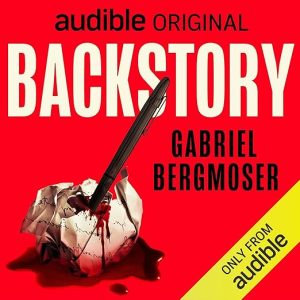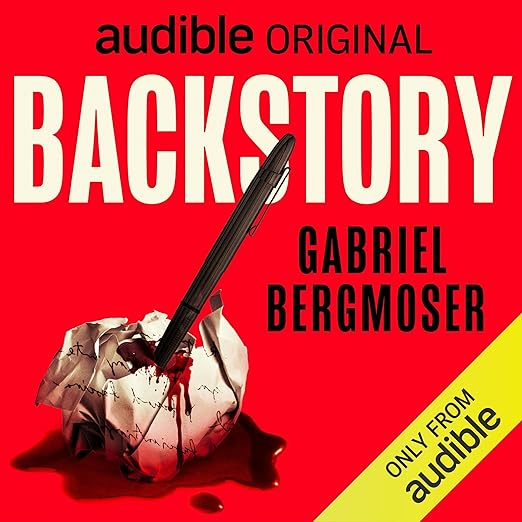
I picked up Backstory on a gray Tuesday afternoon, the kind of day that makes you want something tightly plotted and morally uncomfortable. I got exactly that. Gabriel Bergmoser, the Australian thriller writer who made his name with The Hunted, turns inward here, trading the outback for the hot-house world of university creative writing programs and the quiet, festering resentments they breed.
The setup is deceptively contained: five friends, one weekend away, one death a decade ago. A disgraced journalist named Phoebe Black starts pulling on the thread. What unravels is not just a murder mystery but a study in how people who spend their lives crafting narratives use that same skill to protect themselves from their own worst truths.
The Verdict, Briefly
Bergmoser has written a thriller that trusts its premise enough not to oversell it. The novel's engine is Phoebe's investigation, told partly through her conversations with the surviving friends and partly through her deteriorating sense of her own objectivity. One reviewer noted that the different points of view made them reflect on how untrue our memories can be, and that is precisely the effect Bergmoser is after. He is not just asking who killed Keith Brooks. He is asking whether the answer even matters when everyone involved has spent a decade rebuilding the past in their own image.
The creative writing world is a smart setting for exactly this reason. These are people whose professional identity is bound up in authorship and control of narrative. Watching them lose that control, watching Phoebe realize she may be doing the same thing, gives the book a reflexive quality that elevates it above a standard whodunit. The literary concern is genuine, not decorative.
Why Listen to Backstory
Emma Harvie's narration is one of the genuine pleasures here. The interview format that structures many scenes could easily become monotonous in lesser hands, but Harvie uses it well. She finds the slight pauses, the over-explanations, the moments where someone is clearly editing themselves in real time. One listener specifically praised how the interview style worked between Phoebe and the surviving writers, and the audio version makes that structural choice land with more force than it likely would on the page, you hear the performance within the performance.
At just under nine hours, the pacing is tight. Bergmoser does not let scenes breathe for long before tightening the screw. That relentlessness suits the material and suits the audio format, where momentum is everything.
Points to Consider
The novel is at its best when it leans into the intellectual discomfort of its premise: the idea that fiction writers are by definition skilled liars and that their accounts of reality should be treated with profound suspicion. At its weakest, it occasionally borrows thriller conventions that sit slightly awkwardly against that literary intelligence, a few late-chapter escalations feel more genre-obligatory than character-driven.
Listeners who prefer character interiority over procedural movement may find Phoebe a somewhat guarded protagonist. She is compelling, but Bergmoser keeps her at arm's length in ways that feel deliberate but occasionally frustrating. The payoff is real, though. Several readers noted that theories formed throughout dissolved completely in the final act, that is the mark of a plot that has been constructed with genuine care rather than reverse-engineered from its twist.
Should You Listen to Backstory?
This one is for listeners who want their thrillers to carry some intellectual cargo. If you were drawn to books like The Secret History by Donna Tartt or Kate Atkinson's crime fiction, stories where literary culture and moral collapse intersect, Backstory will feel like familiar, welcome territory. It also works well for anyone who has spent time in a workshop environment and recognizes the specific toxicity that creative competition can produce.
Skip it if you need high action or significant violence to stay engaged. This is a quieter, more cerebral kind of suspense, driven by conversation and revelation rather than physical threat. The Audible Original format means the production is clean and the runtime is precisely calibrated, a good choice for a focused listening session rather than a fragmented commute listen.
Good to Know
Does Emma Harvie voice multiple characters or is this a single-narrator performance?
Harvie performs the entire audiobook solo, distinguishing characters through vocal shifts rather than a full cast. Reviewers found her handling of the interview-style scenes particularly effective.
Is the ending satisfying or does it leave things unresolved?
The central mystery resolves fully. Reviewers consistently noted that the identity of the killer is genuinely surprising until the final chapters, the plot is structured to be surprising rather than ambiguous.