At a Glance
- Performance: Jessica Radloff narrates her own book with the ease of someone who spent years inside the subject, giving the behind-the-scenes material an insider warmth that a hired narrator could not replicate.
- What it covers: television production history, ensemble casting dynamics, fame and creative collaboration
- Feel: Warm and celebratory
- Our call: Over seventeen hours of cast and crew interviews distilled into a narrative that devoted fans of The Big Bang Theory will find essential listening.
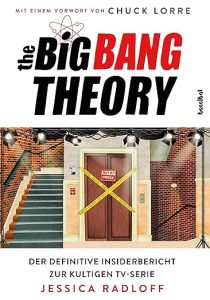
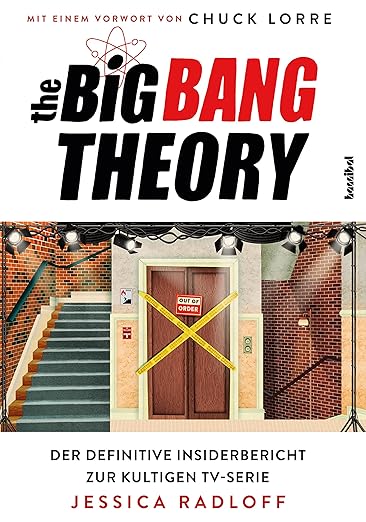
Television production histories live or die on access. Without the cooperation of the people who were actually there, these books tend to produce polished but ultimately secondhand accounts of what made a show work. This audiobook of The Big Bang Theory by Jessica Radloff is not that kind of book. Radloff, a journalist who developed professional relationships with the show's cast and key crew during her career, conducted over one hundred and twenty hours of interviews before shaping the material into this extended audio experience. The result, narrated by the author herself, is an oral history that positions itself as something closer to a collective memoir of the show than a conventional entertainment biography.
Radloff's access matters in specific ways. She interviewed not just the leads, including the actors behind Sheldon, Leonard, Penny, Raj, and Howard, but also the recurring and supporting cast and the production team. This breadth means the audiobook can trace the show's development from multiple vantage points simultaneously, following decisions about casting, writing, and production choices through the perspectives of people who experienced them differently depending on their role in the process. For a series that ran twelve seasons and became one of the most widely watched sitcoms in television history, that kind of layered account is genuinely valuable.
Is The Big Bang Theory Worth Your Time?
The audiobook is based on material originally developed for the author's reporting work, which means it is written with a journalist's ear for the telling detail and the revealing anecdote. Radloff knows how to find the moment that crystallizes a larger dynamic, and seventeen-plus hours of content organized from one hundred and twenty hours of interviews suggests a rigorous editing process shaped by someone who understood what the essential story was. A German reviewer writing for an audience familiar with the show described this as essential reading for fans, noting the personal material about the actors and insights into the production process, including who was originally considered for the role of Howard Wolowitz.
The casting detail is particularly compelling because The Big Bang Theory's ensemble success depended so heavily on the specific chemistry between its leads. How those casting decisions were made, who was considered and why they were or were not chosen, is the kind of production history that fans find genuinely illuminating. It transforms a familiar show into a set of contingent choices that could easily have gone differently, making the version that succeeded feel both more remarkable and more precarious in retrospect.
The Best Parts of The Big Bang Theory
The audiobook format is a good fit for this material for a specific reason: Radloff's source material is hundreds of hours of spoken conversation, and her prose carries the rhythm and texture of spoken testimony even in written form. Her self-narration reinforces this quality. Listening to the author read her own work about a show she covered intimately creates a sense of direct transmission that is well-suited to a book built from real conversations. The seventeen hours and fifty-three minutes allow the oral history to develop at a pace that accommodates the weight of the material without feeling padded.
The guest appearance list that the synopsis mentions is itself a marker of the show's cultural reach: Stephen Hawking, Steve Wozniak, Elon Musk, and Bill Gates all appeared on a sitcom about physics nerds, which is a genuinely unusual thing that tells you something about the show's specific intersection of geek culture and mainstream entertainment. Radloff addresses how those appearances came together and what they meant to the production, which gives the audiobook moments that go beyond conventional fan service into real cultural history.
Before You Commit to The Big Bang Theory
Self-narration by authors who are not trained voice performers can occasionally be a limitation in audio form, but Radloff's journalism background means she is comfortable speaking for extended periods and knows how to organize spoken delivery around a listener's attention span. Her familiarity with the subject material provides a natural fluency in the text that compensates for any absence of theatrical range. Listeners who are accustomed to professional narrators may initially notice the different register, but the intimacy it creates tends to become an asset as the book develops.
The book covers the show's full run, which means it addresses the later seasons and the decisions around the series finale that some fans found more complicated to assess than the show's peak years. Radloff's journalism training means she approaches these sections with the same care for factual accuracy and perspective that she applies to the show's origins, and the result is an account that neither glosses over tensions nor sensationalizes them. For fans who want to understand the show as a complete creative arc rather than a collection of favorite moments, this comprehensive approach is the right one.
Should You Listen to The Big Bang Theory?
Devoted fans of the series are the natural primary audience and will find the level of detail and insider access rewarding across the full runtime. Listeners interested in television production history more broadly will appreciate the journalism-quality behind-the-scenes access, particularly around casting decisions and the show's development from a niche concept into a global phenomenon. People who want to understand how a long-running sitcom maintains creative energy across twelve seasons will find useful material here.
Casual viewers with only light familiarity with the show will get less from the seventeen-hour commitment, since much of the book's reward depends on existing investment in the characters and their dynamics. This is not an audiobook designed to convert skeptics of the show. It is designed for listeners who already care and want to understand why it worked as well as it did for as long as it did.
Questions Listeners Ask
Is Jessica Radloff's self-narration effective for an audiobook of nearly eighteen hours?
Her journalism background gives her a comfortable spoken delivery, and her direct familiarity with the subject creates an intimacy that compensates for the absence of theatrical range. The self-narration suits the oral history format well.
What specific behind-the-scenes details does this audiobook reveal about the show's casting?
Reviewers specifically mention learning who was originally considered for the role of Howard Wolowitz, among other casting details. The book addresses how the ensemble was assembled and why specific decisions were made.