Key Details
- Narration: Edoardo Ballerini is the credited voice, and the written column singles out the pace and clarity as the reason this edition works.
- Themes: Impermanence and continuation, mindfulness practice, grief and aging, seven guided meditations.
- Mood: Unhurried, consoling, quietly demanding.
- Verdict: The rare spiritual title improved by being heard, since the material began as talks and the recording gives it back its room.
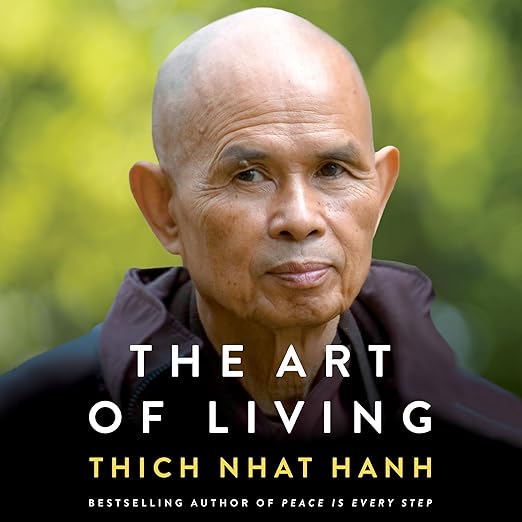
Seven meditations in five hours and one minute is the arithmetic that shapes this audiobook, and it is a more interesting number than it looks. Roughly forty minutes apiece for teachings the description says came from the last full talks Thich Nhat Hanh gave before his sudden hospitalization. Edoardo Ballerini is the credited voice, and the pairing turns out to matter enormously, because this material is transcribed speech being spoken again rather than prose being performed. The book was addressed to a room before it was addressed to a reader, and the recording quietly restores the setting the printed version had to translate away.
Ballerini's reading is the rare case where the written column tells you something concrete about the production. A five-star note from April 2020 describes one of the calmest and most reassuring voices the person filing it had ever heard, clear, easy to follow, delivered at a measured pace. That is not decorative praise on a book of guided contemplation. Pace is the whole instrument here. Read too briskly, these seven meditations become propositions to agree or disagree with. Read slowly enough, they become what they were built to be, which is an invitation to stop and sit with a thought rather than to collect it.
Impermanence is the load-bearing idea, and it arrives with fewer defenses than most Buddhist writing puts in front of it. The teachings work outward from birth, death, aging and emotion, and the description is explicit that the aim is not escape into bliss but a working understanding of where we come from and where we are going. That directness is what makes the book approachable to people with no background at all. It also means the harder claims arrive without ceremony, and a listener who has come for comfort will meet propositions about death somewhere in the first hour. What softens them is the register, which is closer to a conversation with a patient friend than to instruction, and that register is entirely a function of how the sentences are said.
Five Hours Light Enough to Carry Everywhere
Portability is a real argument for this edition, and an October 2025 note makes it without meaning to, saying the book goes everywhere with its owner. Five hours is short enough to hold whole in your head and long enough to be worth returning to, and the chapters are self-contained in a way that survives a week of ten-minute encounters. HarperOne released it in June 2017. Unlike most spiritual titles of this length, it has no exercises to write down and no worksheets to complete, so nothing is lost by having your hands somewhere else while you listen. That makes it one of the few titles in this genre where the recording is not a compromise on the printed version but a straightforward improvement.
Agnostics may be the audience this serves best, and the written column bears that out. The only note on the page that withholds a fifth star describes coming to the book while dealing with the loss of someone close, identifying as agnostic leaning toward atheist, unable to accept organized religion, and finding the passages on impermanence and death genuinely useful regardless. That is a strong recommendation precisely because it is a qualified one. The teachings are framed as observations about how experience works rather than as doctrine requiring assent, which is why they survive translation to a skeptical listener.
Essence Over Argument in Five Compressed Hours
Buddhism is the frame, and the listing files this title under health, spirituality and social sciences all at once, which is a fair description of how wide the reach is and a poor guide to what you are actually buying. The tone is gentle and the vocabulary is plain, but the content is a specific tradition's account of self and continuation, not a general wellness program. Anyone expecting practical stress management with a light spiritual finish will find the emphasis falls somewhere else entirely, on questions that do not resolve into technique. The multi-genre filing is worth noticing for a second reason: it is the listing hedging about what shelf this belongs on, which suggests the publisher was uncertain too.
Compression is the risk in five hours. Seven transformative meditations is a large promise for a recording shorter than most novels, and the description leans hard on the word essence, offering the essence of the Buddha's teachings alongside the author's own prose. Essence means selection, and selection means a listener new to this material gets conclusions faster than arguments. That works beautifully as an introduction and less well as a reference. No companion document appears on this listing, so a phrase you want to return to has to be hunted down by scrubbing rather than by turning back a page.
An Easy First Encounter With Buddhist Teaching
Newcomers are explicitly well served, and a July 2024 note confirms it, describing this as a first encounter with the author and finding the concepts easy to take in as presented, with the strong impression of being spoken to directly. That impression is worth taking seriously as a reason to choose the recording over the page, because it is exactly what the original talks were meant to produce. Anyone grieving, anyone facing a diagnosis, and anyone who has been circling meditation without finding a door into it should start here rather than with something longer. Five hours is a small enough commitment that a second pass costs almost nothing, and this is a book that improves on a second pass.
Those who want scholarship, citations or a historical account of Buddhist thought are in the wrong place, as is anybody who prefers spiritual reading argued rather than offered. The absence of exercises will frustrate listeners who want a practice to follow rather than a perspective to adopt. And if a calm, unhurried delivery reads to you as slow, five hours will feel considerably longer than five hours, because nothing in this recording is trying to move you along faster than the thought requires.
Before You Listen
How long is The Art of Living audiobook, and who reads it?
Five hours and one minute, with Edoardo Ballerini credited as narrator, published by HarperOne in June 2017. That works out at roughly forty minutes for each of the seven meditations the description promises, which is short for the genre and deliberately so.
Does the audiobook include exercises or a companion document?
No supplementary file is listed in any field on this page. The seven meditations are presented as perspectives to sit with rather than as exercises to write down, so nothing practical is lost by listening while your hands are occupied elsewhere.