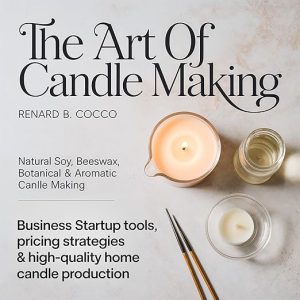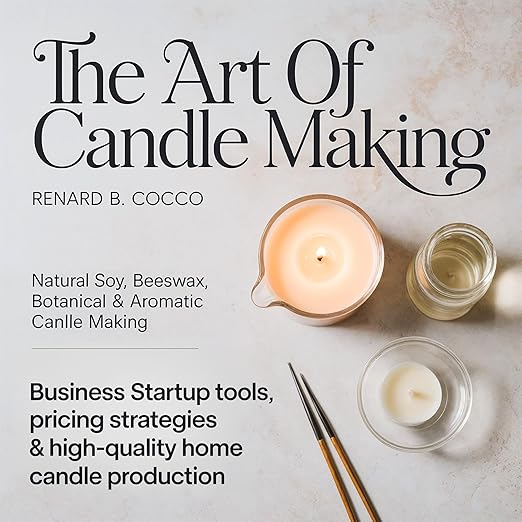
The candle making section of any craft marketplace is crowded with titles that promise beautiful results and underdeliver on the actual troubleshooting that determines whether your first batch burns clean or tunnels halfway down and dies. The Art of Candle Making by Renard B. Cocco takes a different structural approach: rather than organizing around inspiration, it organizes around a five-part system covering wax selection, wick sizing, scent blending, color and botanicals, and scaling. The audiobook version, narrated by Kevin Wagner, comes with a companion PDF that delivers the visual and numerical reference material that the audio necessarily cannot, and the combination of listening and reference works well for a craft that involves specific temperatures and ratios.
Tunneling, Frosting, and a Fragrance Pyramid Fix
The problem that the book opens by naming is the right one to start with: you have bought expensive supplies, followed a tutorial, and ended up with tunneling, frosting, or a candle that will not sustain a flame. Those specific failure modes, with their specific causes, form the diagnostic backbone of the audiobook. Cocco structures the troubleshooting content around the actual mistakes that beginning candle makers consistently make: sinkholes, wet spots, weak scent throw, uneven burns. Working through what causes these problems and how to correct them is more useful than working through an idealized production sequence, because the idealized sequence rarely matches what happens in a first or second attempt.
The five-part system covers the main decision points a candle maker faces in order of their operational importance. Wax type, soy versus beeswax versus coconut, affects everything downstream: wick sizing, optimal temperature range, scent load capacity, and the visual texture of the finished product. Cocco's approach to wax selection is comparative rather than prescriptive: he explains what each type does well rather than simply declaring a winner. The wick selection section addresses one of the most common points of failure in beginner candle making, where a mismatch between wick diameter and vessel geometry produces the uneven burns that frustrate new makers the most.
The thirty signature recipes represent the book's most directly transferable content. Each recipe is described as complete and usable as-is while also serving as a customization template. The fragrance pyramid approach to scent design, which organizes aroma notes into top, middle, and base layers, brings perfumery logic into craft candle making in a way that most beginner guides omit. The result is scent blends that evolve over the burn rather than delivering a single flat note from first light to finish.
Kevin Wagner Reads the Numbers a PDF Completes
Kevin Wagner's narration is clear and instructional without being dry, which is exactly what this material requires. Craft audiobooks live or die on their ability to communicate process through audio alone, and the choices that work in print, numbered steps, diagrams, temperature charts, do not translate directly to listening. Wagner reads the instructional content with the deliberateness that allows a listener to follow along without having the page in front of them, and the companion PDF handles the numerical and visual material that prose cannot carry. Download the PDF before you begin and have it available for the temperature and ratio sections, which benefit from being able to reference the specific numbers while listening.
At four hours and four minutes, the audiobook is short enough to complete in a single extended session, which suits the craft content well: you can listen through the complete system, then return to specific sections as reference when you are actually working. The botanical section, which covers incorporating herbs and dried elements without creating fire hazards, is notably practical and addresses a concern that tutorials rarely cover with adequate specificity. Knowing that dried lavender behaves differently from dried citrus peel in a burning wax environment is the kind of operational detail that distinguishes experienced makers from beginners, and Cocco provides it without making the listener feel they are consulting a safety manual.
Skip the Basics and the Advanced Chapters Suffer
The advanced sections on pillars, tapers, and wax melts build directly from the five-part system established in the beginner material, which means the organization rewards front-to-back listening rather than skipping ahead to the techniques that seem most interesting. Listeners who skip the wax fundamentals section may reach the advanced forms chapters without the conceptual vocabulary to follow the troubleshooting advice specific to those formats. The sequencing is pedagogically intentional rather than arbitrary.
The production value of the companion PDF should be checked before purchasing if visual guides are important to your learning style. The audio describes the procedures clearly enough to follow without the PDF, but the temperature guides, fragrance ratio charts, and recipe formatting are significantly easier to use in a visual reference format than to hold in working memory while actively making candles. Treat this as a hybrid learning experience from the start rather than attempting to extract all the content from the audio alone.
Systematic Troubleshooters Do Better Than Visual Learners
This audiobook works best for beginning to intermediate candle makers who want a systematic understanding of why things go wrong and how to correct them, rather than a purely inspirational introduction to the craft. The troubleshooting focus and the fragrance pyramid approach give it more practical depth than most titles in this space. Listeners who are already experienced with basic container candles and want to move into pillars, tapers, and botanical integration will find the advanced sections genuinely useful rather than redundant. Skip it if you are looking for a purely visual craft experience: the companion PDF helps, but the audio alone is not a substitute for video-based instruction if watching technique demonstrations is your primary learning mode.
Does The Art of Candle Making audiobook include all the recipes and temperature guides, or do I need the companion PDF?
The audio covers the methodology and reasoning behind the techniques clearly enough to follow along, but the thirty signature recipes and the temperature and ratio charts are best used from the companion PDF. It is included in your audiobook library and worth downloading before your first listening session.
How does The Art of Candle Making audiobook compare to video tutorials for learning candle making technique?
The audiobook delivers stronger conceptual grounding and systematic troubleshooting than most video tutorials, which tend to demonstrate without fully explaining the reasoning behind specific choices. Video tutorials show you what to do; this audiobook explains why it works and what goes wrong when it does not. The two formats complement each other rather than substituting.