At a Glance
- Read by: Will Rixon brings genuine enthusiasm to the material, which suits the motivational tone of the guide without tipping into parody.
- At its heart: Advanced storytelling and worldbuilding, adaptive player management, campaign craft as creative discipline
- Vibe: Energetic and practical, occasionally grandiloquent
- Short version: A genuinely useful upgrade guide for DMs who have the basics down and want to run campaigns that feel like living worlds rather than scripted experiences.
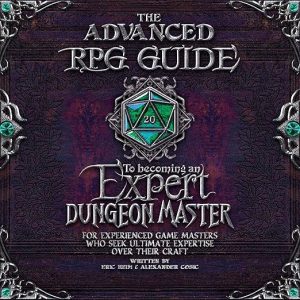
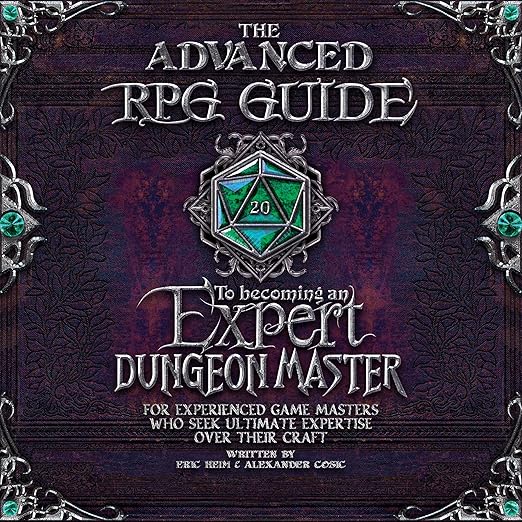
I do not run tabletop campaigns myself, but I spent three years during graduate school watching a very skilled DM hold a table of six academics together through a year-long campaign that veered from Byzantine political intrigue to full wilderness survival to something approaching cosmic horror. I understood from that experience that running a great tabletop game is a distinct craft, and one that serious practitioners work at continuously. Eric Heim's The Advanced RPG Guide to Becoming an Expert Dungeon Master is aimed squarely at the practitioner who has moved past the rulebook stage and wants to level up their actual art.
The guide is explicit that it is not for beginners. It is the companion to an earlier introductory volume, and it positions itself as the transition from competent DM to expert one. At six and a half hours, it covers advanced storytelling, adaptive worldbuilding, and player management, which the author frames not as optional accessories but as the core of what separates a good session from an extraordinary one.
All Five Senses Build the Immersive Scene
The book's strongest asset is its conceptual breadth. One reviewer, a seventy-two-year-old DM with decades of experience, described it as opening doors into better planning and worldbuilding he wished had existed when he first started running games. Another noted it functions as a resource for public speaking and writing compelling fiction, not just tabletop gaming. That crossover appeal is genuine: the skills involved in holding a room, creating immersive narrative, and responding dynamically to an audience translate directly.
The emphasis on sensory immersion, using all five senses when describing environments, is particularly well-developed. Reviewers who have been DMing for years found specific techniques here they had not encountered before, which is a real achievement for a guide covering a domain with substantial existing literature.
Rixon's Energy Suits Dense DM Methodology
The audiobook format suits the way a DM actually absorbs craft knowledge: on commutes, during prep sessions, or in background listening while sketching maps. Will Rixon's narration has the right energy, enthusiastic without becoming a performance, and it keeps the material moving through what could otherwise become dense methodology.
The guide is particularly strong on player management: how to read a table, how to adapt when players take your narrative in unexpected directions, and how to maintain investment across a long campaign arc. These are the problems that experience alone does not always solve, and having structured frameworks for approaching them is the kind of practical value the better craft guides offer.
War Cries and Weapons Land Oddly in Audio
One reviewer noted pointedly that the title specifies Dungeon Master rather than the more generic Game Master, which means it is written primarily for D and D 5th edition players. Listeners who run Pathfinder, Call of Cthulhu, or other systems will still find the storytelling and worldbuilding principles applicable, but some system-specific advice will not transfer directly. The reviewer in question was willing to adapt, but it is worth knowing going in.
The tone occasionally tips into the motivational, with phrases about weapons, war cries, and commanding stories like a master that read better on the page than they land in audio. Listeners who prefer understated instructional prose should be aware the register is energetic throughout.
Best Suited to DMs Already Running Campaigns
Worth mentioning separately: the publisher is Advanced RPGs, the same outfit behind the introductory volume, which means the production quality and structural approach are consistent across both. Listeners who worked through the first guide and found the format effective will feel immediately at home here, with the material simply operating at a higher level of craft and complexity.
DMs who have run several campaigns and feel competent at the mechanics but want to develop their narrative and player management skills will get the most from this. It is also a strong listen for writers and storytellers working in other forms who want exposure to live-audience narrative principles. Absolute beginners should start with the companion introductory guide rather than jumping in here. D and D 5th edition players will find it most directly applicable, while other-system GMs should be prepared to translate some of the specific guidance.