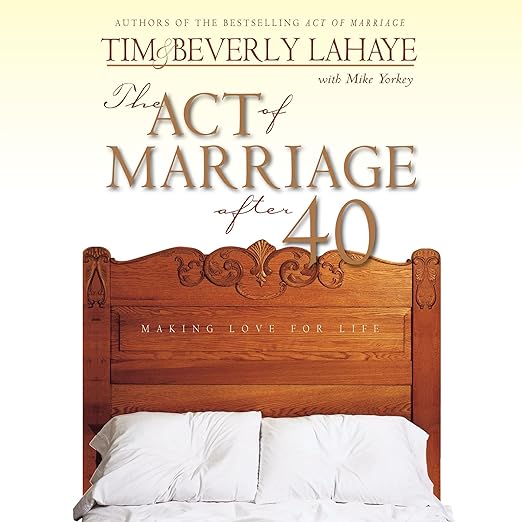
Quick Take
- Narration: Robertson Dean delivers this material with the crisp authority of someone who has read a lot of health and wellness nonfiction. He’s well-suited to the combination of medical information and pastoral encouragement that characterizes the LaHayes’ writing style.
- Themes: Sexual intimacy after midlife, menopause and male aging as they affect desire, rekindling marriage through physical and relational knowledge
- Mood: Warm and clinically reassuring, this writes like a knowledgeable friend who also happens to have medical references on the shelf
- Verdict: A medically grounded and faith-informed guide for married couples navigating the physical changes of middle age and beyond; the companion PDF for figures and tables is worth downloading alongside the audio.
I started The Act of Marriage After 40 on the same afternoon I’d been reviewing shorter entries in this batch, and the contrast in tone and scope was immediately apparent. Tim and Beverly LaHaye are writing for a specific audience, married Christian couples dealing with the physical and relational realities of middle age, and they address that audience with the kind of direct, information-dense care that suggests they’ve been listening to questions from that group for a long time. This book answers the questions that couples apparently have and don’t always know how to ask.
The LaHayes were prolific writers across multiple genres, Tim LaHaye best known outside Christian circles for the Left Behind series he co-authored. The Act of Marriage, their earlier title, reportedly sold millions of copies as a foundational Christian guide to marital sexuality. This follow-up, specifically focused on midlife and beyond, addresses what the original presumably left out: the physiological and relational changes that arrive after forty and that neither partner may have been given adequate language to discuss.
The Medical Content That Anchors the Book
The questions the synopsis lists, whether sexual desire reverses with aging, how menopause affects a woman’s sex drive, whether male menopause exists, how exercise and nutrition interact with sexual function, are handled with the combination of medical specificity and accessible language that characterizes the LaHaye approach. Robertson Dean reads the data-heavy sections without the slightly detached quality that sometimes creeps into narration of medical content, and the pacing is appropriate for material that listeners may want to absorb and reflect on rather than race through.
The companion PDF containing figures, tables, and an appendix is mentioned in the listing and is worth downloading if you’re engaging seriously with the medical content. Physical changes in aging are in many cases best tracked through the visual comparisons that tables and figures offer, and losing that visual layer is a real limitation of the audio-only experience. That said, the prose explanations are detailed enough to stand on their own for most purposes.
What ‘After 40’ Actually Encompasses
The book’s ambition is broader than a menopause guide or a guide to managing physical decline. The LaHayes are interested in the full arc of midlife sexuality: understanding the physiological changes, addressing sexual dysfunction and the emotional weight it carries in long marriages, navigating the temptation of extramarital affairs that can emerge from dissatisfaction, and, most prominently, rekindling desire and deepening intimacy in a marriage that has weathered decades together. That last ambition is the most distinctive part of the book, and it’s what distinguishes it from purely clinical guides.
One reviewer preparing for marriage described reading this alongside The Act of Marriage, suggesting that the two books function as a sequence, the earlier title for the foundation, this one for the longer view. That pairing seems right based on the scope. Another reviewer described the book as ‘very inclusive,’ which I interpret as the LaHayes’ attention to both male and female experience rather than defaulting to a single perspective.
Faith Framework and Medical Ground
Like Red-Hot Monogamy, also reviewed here, this book operates within a Christian faith framework. The LaHayes describe sexual intimacy as having a divine design, and that framing is present throughout. Unlike some faith-based sex guides, however, the medical content is substantial and appears to be researched rather than assumed. The discussion of breast and prostate cancer as risks that affect sexual health, the treatment of menopause and its hormonal dimensions, and the attention to how nutrition and exercise interact with sexual function are all markers of a book that takes the body seriously rather than just the spirit.
Who Should Listen and Who Should Skip
Listen if: you’re in a Christian marriage, you’re over forty, and you’re navigating the physical and relational changes that come with that territory. The book is precise about its audience and delivers what that audience needs. Also worth considering if you’re approaching forty and want to understand what’s ahead before it arrives.
Skip if: you want a secular guide, you’re in an early stage of marriage without the physical-change context that drives the book, or you’re looking for explicit content rather than informed and principled discussion of sexual health and intimacy.
Frequently Asked Questions
Is the companion PDF mentioned in the listing important, and how do you access it?
The listing notes that figures, tables, and the appendix are included in an audiobook companion PDF download. For listeners engaging seriously with the medical content, particularly the discussions of physiological changes, hormonal effects, and the visual comparisons those require, downloading the PDF is worth the effort. It should be accessible through your Audible account after purchase.
Does The Act of Marriage After 40 require familiarity with the earlier Act of Marriage by the LaHayes?
No. The book is designed to stand alone, addressing a specific life stage and the questions that accompany it. Reading the earlier title first provides helpful context, but the LaHayes provide enough foundational framing in this book to make it useful without the prerequisite.
How does Robertson Dean’s narration handle the sensitive medical content?
Dean reads with confident evenness throughout. He doesn’t retreat to clinical flatness when discussing sensitive topics, nor does he over-warm the medical sections. The balance, authoritative but accessible, suits a book that is trying to be both medically grounded and personally encouraging.
Is this book relevant for couples where both partners are over 40, or primarily addressed to one?
The LaHayes address both partners throughout, covering the female experience of menopause and its effects alongside the male experience of aging and changing desire patterns. The book is explicitly designed for couples to read together, and reviewers who describe the most satisfying experience are those who engaged with it as a shared conversation rather than individual research.