Key Details
- Narrator: Sean Covey reading his own work brings authenticity and conversational warmth that a professional narrator might not replicate, and it works particularly well for a book aimed at young people.
- Subjects: Personal responsibility, proactive mindset, navigating peer relationships and identity during adolescence
- Tone: Encouraging and grounded, with enough real-world texture to avoid feeling like a lecture
- Bottom line: A practical framework for teens that also holds up for adults who never encountered this material during their own adolescence.
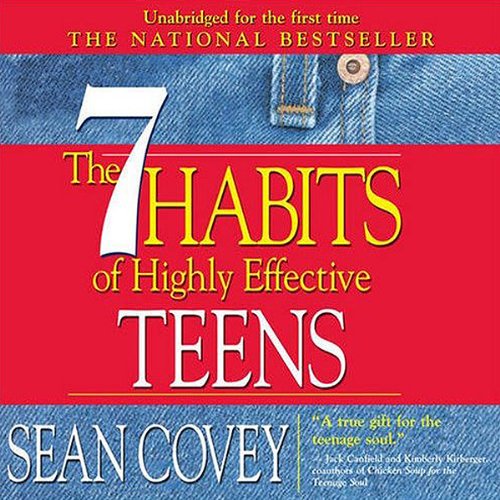
I picked up this audiobook on a recommendation from a colleague whose teenage daughter had started using phrases like being proactive in dinner-table conversation. That alone felt like sufficient evidence that something in this book was actually sticking. I had been aware of Sean Covey's adaptation of his father's famous framework for years without ever sitting down with it, and I finally did on a rainy Tuesday morning, expecting something polished but generic. It was more specific than I anticipated, and more honest about what it actually asks of a young person than most teen self-help material manages to be.
Covey Voices a Graphic Novel of Seven Teens
When authors narrate their own books, the results vary enormously. Some are stiff, clearly more comfortable writing than speaking. Covey is neither. He reads with the easy rhythm of someone who has spent years talking about these ideas with actual teenagers, not just theorizing about them in the abstract. There is a lightness to his delivery that never tips into condescension, which is a real risk with this subject matter and one that sinks a lot of books aimed at young people. The graphic novel adaptation referenced in the synopsis adds a dimension here: the book was reimagined to follow seven high school students, including Fine, a football-loving senior, and Jasmine, a shy writer, and Victoria, an ambitious freshman who joins the entrepreneurship club. Covey voices these characters' arcs with an awareness that the principles only land if the situations feel real and specific rather than merely illustrative. A reviewer who shared the book first with a niece and then sent a second copy to a young adult speaks to a quality the narration makes possible: the material ages up rather than bottoming out at its stated target audience. The seven-hour runtime never drags because Covey knows where to push forward and where to slow down and let an idea settle.
From Dependence to Interdependence, One Habit at a Time
The seven habits are organized into a progression that the book makes explicit and structural: first move from dependence to independence, then from independence to interdependence. That scaffolding matters more than it might seem. A lot of self-help content aimed at young people treats each concept as a standalone tip, which is why it evaporates quickly once the book is closed. Covey builds a sequence with internal logic that makes each habit build on the ones before it. The first habit, being proactive, is not simply advice to take initiative. It is grounded in the idea that you choose your response to what happens to you, which is a fundamentally more demanding proposition than simply trying harder when things go wrong. The book then asks teens to hold that frame while navigating the relationships habits, where the work gets considerably harder and considerably more personal. One reviewer noted they added their own annotations to sections on diet and exercise, redirecting the framing from appearance to health. That is a fair critique of one corner of the material. But those are minor cavities in a structure that mostly holds its shape across the full listening experience.
Dated Anecdotes in an Otherwise Durable Framework
This audiobook has been in circulation since 2012, with the source material going back considerably further. Over ten million copies sold is a real number, and you feel the reason for it in how consistently the core principles apply across different readers' situations regardless of when they come to the book. But a few reviewers have flagged that certain anecdotes in the text reflect assumptions that feel dated, particularly around race. Covey does not appear to have substantially updated those sections for the audio version currently in circulation. For parents listening alongside teens, that is worth a conversation rather than a reason to avoid the book entirely. The core architecture of the habits is as structurally sound as it was when first developed. The illustrative material around it is more time-stamped, and honest readers will notice the difference between the two layers of the book without much difficulty.
Best for Teens Ready to Listen Actively
Teens who are willing to listen actively, meaning not just absorbing the content during a commute but actually sitting with what the habits ask of them, will find this valuable. The seven hours are dense with applicable ideas, and Sean Covey's narration makes the time move quickly. For adults who grew up without exposure to Stephen Covey's framework, this adaptation is a gentler and more narrative entry point than the original. The graphic novel structure gives it momentum that keeps the listening experience from feeling like a lecture delivered at you from a considerable height. If you are looking for something with more clinical depth on adolescent psychology specifically, you will want a different book. If you want a structured, habit-based framework delivered by a warm and credible voice, this recording delivers consistently on what it promises.