Quick Take
- Narration: Edmund Crafts delivers a measured, period-appropriate reading that suits the 19th-century prose style without over-dramatizing it.
- Themes: Self-sufficiency and the rural ideal, small-scale farming economics, the city-to-country transition as lived experience
- Mood: Contemplative and practical, occasionally quaint but consistently earnest
- Verdict: A surprisingly durable classic for homesteaders and small-scale farmers, the principles hold even if the prices and tools are 150 years old.
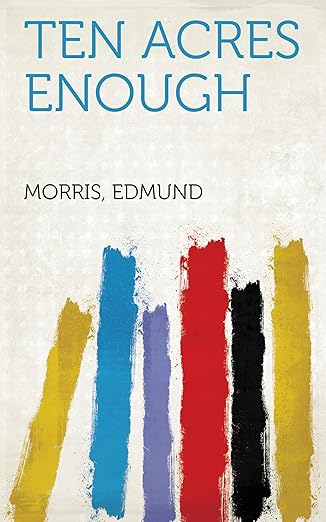
I came to Ten Acres Enough with some skepticism. A 19th-century farming manual seemed like the kind of historical curio that rewards only specialists. I was wrong about that. Edmund Morris’s account of his transition from city to country life, built around the establishment of a ten-acre peach orchard in New Jersey in the 1860s, turns out to be one of those books that time has treated gently. The specific numbers are historical relics; the underlying logic of small-scale farming is not.
Morris was a city man who got out. His book documents the how of that transition with the specificity of someone who actually did the work: soil preparation, tree selection, planting spacing, pruning techniques, pest management before chemical pesticides existed, and the economics of the farm stand and the relationship with buyers. There is a practical intelligence here that transcends its era. One reviewer who is clearly a working homesteader described needing to read it twice and take notes, a response that says something about the density of usable information in a book published over 150 years ago.
Our Take on Ten Acres Enough
The book is most interesting as a document of permaculture thinking before the word existed. Morris manages soil health, the economics of land use, and the relationship between crop diversity and farm viability with an integrated sensibility that resonates with contemporary sustainable agriculture in ways that feel less like historical coincidence and more like the rediscovery of what works. One reviewer made this connection explicitly, noting that the principles translate directly to modern homesteading practice.
The narrative sections, Morris’s account of country life, community interactions, and the contrast between urban and rural existence, are also more engaging than you might expect from what announces itself as a farming manual. He is a capable writer with genuine affection for what he has built and a wry awareness of what city life cost him. The book balances instruction and memoir in a ratio that keeps both elements from becoming tedious over six and a half hours.
Why Listen to Ten Acres Enough
Edmund Crafts narrates with a measured pace that suits 19th-century prose. The sentences are longer and more formally constructed than contemporary nonfiction, and Crafts does not try to modernize the delivery, he reads the book as the period piece it is, which is the right call. A more conversational narration would create a tonal mismatch with the text. The audio format works reasonably well for a book of this type, though readers who want to take notes on the farming specifics may find themselves pausing frequently to capture details.
The chapter structure is clear enough that individual sections can be revisited without the full context of everything surrounding them, which helps for practical reference after a first full listen.
What to Watch For in Ten Acres Enough
The economics are period-specific and should be treated as illustrative rather than practical. Morris’s costs, yields, and prices reflect the 1860s American agricultural economy. The ratios and principles translate; the actual numbers do not. One reviewer who found the book valuable noted this explicitly, the depreciation of the dollar since then makes direct comparison impossible, but the underlying logic of yield management and the economics of perishable crops remains instructive for contemporary small farmers.
The farming advice is also specific to the Mid-Atlantic US climate and the particular crops Morris grew. Readers in different climates or with different crops will need to adapt his principles rather than apply them directly. And pest management techniques that predate modern organic certification frameworks may need updating for contemporary homesteaders working within current regulatory and ecological contexts.
Who Should Listen to Ten Acres Enough
Homesteaders, small-scale farmers, and anyone curious about the 19th-century rural ideal and how it was actually practiced rather than romanticized. Readers interested in the history of American agriculture and the pre-industrial farm economy. People drawn to the back-to-land tradition who want a primary source rather than a contemporary retelling. Skip it if you want modern practical farming guidance, this is a historical text that rewards reading as such, not a current how-to guide.
Frequently Asked Questions
Is Ten Acres Enough still practically useful for modern homesteaders, or is it purely historical?
Multiple reviewers with working homesteads found it practically useful. The principles of soil management, orchard establishment, and small-scale farm economics translate well; the specific prices, tools, and pest management methods require updating for modern contexts.
What crops and farming methods does Edmund Morris focus on?
The book centers on a peach orchard, including soil preparation, planting, pruning, and pest management without modern chemicals. Morris also covers the economics of selling perishable crops and the broader management of a small mixed farm in 19th-century New Jersey.
How does Edmund Crafts handle the 19th-century prose style in the audiobook narration?
Crafts reads with a measured, period-appropriate pace that suits the formal sentence structure of the era. He does not try to modernize the delivery, which is the right approach for a book whose voice is part of its value as a historical document.
Is the book specific to a particular US region, or are the principles broadly applicable?
Morris farmed in the Mid-Atlantic region, and his advice on climate, soil, and crops reflects that geography. The broader principles of small-scale farm management are more portable, but readers in very different climates should treat the specifics as starting points rather than direct instructions.