Before You Press Play
- Performance: Bill Ayers delivers the project instructions with practical, unfussy clarity that suits the handbook format without becoming robotic.
- What it covers: Off-grid self-sufficiency, DIY preparedness, resource independence
- Feel: Methodical and motivating, with the can-do energy of a well-organized workshop
- Our call: Johnathan Nash's 75-project guide works reasonably well in audio form for conceptual orientation, though the 200-plus diagrams make the companion PDF an essential supplement for anyone planning to actually build these systems.
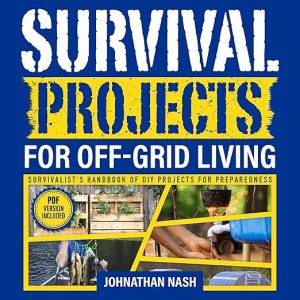
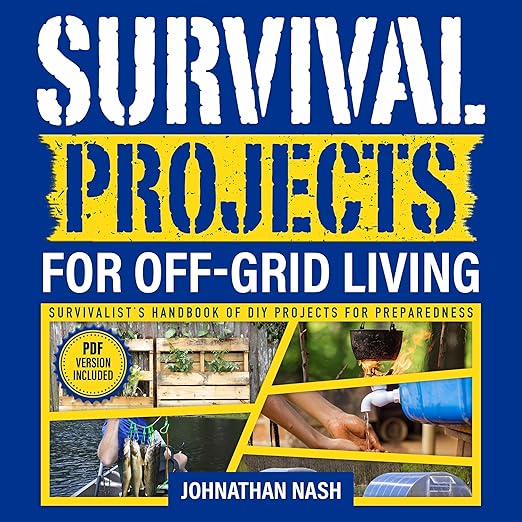
Johnathan Nash's Survival Projects for Off-Grid Living, narrated by Bill Ayers over six hours and eighteen minutes, is a project-based preparedness handbook that carries an immediate structural tension into the audiobook format. The print edition includes over 200 illustrative diagrams and step-by-step material lists for 75-plus DIY projects. In audio form, those visual elements do not exist. What remains is the conceptual framework, the reasoning behind each system, and the broad methodology for approaching off-grid living as a series of incremental, achievable projects rather than an overwhelming single transition. Ayers delivers all of this with a clear, workmanlike narration that does not over-promise, which is the right instinct for material that lives in the practical domain.
The scope is genuinely ambitious. Nash covers water systems from well-digging to rainwater harvesting, solar power installation and EMP protection strategies, campfire cooking through to rocket stove and smokehouse construction, food acquisition and preservation including foraging, hunting, and solar dehydration techniques, sustainable gardening and beekeeping fundamentals, and home defense covering solar-powered security systems and physical perimeter strategies. For a single audiobook under six and a half hours, this breadth of coverage comes with the expected tradeoff: each project gets enough explanation to understand its purpose and approximate method, but not enough detail to execute without the visual reference the PDF companion provides.
Nash writes as a survivalist rather than an academic, and the distinction matters in audio form. The projects are framed around practical necessity rather than self-reliance ideology, which keeps the audiobook focused and prevents it from sliding into the survivalist culture commentary that inflates some books in this genre. Ayers reads the text with appropriate directness, giving the project descriptions a sense of procedural weight without turning them into monotone materials-list recitations. When Nash explains why a three-bucket bio-filter matters for water safety in a grid-down scenario, Ayers makes it sound like instruction from someone who has thought carefully about consequences rather than merely compiled a list.
The review record includes a dissenting voice worth acknowledging: one listener felt the book lacked the authenticity of genuine personal experience with these challenges. That is harder to evaluate in audio form, where the verification of first-hand expertise depends entirely on the writing's texture rather than demonstrated execution. Nash writes with enough specificity in the technical sections, particularly in the water systems and food preservation content, to suggest practical familiarity with the material. But listeners with genuine hands-on experience in any of the covered domains will be best positioned to evaluate how deeply the advice runs.
Mapping the Interdependencies of Off-Grid Systems
The audiobook works best as a planning and orientation tool rather than a construction manual. Listening through all six hours gives a comprehensive map of the interdependencies between off-grid systems: why water independence needs to come before food production systems can function reliably, how solar power installation affects which other systems are viable, where energy budget calculations change the priority order of projects. This systems-level thinking is conveyed effectively in audio even when specific project instructions require the PDF for execution. The conceptual architecture of off-grid preparedness comes through clearly.
Nash explicitly structured the projects for spare-time implementation, which is important context for the audiobook's target listener. This is not a guide for people planning an immediate rural retreat; it is for people building self-sufficiency incrementally alongside existing life commitments. Ayers conveys that incremental logic clearly, and the audiobook's runtime is short enough that a listener can absorb the complete framework in a couple of sessions before deciding which projects to prioritize based on their specific situation, geography, and skill level.
Water and Food Preservation Outshine the Beekeeping Chapters
The book explicitly mentions that the PDF companion is included with the audio purchase, and that companion material is where the 200-plus diagrams and material specifications live. Listeners who rely solely on the audio narration will have the conceptual framework for each project but will lack the visual reference required for safe and accurate construction. The home defense and solar electrical sections in particular involve safety considerations where visual confirmation of technique matters more than any amount of careful verbal instruction. Nash is honest about this limitation in how he frames the audio's scope.
Nash is strongest on water systems and food preservation, which receive the most layered treatment in the audio and the most supporting detail in the PDF. The livestock and beekeeping sections are necessarily briefer given the scope, and listeners with serious interest in apiculture or sustainable animal husbandry will need dedicated resources beyond this audiobook. The value in those sections is framing the relevant questions and establishing what is involved at a foundational level rather than providing operational depth. Listeners who come to the audiobook with a specific project already in mind, a rainwater harvesting system for instance, or a solar power array, will find the relevant chapter provides enough orientation to begin their own further research with the right vocabulary.
Ayers Guides Planners Through Six Hours of Systems
This audiobook suits listeners at the planning stage of an off-grid transition, people who want a comprehensive survey of preparedness systems before committing to specific projects, and homesteaders evaluating where to focus time and material investment for the highest resilience return. It is less suited to listeners hoping to use the audiobook as a primary construction guide without the PDF companion. Anyone with substantial hands-on experience in survivalist or homesteading projects will find the audio content too abbreviated to add practical value, though it may serve as a useful checklist against an existing setup. The six-hour runtime makes it a reasonable first listen for anyone beginning the off-grid preparedness conversation.
A Few Questions About Survival Projects for Off-Grid Living
How does the audiobook handle the technical project instructions without visual support?
Ayers reads the step-by-step instructions procedurally, which conveys the sequence and logic of each project without substituting for the diagrams. Nash writes the instructions with enough explanatory context that the audio alone provides solid conceptual understanding, but executing specific projects safely requires the PDF or additional visual resources.
Does the off-grid living audiobook cover topics beyond food and water, such as security and energy systems?
Yes. The scope includes solar power installation, EMP protection strategies, home defense including solar-powered security systems and physical perimeter design, as well as hygiene systems. Nash designed the handbook to cover all basic human needs in a grid-down scenario rather than focusing narrowly on any single survival category.