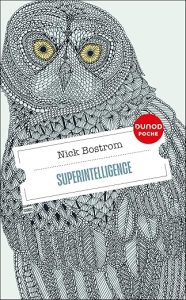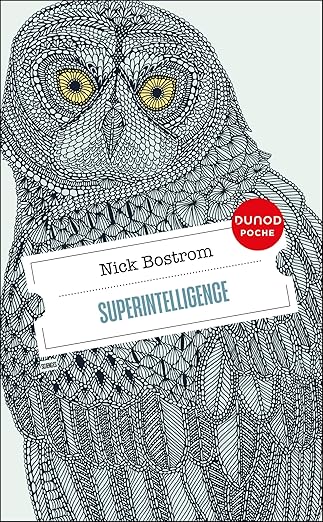
Nick Bostrom's Superintelligence arrived in 2014 as the book that moved AI existential risk from the fringe of philosophy into the mainstream of technology policy debate. At 14 hours and 17 minutes in its audiobook form, narrated by Napoleon Ryan, it is a dense, serious, carefully argued case for taking the possibility of machine intelligence surpassing human intelligence not as science fiction premise but as the most consequential long-term challenge humanity is likely to face. A decade later, with large language models now in daily use by hundreds of millions of people, the questions Bostrom raises have migrated from speculative to urgently practical.
The synopsis available for this edition is in French, indicating this audiobook may be part of a French-language catalog entry, but Bostrom's work was written in English, has been translated into 19 languages, and is one of the most cited books in AI safety literature. The core argument: when and if artificial general intelligence arrives, the transition from human-level to superhuman intelligence may happen very rapidly, and the resulting entity's goals and values may not align with human welfare unless we design and constrain that alignment carefully in advance. This is the "control problem" that has since become the central preoccupation of the AI safety research community.
Our Take on Superintelligence
The reviews available, while brief, convey the range of responses Bostrom generates. French-language reviewers confirm the book's topicality ("perfectly current with increasingly powerful AIs") and acknowledge its intellectual challenge ("not within the intellectual reach of the majority, but provides elements for reflection"). That tension, essential subject matter, demanding text, is the honest characterization of what Bostrom has written.
Superintelligence is not popular science writing. Bostrom is a philosopher at Oxford, and he writes with philosophical rigor: careful definitions, extended thought experiments, acknowledgment of uncertainty, systematic coverage of counterarguments. Chapter by chapter, he works through possible paths to superintelligence (whole brain emulation, artificial neural networks, biological cognitive enhancement), possible developmental timelines (from decades to centuries), possible control strategies (capability control, motivation selection, institutional design), and the specific failure modes, scenarios he calls "treacherous turns" and "goal content integrity" problems, that make the challenge so difficult.
This methodical rigor is the book's great strength and its most demanding quality in audio format. Arguments that can be re-read and cross-referenced in print must be tracked across long listening sessions when consumed as audio. Ryan's narration is clear and paced appropriately, but listeners who find themselves losing the thread of a multi-step philosophical argument across chapter breaks should know this is a feature of the text rather than a failure of the production. Bostrom builds carefully, and the architecture requires sustained attention.
Why Listen to Superintelligence
Napoleon Ryan delivers the narration with a quality that suits academic philosophy better than entertainment: he reads for comprehension rather than drama. The vocabulary Bostrom uses, "orthogonality thesis," "instrumental convergence," "singleton," "capability control", is handled clearly without Ryan affecting false confidence about terms that are genuinely technical. This is the correct approach. Superintelligence is not a book where dramatic interpretation adds value; what listeners need is clarity about complex argument structure, and Ryan provides it.
The audiobook's value proposition has changed significantly since 2014. When Bostrom wrote, he was arguing against the assumption that superintelligence was a distant, speculative concern. The arguments he made for taking it seriously have been substantially vindicated by subsequent events, not because superintelligence has arrived, but because the capabilities of AI systems have advanced much faster than most mainstream commentators predicted at the time of publication. Reading Bostrom now, listeners encounter a foundational text whose predictions and concerns have been partially confirmed by the technology landscape they already inhabit.
The chapters on control strategies, specifically what alignment might look like, what failure modes to design against, and why the problem does not reduce to simply "just make the AI nice", are the sections with the most practical current relevance. Bostrom's analysis of why a superintelligent system with seemingly benign instrumental goals could still pose catastrophic risk is detailed and rigorous, and it is the argument that the AI safety field has been working to refine and address in the decade since the book appeared.
What to Watch For in Superintelligence
The book's length relative to its philosophical density is the primary challenge in audio. At fourteen-plus hours, Superintelligence covers its argument with academic thoroughness rather than popular-science compression. Some listeners will find the extended thought experiments, the paperclip maximizer, the various singleton scenarios, the institutional governance models, go on longer than their interest supports. The book is not structured to serve skimmers; it assumes readers who will track the argument carefully from chapter to chapter.
Bostrom's writing also reflects the philosophical assumptions of its moment in ways that some subsequent AI researchers have critiqued. The emphasis on artificial general intelligence as a discrete arrival event, rather than the gradual capability expansion that large language models represent, is a framing choice that ongoing AI development has complicated. The control problem Bostrom describes remains real and important, but the pathway to it may be different from the scenarios he emphasizes. Listeners who approach this as a historically important text about AI risk rather than as a complete current account will get the most from it.
One note for audio-format listeners specifically: the book's appendices and footnotes, which are extensive and substantive in the print edition, are either absent or reduced in the audiobook. Bostrom's footnotes are not trivial additions, they carry additional argument and qualification that the main text sometimes compresses. Print readers who want the complete scholarly apparatus should supplement the audio accordingly.
Who Should Listen to Superintelligence
Technology professionals, policy researchers, and intellectually serious general readers who want to understand why AI safety became a major field of research and what the central arguments for its importance actually are will find this audiobook invaluable. Philosophy students interested in ethics under deep uncertainty will find Bostrom's methodology exemplary. Anyone who has encountered headlines about AI risk and wants to understand the foundational argument behind them, rather than the popular press summary of it, should start here.
Pass on this as your first AI audiobook if you have no prior interest in philosophy or technology policy. There are more accessible introductions to AI risk concerns, Brian Christian's "The Alignment Problem" is one, that cover adjacent territory with more narrative accessibility. Superintelligence rewards listeners who bring prior philosophical interest and are willing to track a sustained argument across fourteen hours. For those listeners, it is indispensable.
- Read by: Napoleon Ryan reads Bostrom's dense philosophical argument with controlled clarity, managing the technical vocabulary without making the audiobook feel like a lecture series.
- At its heart: Existential risk from artificial general intelligence, the control problem, humanity's long-term future
- Vibe: Dense and intellectually demanding, with a persistent low-level urgency that builds across fourteen hours
- Short version: Bostrom's landmark AI risk argument remains essential reading for anyone thinking seriously about where machine intelligence is heading, this audiobook makes the dense text accessible without softening its challenge.
Common Questions
How does Napoleon Ryan's narration handle Bostrom's highly technical philosophical vocabulary in this audiobook?
Ryan reads for comprehension and clarity rather than dramatic effect, which is the correct approach for this material. He handles the technical terminology consistently without stumbling or affecting false familiarity with specialized terms. Listeners who need clarity about complex argument structure across long sessions will find the narration serves the text well.
Is this audiobook suitable for listeners without a philosophy or technology background?
It is accessible to motivated general readers but requires sustained attention. Bostrom writes for a general educated audience rather than specialists, but the argument is dense and builds systematically. Listeners without prior interest in either philosophy or AI technology may find the extended thought experiments difficult to follow across the audiobook's 14-plus hours. A more accessible introduction to AI risk literature might serve as useful preparation.