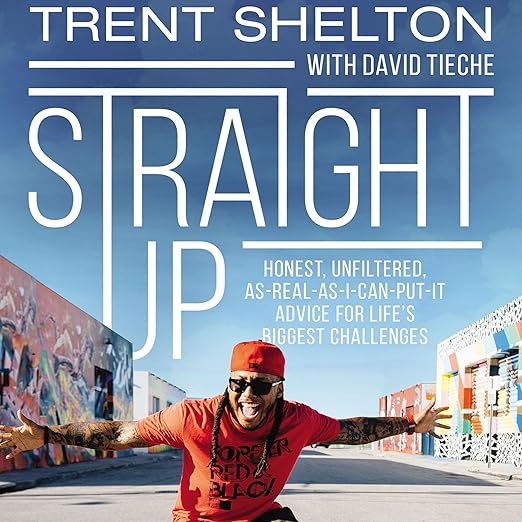
Quick Take
- Narrator: Trent Shelton reads his own book, which on a motivational speaker's direct address returns the material closer to its natural state than print ever managed.
- Subjects: Fear and depression, friendship and toxic relationships, forgiveness, past trauma, life after football.
- Tone: Direct, warm, deliberately plain.
- Bottom line: A strong fit for teens who hate being lectured, and easy enough to outgrow once you are through it.
Trent Shelton reads his own book here, and on an audiobook of direct advice that matters more than it usually would. Straight Up is written as one half of a conversation, addressed to a teenager having a bad year, and the entire register depends on believing that somebody means what is being said. A hired reader can perform sincerity convincingly. An author who has spent years saying these things out loud to rooms full of people is doing something different.
Where This One Lands
Self-narration shows up in the credits as author and narrator sharing one name, and it is the single most useful piece of production information on this page. Shelton is described as a bestselling author, a former NFL player and a motivational speaker, and the last of those three is the one that counts. The structure of the book, short chapters closing with questions put to the listener, is speech shaped for a page, and reading it back aloud returns it closer to its natural state.
Every visible response here awards five stars, and the counter above them reads one. The badge is wrong in two directions at once. Five signed responses cannot sit beneath a tally of a single vote, and an average of 4.9 cannot sit below every grade a reader can actually see. Whatever produced that figure was not the material on this page, so disregard the number and work from the five accounts underneath it instead. Thirteen and up is a wide band at that age, and the copy makes no attempt to narrow it further.
Zonderkidz is the publisher, and the description sets the audience at teens and young adults thirteen and up, with small group use named explicitly. That last phrase deserves attention, because it tells you the book was built to be discussed rather than merely consumed. The topics the copy lists run to relationships, friendships, fear and depression, and past trauma, which is a heavier slate than the motivational shelf usually carries for this age. Nothing in the copy promises resolution on any of them, and the honest reading of what is on offer is company rather than treatment.
Why Listen to Straight Up
Sandy Garrett's response supplies the structural detail the description leaves out: sixty-four separate pieces of content, each short enough to pick up whenever time allows. Across six hours and five minutes that averages under six minutes apiece. The same response lists what those pieces cover, among them finding success, being the real you, keeping a healthy relationship with social media, identifying toxic relationships, how to forgive, and getting through fear.
Interactive exercises are the one genuinely audio-specific detail here, and the listing handles them properly. The copy states that the exercises for putting Shelton's ideas into practice arrive as a companion PDF download alongside the recording. That is the correct solution for a book with worksheets built into it, and more than many publishers bother to arrange. Confirm your player gives you the attachment before assuming you have the whole product in hand.
Not one of the five responses describes what the recording sounds like, which on a book read by a professional speaker is a curious gap. The closest anyone comes is KATHERINE AITKENS, who writes that this is straight up and truthful as is his way, and calls it really good reading. That phrase might mean the narration or it might mean the text, and nothing here settles which. MJS, meanwhile, describes finding Shelton through a podcast and then reading the book, an audience arriving by voice and reviewing the page.
What Gives Us Pause
Sixty-four short chapters is a format with real consequences in both directions. It makes the book nearly impossible to lose your place in, which suits a listener who picks it up for ten minutes at a time, and it makes any individual chapter easy to shrug off, since none has room to build an argument. The description pairs each short chapter with questions, and in audio those questions arrive with no page to write on, which is exactly what the companion download exists to solve.
MJS's response is the most revealing thing on this listing and it stops mid-sentence. It describes eighteen months of scrolling past Shelton on a feed, not relating to the message, disliking the delivery, and admitting to prejudice about the tattoos, before landing on never ever judge a book by its cover. Then the account of what finally connected cuts off partway through. The trajectory it records, resistance turning into recognition, is the exact experience the book sets out to produce.
Teens who hate being talked down to are the audience this has to win, and the title is a promise pointed straight at them. Straight-up truths is how the copy puts it, with Shelton offering the missteps he made growing up rather than issuing rules from a podium. April HM calls him a truth teller and a family man. That is the pitch working as designed, and the plainness of the framing is what carries it. DAWN YOPP's response is terse to the point of bluntness, calling the book very knowledgeable and saying only that buying it was the right decision. That tells you little about the writing and plenty about who is reading it.
The Right Listener for Straight Up
Youth workers, teachers and small group leaders form the second audience, and the note about group use confirms the book was designed with them in mind. Not the right pick for someone who wants one sustained argument, or who already reads widely in this space, since sixty-four short pieces cover ground quickly rather than deeply. The same brevity that makes it accessible makes it straightforward to outgrow within a year or two. A group leader gets more from the format than a solo listener does, since sixty-four discussion prompts amount to a term of material and the companion document turns each one into something a room can work through together.
What this listing gets right is unusually clear for the shelf it sits on: a stated age band, a named setting, an acknowledged companion document, and an author doing the reading. What it gets wrong is a score that cannot be reconciled with anything written below it. Trent Shelton is the credited reader on a book built entirely out of straight talk, and that credit carries more weight here than any blurb attached to it.
Questions Listeners Ask
Does Trent Shelton narrate the Straight Up audiobook himself?
Yes. Author and narrator carry the same name on this listing. Shelton is described as a motivational speaker as well as a bestselling author and former NFL player, and the book is written as direct address, so hearing it from him puts the material nearer its original form than a printed page can.
Does the audiobook come with the companion PDF?
The description says the interactive exercises for applying Shelton's ideas arrive as a companion PDF download alongside the recording. It is worth confirming your player gives you the attachment, because those exercises are where the questions closing each short chapter finally get somewhere to be answered.
What age group is Straight Up written for?
Teens and young adults thirteen and up, according to the description, which also names small group settings as an intended use. Zonderkidz is the publisher. The topic list reaches fear and depression, toxic relationships and past trauma, so the age band reflects reading level rather than lightness of subject.