Quick Take
- Narration: Virtual Voice handles the interview-based material functionally, though the intimate first-person accounts lose considerable warmth in synthetic delivery.
- Themes: Female sexuality, squirting physiology, sexual shame and self-acceptance
- Mood: Curious and affirming, documentary in structure
- Verdict: An interesting premise undercut by limited scope; the interview format has real value but reviewers are split on whether the content justifies the runtime.
The tension at the center of this audiobook is one I recognized immediately when I read the reviews: one listener found it fascinating and transformative, another called it a glorified pamphlet. Both reactions are probably accurate, and they point to a content design problem that the 44-minute runtime makes unavoidable.
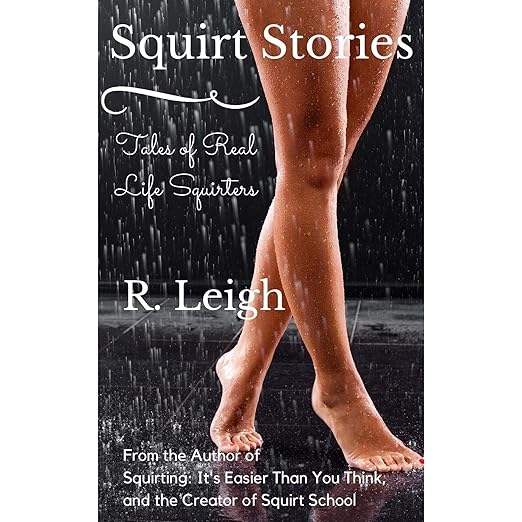
R. Leigh comes to this project with an established presence in the squirting education space, having previously authored Squirting: It’s Easier Than You Think and created what the synopsis describes as Squirt School. This compilation presents itself as the documentary companion to those how-to resources: where those books provide instruction, Squirt Stories provides testimony. The stated intent is not erotica but encouragement. The book wants women to embrace their sexuality through recognition in the experiences of others, which is a legitimate and genuinely useful design. The question is execution.
The Interview Format and What It Can Offer
The book’s structural hook is its primary asset: rather than presenting one author’s claims, it collects accounts from women across different backgrounds and places in the world. That diversity matters in a subject area where individual variation is significant. One reviewer notes having been with a partner who could achieve this consistently before pursuing the experience themselves, which is precisely the kind of social learning the compilation format is designed to enable. Hearing that other real women experience something, navigate it, and find it positive is a different kind of information than physiology charts or technique instructions.
The historical section on the documented history of squirting and the discussion of female sexuality are listed in the synopsis as structural components before the individual accounts. That academic scaffolding, brief as it must be in 44 minutes, provides useful context for listeners who approach the subject with skepticism about whether the phenomenon is real, exaggerated, or something else entirely. The answer to that question is scientifically contested enough that framing it carefully matters.
Where the Format Breaks Down
The 1.0 review is specific and worth taking seriously: five case studies across what amounts to about 40 pages of source material. For a compilation that advertises interviews with all types of women from all parts of the world, that is a thin sample. The reviewer’s word pamphlet is accurate in a structural sense. The ambition of the project does not match its execution depth, and at a price point that the reviewer found objectionable for the length, that gap becomes the dominant experience.
The Virtual Voice narration compounds this. Interview-based content in which individual women share personal sexual experiences is almost uniquely suited to human narration. The variance in voice, affect, rhythm, and delivery that different narrators can bring to different accounts is part of what makes the genre work. Synthetic narration collapses that variation into a single flat register, and what should feel like a collection of distinct voices becomes a single continuous stream. For a book explicitly designed to make women feel recognized in others’ experiences, this is a meaningful production choice against the content’s own stated goals.
The Erotic Incidental and the Educational Intent
The synopsis is careful to note that while the stories are not meant to be erotic, there is definitely some eroticism. That hedging is honest and probably necessary, but it also positions the book awkwardly between categories. Listeners seeking straight-forward educational content will find some arousal embedded; listeners seeking erotica will find a documentary framework around it. Whether that middle ground is a problem depends entirely on what the individual listener is looking for.
Who Should Listen and Who Should Skip
The best audience here is women who are curious about squirting, feel some uncertainty or embarrassment about it, and would benefit specifically from hearing that other women share the experience and find it positive. The testimonial format serves that purpose better than instruction would. Listeners who want comprehensive coverage, clinical detail, or a robust sample of accounts should expect the 44-minute runtime to feel short. Anyone sensitive to synthetic narration in intimate content should note the Virtual Voice production.
Frequently Asked Questions
Is the content in this audiobook medical or scientific in nature, or primarily anecdotal testimony?
It is primarily anecdotal, organized around interview accounts from real women. The synopsis mentions a historical overview and a discussion of female sexuality, but the core of the book is first-person testimony rather than clinical analysis. The author has medical-adjacent publications in the same subject area but this specific title positions itself as documentary rather than instructional.
How does this book relate to R. Leigh’s other works, like Squirting: It’s Easier Than You Think?
This is a companion volume rather than a standalone guide. The other title provides instruction; this one provides social proof and lived testimony. Listeners who want practical guidance would be better served by the instructional title, while those who want community recognition or the historical and social framing would find more value here.
The synopsis says the stories are not meant to be erotic but acknowledges some eroticism. Is this appropriate to listen to in mixed company or shared spaces?
The content is frank about sexual experience and deals with explicit subject matter, so headphones and a private setting would be appropriate. The framing is educational rather than overtly erotic, but the accounts themselves are candid enough to warrant privacy.
Is there a meaningful difference between listening to this and reading it, given the Virtual Voice narration?
This is a case where the print version likely serves the documentary-testimonial format better than the audio. The Virtual Voice narration flattens what should be distinct individual voices into a single register. Listeners who specifically prefer audio might find the experience tolerable but those who have the option of reading would likely find the text format more engaging for interview-based content.