Before You Press Play
- Performance: Virtual Voice handles Aidan J. Reid's short fiction with serviceable clarity but strips away the tonal irony that a human performance would have found in Eoin's teenage voice.
- What it covers: adolescent pressure, nuclear metaphor for coming-of-age crisis, dark humor under stress
- Feel: Fast-paced and darkly comic, with a gut-punch ending that earns its single-sitting length
- Our call: At under an hour, Sparky is a compact, well-constructed piece of science fiction short fiction that rewards the small time investment it asks for.
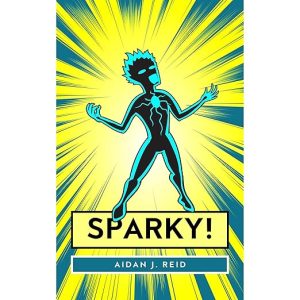
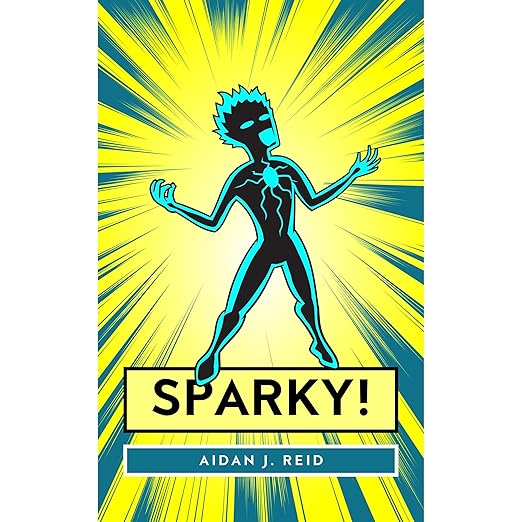
Eoin Matthews has a problem that most teenagers do not. Aidan J. Reid's Sparky, a science fiction short story available in this audiobook narrated by Virtual Voice and running under sixty minutes, opens with a premise both absurd and immediately resonant: Eoin might be on the verge of becoming a nuclear bomb. Reid uses that setup with the straight-faced absurdist logic that separates memorable genre short fiction from work that relies on its concept to do everything. Eoin's situation is extraordinary. His anxieties, his embarrassments, his exasperation with school and acne and the expectations of the people around him are entirely and painfully ordinary. That gap is where the story lives, and Reid exploits it with precision.
The story is a complete narrative in itself, a single short piece of approximately 9,500 words. It is not a preview or an excerpt from a longer work. Published by Aidan J. Reid, Sparky has attracted enthusiastic responses from readers drawn to the author's catalog across multiple genres, and this short story functions as a clean entry point for new readers as well as a satisfying addition for those already familiar with his voice.
An Ending One Reviewer Called Gutting
Reid's central conceit works because he never treats Eoin's nuclear potential as metaphor in a way that diminishes the actual stakes. The coming-of-age pressures that Eoin manages are real and felt, and the supernatural element does not reduce them to allegory. Instead it literalizes them: the breaking point that teenagers joke about, the sense that internal pressure is building toward something catastrophic, is here given a physical form. That literalization is what gives Sparky its tonal singularity. It is funny, but the humor comes from recognition rather than absurdism for its own sake.
Reviewer responses consistently register both the speed of the plotting and the weight of its landing. One reader noted that it was very fast-paced and that there was never a dull moment, while expressing genuine regret that it was not longer. Another described the ending as gutting, noting the story started with excitement before taking a dark turn. That combination of velocity and emotional impact is a specific achievement in short fiction. Reid does not slow down to make sure the listener notices the emotional turn coming; it arrives at the same speed as everything else, which is what makes it hit.
A Flat AI Narration Costs Tonal Complexity
The Virtual Voice narration is functional but flat in a way that costs the story some tonal complexity. Reid's writing has a darkly comic register that requires a reader to hold irony and genuine emotion simultaneously, and the AI narration defaults to a neutral delivery that does not make active choices about where those tones intersect. For a short story where voice is as important as plot, that is a real limitation. The story survives it because the writing is strong enough to carry its effects even without inflection, but a human narrator attuned to the particular quality of teenage self-awareness and suppressed panic would have served this text considerably better.
That said, the under-sixty-minute runtime makes Sparky an easy way to sample Reid's catalog without a major commitment. The investment is small and the story is complete in itself, with a beginning, middle, and an ending that earns its emotional force. For listeners who prefer short-form audio between longer commitments, this is exactly the kind of tightly constructed narrative that the format is well suited to support.
One Character, One Pressure Point, One Resolution
The story takes a tonal turn approximately two-thirds of the way through that shifts from dark comedy to something more genuinely stakes-laden. Listeners who have found Reid's setup delightfully absurd should be prepared for that pivot. It does not undermine the comic register so much as reveal what the comic register was containing. The ending delivers precisely the gut-punch that one reviewer described, and it does so without telegraphing its arrival. That surprise is a craft achievement, not an accident. Reid trusts the reader to feel the shift without being guided toward it, and that trust is part of what makes Sparky worth returning to after a first listen.
Given the story's length and its single-protagonist focus, listeners looking for world-building depth or extended character development will not find it here. Sparky operates in the mode of precisely calibrated short fiction: one character, one pressure point, one devastating resolution. That restraint is a craft choice, and it is the right one for this particular story. Trying to stretch it to novel length would have diluted exactly the compression that gives it power. The story knows what it is, and that self-knowledge is a form of confidence most debut-length short fiction lacks.
A Precision Instrument, Not an Ensemble Piece
Listeners who enjoy short-form science fiction in the tradition of writers like Kelly Link or the darker end of YA-adjacent material will find Reid's approach immediately appealing. This audiobook suits anyone who appreciates genre fiction that earns its emotional effects through character rather than through concept alone. It is also a practical entry point for listeners unfamiliar with Reid's other work who want to assess his sensibility before committing to a longer project.
Listeners who need longer narrative investments to feel satisfied, or who prefer science fiction with extensive world-building and ensemble casts, will find this story too concentrated for their purposes. Sparky is a precision instrument. Its power comes precisely from what it refuses to expand. For the right listener on the right afternoon, that precision is everything, and the under-sixty-minute runtime is not a limitation to overcome but the exact scope the story needs to land with full force.
Is the Sparky audiobook a complete story or a preview of a longer work?
It is a complete, standalone short story of approximately 9,500 words. The under-sixty-minute runtime is the full narrative, not an excerpt. It has a beginning, middle, and a definitive ending.
Does the Virtual Voice narration affect the enjoyment of this audiobook significantly?
It limits the tonal complexity of the story somewhat. Reid's dark comic register benefits from a reader who can hold irony and genuine emotion simultaneously, and the AI narration is more functional than expressive. The writing is strong enough to carry the story, but a human narrator would have elevated the experience.
Is this audiobook appropriate for teen listeners given the protagonist's age?
The story features a teenage protagonist navigating school, social pressures, and a science fiction crisis. The content is not explicit, but the ending is emotionally intense in a way that adult readers have described as gutting. It suits older teen readers and adults comfortable with dark-tinged YA-adjacent material.