Quick Take
- Narration: Virtual Voice AI narration, clear and competent for simple instructional content, though the absence of a human narrator flattens the practical demonstrations.
- Themes: natural pest deterrence through plant pairing, soil health and companion biology, sustainable small-space gardening
- Mood: Encouraging and practical, pitched at beginners with plenty to offer experienced gardeners
- Verdict: A genuinely useful, densely packed beginner companion planting guide that earns its high ratings, with the AI narration as the only material caveat.
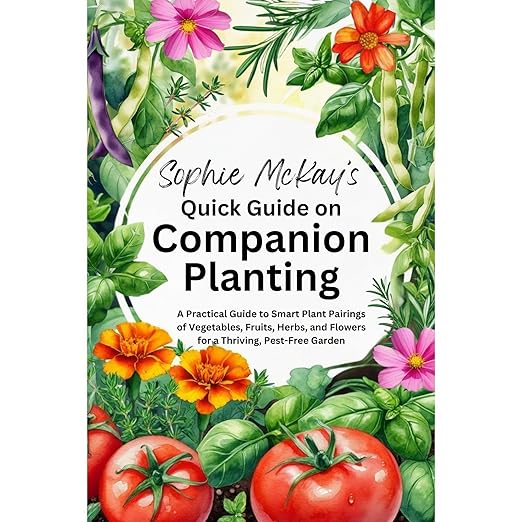
I want to flag something upfront: this audiobook is narrated by Virtual Voice, which means AI-generated narration rather than a human performance. That is not a disqualifying fact for an instructional gardening guide, but it is relevant to managing your expectations before you start. The content itself, Sophie McKay’s Quick Guide on Companion Planting, is a thorough, well-organized introduction to a gardening practice that genuinely rewards understanding, and the AI narration handles the informational density cleanly enough that the knowledge transfers.
I came to this one in spring, when I was trying to plan a raised bed with minimal chemical intervention. The core promise of companion planting, that plants can support each other in ways that reduce pest pressure, improve soil chemistry, and increase yields without the need for synthetic inputs, is not gardening lore. It is documented biology, and McKay presents it with clarity. At just under four hours, the guide is compact relative to its coverage, which means the pacing is brisk and the content is dense.
Our Take on Sophie McKay’s Quick Guide on Companion Planting
McKay covers a genuine range: plant pairings for different climates and garden sizes, soil-building techniques, water-saving strategies, organic pest control, allelopathy (the phenomenon where some plants actively suppress others), overcrowding pitfalls, and specific approaches for container gardens, raised beds, and small-space growing. One reviewer specifically appreciated the summary table at the end of the book as a quick-reference tool, useful confirmation that the structure supports practical use, not just passive listening.
The plant-pairing section is the heart of the guide, and it handles the classic combinations, marigolds and aphids, basil and flies, the Three Sisters planting method, alongside less-discussed pairings with enough explanation that the principles generalize. One reviewer, who had moved to a new area with significant natural pests, found exactly what they needed here: not just a list of combinations but an understanding of why they work, which enables adaptation to specific garden conditions.
Why Listen to Sophie McKay’s Quick Guide on Companion Planting
The guide’s strongest quality is what one longtime gardener identified: clear pairings, handy cheat sheets, and organic pest control tips. The fact that an experienced gardener found it practically useful, not just confirmatory of prior knowledge but actively improving their garden’s health and productivity, is a stronger endorsement than the beginner praise, because it suggests the density is real rather than illusory.
One reviewer noted that the book is written in such an approachable and encouraging way that even a gardening newcomer felt excited rather than overwhelmed. That tone is a deliberate craft choice and McKay sustains it throughout. Instructional writing that maintains warmth across technical content is harder than it looks, and the high rating count relative to the guide’s age suggests listeners are responding to it genuinely.
What to Watch For in Sophie McKay’s Quick Guide on Companion Planting
The Virtual Voice narration is smooth enough for clean informational content but cannot modulate for emphasis the way a human reader can, and it cannot bring warmth to the encouragement sections that McKay clearly intended to feel personal. For a guide where one reviewer described the author’s passion as palpable, the AI voice creates a gap between the text’s warmth and the audio’s neutrality.
The guide is also, as one reviewer honestly noted, a very beginner-oriented book. Experienced gardeners already using companion planting systematically will likely find the content confirmatory rather than revelatory, though the cheat sheets and summary tables provide practical utility as reference tools. The guide is optimized for people building a foundation, not people refining an advanced practice.
Who Should Listen to Sophie McKay’s Quick Guide on Companion Planting
Beginning gardeners who want a clear, warm, practical introduction to companion planting will find this exactly right. Those with some garden experience who want a structured reference they can return to seasonally will also get value from the cheat sheets and summary tables. Experienced gardeners looking for advanced companion planting theory or new research should seek out more specialized resources. Anyone strongly resistant to AI narration should know before purchasing.
Frequently Asked Questions
Is the Virtual Voice AI narration significantly disruptive to the listening experience for instructional content?
For straightforward informational content, Virtual Voice performs adequately, the text is delivered clearly and accurately. Where it falls short is in the warmth and emphasis that reviewer descriptions suggest the text itself carries. The knowledge transfers; the personality is muted.
Does this guide cover companion planting for specific climates, or is it general?
McKay includes plant pairings and guidance for different climates, garden sizes, and growing styles. The guide is not locked to a single climate zone, which makes it broadly useful for gardeners in different regions.
Is the summary table at the end of the book available in a companion PDF for the audiobook version?
The audiobook listing does not specify a PDF companion. In audio format, this content would be read aloud. Listeners who want a visual reference may benefit from also having the print or Kindle version alongside the audio.
How does this guide handle the concept of allelopathy, plants that actively suppress their neighbors?
McKay covers allelopathy and overcrowding pitfalls as specific sections within the guide. The treatment appears conceptual enough to be practically useful for garden planning, helping listeners understand which plant combinations to actively avoid.