Quick Take
- Narration: Michael Goodrick delivers the material cleanly and professionally, the narration is functional rather than memorable, which is appropriate for a workbook that is primarily a reference resource rather than a listening experience.
- Themes: Platform-specific social media strategy, business marketing fundamentals, practical implementation frameworks
- Mood: Structured and methodical, like a competent university course delivered at your own pace
- Verdict: A comprehensive and well-organized social media marketing reference, but the workbook format’s interactive elements, worksheets, videos, companion tools, are largely inaccessible in audio form, which limits the audiobook’s usefulness considerably.
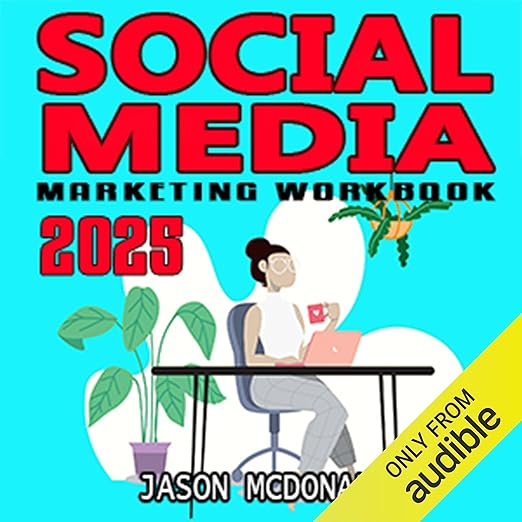
I want to be honest about something before I say anything else about this book. The synopsis itself contains a note from the publisher: Use this edition only if assigned in a college course. Otherwise, please search for the 2026 edition. That is a striking thing to encounter in a product listing for an audiobook, and it immediately raises the question of whether listening to the 2025 edition instead of the 2026 edition represents a meaningful gap. In a genre where specific platform advice dates quickly, it might.
With that caveat registered, Jason McDonald’s Social Media Marketing Workbook is among the more earnest and comprehensive entries in the crowded field of social media business guides. McDonald is a practitioner and instructor with a real teaching record at Stanford Continuing Studies, which gives the book a level of credibility that many titles in this space cannot claim. The curriculum behind this audiobook has been tested in front of actual students, and that experience shapes the way material is sequenced and explained.
What a Workbook Becomes Without Its Worksheets
The fundamental tension in this audiobook is the format mismatch between the book’s design and the audio medium. McDonald’s Workbook is built around companion worksheets, step-by-step videos, and a companion Marketing Almanac full of free tools. These are not optional supplements, they are integral to how the learning is supposed to work. The book explicitly directs you to download worksheets, watch videos, and access tools as you progress through each section. In audio form, all of these elements exist as references to things you are not doing while you listen.
This is a real limitation. The audiobook can tell you what to do; it cannot walk you through doing it. The reviewer who described finding the audio version restful because it let her rest her eyes while listening identified something genuine, there is value in absorbing the concepts in audio form before or while engaging with the print materials. But as a standalone audiobook experience, significant portions of the book’s value exist in the companion resources that audio listeners cannot access while driving or exercising.
Coverage and the Platform-by-Platform Structure
At nearly fifteen hours, this is a substantial listen. McDonald covers Facebook, LinkedIn, Instagram, YouTube, Twitter, Pinterest, and TikTok in sections that move through strategy, content, and implementation for each. The 2025 edition includes a new Marketing Basics chapter and continued TikTok analysis, which signals genuine updating rather than simple version-number incrementing. The LinkedIn and Facebook sections are particularly developed, reflecting McDonald’s background in B2B and continuing education contexts where these platforms dominate.
The structure is deliberately pedagogical, each platform gets a similar treatment so that listeners can build a comparative understanding of how strategy differs across contexts. This is more useful than books that go deep on one platform while treating others as afterthoughts. The Stanford curriculum influence shows in the way concepts build on one another rather than being presented as isolated tactics.
The Companion Resource Problem and the 2026 Question
McDonald makes his resources accessible and openly offers contact through his website, which is an unusual and genuinely useful commitment for a textbook author. The Marketing Almanac referenced throughout the book is a real, maintained resource, and the invitation to reach him directly adds a layer of accountability that most audiobook authors cannot match. Whether those resources remain fully current in the 2025 edition, given the existence of a 2026 version, is a question the publisher’s own note raises without fully answering.
For listeners who purchase this specifically as an audiobook to listen in the car or on a walk, the honest advice is to pair it with the print edition or to use it as pre-reading before engaging with the worksheets. The audio conveys the conceptual framework; the learning happens in the companion materials.
Who Should Listen and Who Should Skip
Listen if you have been assigned this in an educational context and want to supplement your reading with audio review. Listen if you want a solid structural understanding of how social media marketing works across platforms and are willing to do the worksheet and video work separately. Skip if you expect a self-contained audio experience that teaches you everything you need without supplemental materials, that is not what this format is designed to provide. Skip if you need the most current platform guidance and haven’t confirmed which edition reflects current conditions.
Frequently Asked Questions
The synopsis says to use the 2026 edition instead of this one. Why is the 2025 edition still listed?
Publishers often continue listing earlier editions on audiobook platforms even after new editions are available, particularly if the earlier edition was used in academic contexts. The note appears to be directing general consumers toward the more current version while noting the 2025 edition’s intended use for specific course assignments.
How much of the book’s value is inaccessible in audio form because of the worksheets and companion tools?
Meaningful portions. The worksheets, step-by-step videos, and Marketing Almanac tools are core to the workbook methodology, not peripheral enhancements. Listeners who use the audiobook alone will absorb the conceptual framework without the practice components. Pair this with the print edition if you want the full learning experience.
Is Jason McDonald’s Stanford credential relevant to the quality of the advice?
Yes, more than usual. McDonald’s teaching record means the material has been developed through actual classroom instruction and feedback from working practitioners. The sequencing and explanatory choices in the book reflect pedagogical experience that self-published social media guides often lack.
At almost fifteen hours, is this book suitable for listening at an accelerated speed?
The instructional nature of the content makes 1.25x to 1.5x speed reasonable. The narration is clear at normal pace, and compression is tolerable since the material is explanatory rather than emotionally nuanced. Sections that reference specific action steps may be worth replaying at normal speed.