Quick Take
- Narration: Adreena Winters narrates her own work, and the self-narration is not just appropriate but essential. Her identity as an experienced cuckoldress gives the material its entire authority.
- Themes: Cuckolding lifestyle, submissive masculinity, jealousy and emotional navigation
- Mood: Confident and intimate, practical but psychologically aware
- Verdict: A genuine insider’s guide with real emotional and practical value for its target audience, though one dissenting reviewer found the depth insufficient for the price.
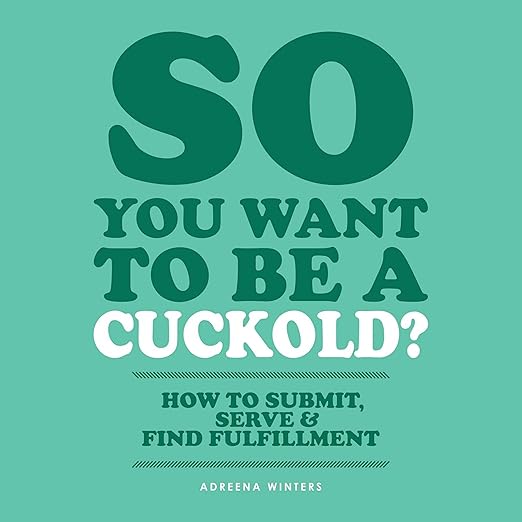
There is a particular kind of book that can only be written by someone actually inside the experience. Not because outsiders cannot understand it intellectually, but because the authority needed to walk someone through the emotional and psychological dimensions of a non-conventional relationship role has to come from lived practice rather than research. Adreena Winters’s guide to cuckolding is exactly that kind of book, and the fact that she narrates it herself is not just a production choice but a fundamental part of the content’s credibility.
I came to this one on a weekday afternoon, curious about what the format would do with a subject that sits at a complicated intersection of fantasy, relationship structure, emotional vulnerability, and identity. At one hour and fifteen minutes, it is brief. But the question for a book like this is not whether it is comprehensive, it is whether it is true to the experience it describes, and whether it gives newcomers enough scaffolding to engage with their own desires intelligently.
Adreena Winters as Both Author and Narrator
Winters describes herself in the synopsis as an experienced cuckoldress and industry leader, and her voice in the narration reflects a comfort with the subject that immediately separates this from amateur guides. The tone is wise rather than performative, measured rather than salacious. She is clearly aware that her audience is largely men who have been carrying this fantasy in silence for years, as one reviewer puts it, and who will likely arrive at this book already having done extensive mental rehearsal of a scenario they have never discussed with anyone. The book is designed to meet them there, and the narration does that work.
One reviewer describes a first reading experience: never having finished a book before this, then completing it in one sitting. What can I say about this book is the opening of that review, and the ellipsis is earned. The reviewer goes on to note that fantasies probably live rent free in your head for years, building elaborate mental architectures that you have never had a framework for. The book appears to provide that framework, which is the real function of a guide like this.
The Emotional Architecture of Submission Within Cuckolding
The synopsis outlines six focus areas, and the most interesting are Understanding Your Desires, Navigating Emotions, and Communicating and Setting Boundaries. These are not technique chapters; they are psychological navigation chapters. Cuckolding involves jealousy by design, which makes emotional literacy around jealousy a functional requirement rather than a bonus. The guide’s willingness to address this directly, including the trust and personal growth dimensions, is what separates it from guides that treat the subject purely as sexual choreography.
The framing around submission as fulfillment rather than degradation is important for an audience that often carries cultural conditioning that reads submission through a diminishment lens. Winters approaches it as a role that involves confidence, self-knowledge, and clarity of desire, which is a significantly different frame from the one most newcomers arrive with.
The One-Star Review and What It Tells Us
The 2.0 review describes the content as superficial fluff with slogans, and a no meaningful examination of how, what and the negatives. This is a fair critique in isolation, and the reviewer’s resentment at the price point is understandable if the expectation was a comprehensive psychological treatment of the cuckolding dynamic. At one hour and fifteen minutes, this book is an introduction to the emotional and relational framework of cuckolding, not a complete manual. Listeners who want the full spectrum of challenges, including the negatives, will find the scope too light. Those who need the foundation, the validation, and the first framework for having the conversation with a partner will find it valuable precisely because it is focused rather than exhaustive.
Who Should Listen and Who Should Skip
This is for men who fantasize about cuckolding and have never found a legitimate entry point for exploring whether and how to pursue it, for couples who are tentatively considering this dynamic and need a shared starting vocabulary, and for those who want to understand the submissive experience of cuckolding specifically from someone who occupies the dominant role in the dynamic. Listeners looking for a deep psychological analysis, a full accounting of the risks, or advanced guidance for those already in the lifestyle will need something more comprehensive.
Frequently Asked Questions
Does this guide address the female partner’s perspective on cuckolding, or is it focused entirely on the male submissive?
Winters writes from the cuckoldress perspective but frames the content around helping the male submissive understand and embrace his role. There is meaningful coverage of serving your partner and supporting the relationship, which gives some insight into the dynamic from both sides, but the primary audience is the aspiring cuckold rather than the cuckolding female partner.
How does Winters address the emotional challenges, specifically jealousy, that are inherent to cuckolding?
The guide includes a dedicated section on navigating emotions covering jealousy, trust, and personal growth. The framing treats emotional navigation as a learnable skill rather than an obstacle, and Winters’s experience in the lifestyle gives her specific and non-generic insight into how jealousy functions within this dynamic when the relationship is healthy.
Is this book appropriate for someone who has only fantasized about cuckolding but has no experience in open or non-monogamous relationships?
Yes, the book is explicitly designed for that audience. The synopsis frames it for beginners and anyone considering the journey from fantasy to reality, and the first section is specifically titled Understanding Your Desires, which addresses the starting point of not yet knowing how you feel about the fantasy as a lived reality.
One reviewer was disappointed by the depth. Is there a more comprehensive resource in this space for those wanting more than an introduction?
Winters herself is likely the most prominent active voice in the cuckolding lifestyle space, and her other work may provide more detailed treatment of specific aspects of the dynamic. For broader non-monogamy and open relationship frameworks that include cuckolding as a subset, books like The Ethical Slut by Dossie Easton and Janet Hardy or More Than Two by Franklin Veaux and Eve Rickert offer greater psychological and practical depth, though they are not cuckold-specific.