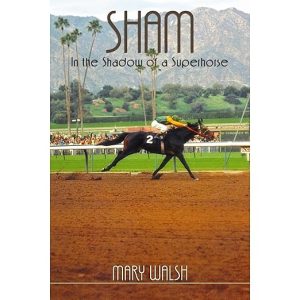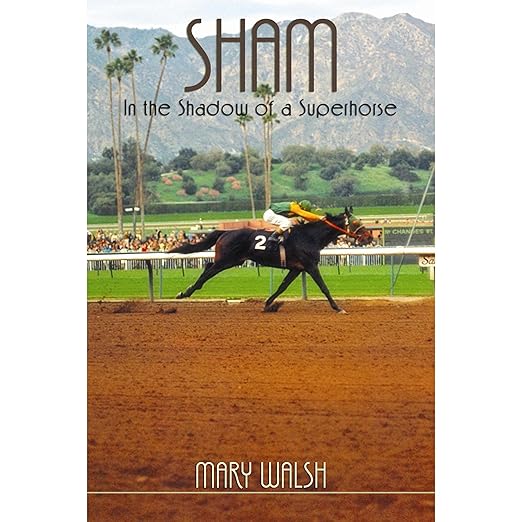
SHAM: In the Shadow of a Superhorse - Revised is an audiobook built around a genuine historical injustice of circumstance. The Magnificent Sham achieved what the Thoroughbred Times called the second-fastest time in Kentucky Derby history. He was, by any objective measure, an extraordinary racehorse. And he is remembered almost entirely as the horse that lost to Secretariat during the 1973 Triple Crown, defined by the shadow he could not escape rather than by his own extraordinary record. Mary Walsh wrote this biography to correct that imbalance, and the revised edition carries the additional weight of knowing the argument needed revisiting.
Born in 1970, Eclipsed by Secretariat
Walsh's premise is specific and she earns it: Sham was not merely a good horse who lost to a great one. He was a generational talent whose misfortune was temporal. Born in 1970, he ran directly into Secretariat, and that collision defined him in the public imagination in a way that his actual racing record does not support. The Thoroughbred Times review quoted in the book describes Walsh's project as a labor of love written by the would-be champion's number-one fan, and while that framing risks sentimentality, the book's reviewers consistently praise its research depth.
One reviewer noted the book was well written and well researched, loaded with a multitude of information on Sham, his owners, trainer, and the thinking that went into his race campaign. Another called it an honor long deserved, noting that writers of Thoroughbred biography must be poets as well as reporters because describing the motion of a horse requires a particular kind of language. Walsh reaches for that standard throughout, particularly in the sections covering the 1973 Triple Crown campaign itself, where the prose works to convey what it actually felt like to watch Sham run against the most dominant racehorse of the modern era.
Virtual Voice Undersells This Horse's Lyricism
The book is narrated using Virtual Voice synthesis rather than a human performer, and listeners should calibrate their expectations accordingly. Virtual Voice technology has improved substantially in recent years, but it remains distinct from human narration in its handling of emotional inflection and the rhythmic variation of literary prose. For a biography that depends on lyrical language to convey what it felt like to witness Sham run, the absence of a skilled human narrator is a meaningful limitation. The audiobook works best for listeners primarily interested in the historical and biographical content rather than those who depend on performed prose for their emotional engagement with a book.
The biographical detail around the 1973 Triple Crown season is extensive, and Walsh situates Sham against a kaleidoscopic backdrop of that cultural moment: Vietnam-era tension, protest movements, space travel, and a rising tide of feminism. Secretariat became a national icon during that unsettled period, which Walsh argues made Sham's eclipse more complete than it would have been in a quieter time. That contextual framing, placing a horse race within its full historical moment, is what distinguishes this from a narrower sports biography and what makes the book resonate beyond dedicated Thoroughbred racing fans.
Under Eight Hours for a Near-Fatal Season
The book's emotional center is the 1973 Triple Crown campaign and its aftermath, during which challenging Secretariat not only cost Sham his shot at fame but, according to the synopsis, almost ended his life. Walsh handles this with evident care for her subject. A reviewer noted coming close to a five-star rating before pausing on one element, which suggests the book has minor structural or editorial unevenness in at least one section. The revised edition is noted in the title without detailed description of what changed between editions, so listeners who encountered an earlier version may want to check whether the revisions are substantive additions or editorial refinements.
At just under eight hours, this is a focused biography that does not overstay its welcome. It covers Sham's full life and career with the depth the subject deserves while maintaining the narrative drive of a story that carries genuine stakes even when you already know the outcome of the 1973 races. The cultural backdrop Walsh provides around the period gives even listeners unfamiliar with Secretariat's legacy enough context to feel the weight of what Sham was running against.
Seabiscuit and Secretariat Fans Will Recognize This
Thoroughbred racing enthusiasts, especially those with a long memory for the 1973 season, will find this exactly the biography Sham deserved. Listeners who followed the Secretariat story through other accounts, or who were moved by Laura Hillenbrand's work on Seabiscuit, will recognize the quality of deep immersion in a single animal's life. Those who prefer human narration over Virtual Voice synthesis should note the production choice upfront, as it affects the listening experience considerably for a book that reaches for lyrical prose in its best passages.
Sports biography readers who want cultural and historical context woven into their subject's life story will find Walsh's approach to the 1973 moment genuinely illuminating. This is not a casual introduction to horse racing history. It is a serious corrective biography written with affection and serious research, and it rewards listeners who arrive with at least a passing familiarity with Secretariat's legacy and what it meant to race against him in that specific moment in American sporting history.
Questions Listeners Ask
Is this audiobook narrated by a human voice or a synthesized narrator?
This audiobook uses Virtual Voice synthesis rather than human narration. The content is detailed and well-researched, but listeners who strongly prefer human narration for biographical material should factor that into their decision before purchasing.
What does the 'Revised' in the title mean for this audiobook edition?
The revised designation appears in the title but detailed notes on what changed between editions are not provided anywhere on the current listing. Listeners familiar with an earlier print or audio version should check the publisher's notes to understand the scope of revisions made.
Does this audiobook cover only the 1973 Triple Crown, or Sham's full life?
Walsh covers Sham's full biography, from his bloodlines and early career through the 1973 campaign and its aftermath. The Triple Crown season is the emotional and narrative centerpiece, but the book situates it within the complete arc of the horse's life.