Quick Take
- Narration: Ann Sprinkle delivers a sensitive, grounded performance that honors the emotional weight of the subject without being heavy-handed.
- Themes: Grief and sexual reawakening, widowhood and dating again, solo sexuality as a path back to intimacy
- Mood: Tender and honest, neither clinical nor saccharine, the rare audiobook that holds grief and desire in the same space without flinching
- Verdict: Joan Price has written something genuinely needed here, and the combination of her personal story with diverse community voices and therapist guidance makes this one of the most emotionally complete resources on a subject most books refuse to touch.
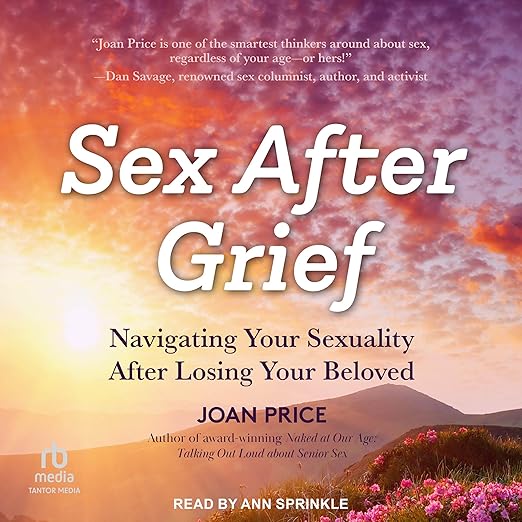
I started listening to Sex After Grief on a quiet Wednesday evening, initially because the title intrigued me from a clinical-literary angle. Thirty minutes in, I had stopped thinking analytically and started just listening. Joan Price has written something that requires that of you. The subject, sexuality as part of grief recovery, is so rarely treated with this combination of personal candor and practical care that the audiobook occupies almost solitary territory.
Price lost her husband Robert Rice in 2008 to cancer. She describes herself as a widow and the country’s leading advocate for senior sexuality. Both of those biographical facts are load-bearing in this book. The authority she brings to the subject is not academic, it is the authority of someone who has lived the grief process, stumbled back toward sexual selfhood, and done extensive field research among others doing the same.
The Stories That Hold the Framework Together
Sex After Grief is structured around Price’s own experience but gains its real texture from the many personal accounts she gathers from people across genders and orientations. The diversity of those stories is the book’s moral center. Some people returned to sexuality quickly after loss. Some waited years. Some stepped back from it indefinitely. Price is clear that no path is wrong. That non-judgmental plurality of experience is unusual in self-help literature, where there is often a prescribed sequence to things. Here, the range is the point: grief does not follow a schedule and neither does desire.
Ann Sprinkle narrates with appropriate care. This is not a performance that calls attention to itself, which is exactly right for material this intimate. The reviewer who called the book “warm and loving” was describing the written voice, but Sprinkle honors that tone consistently. For a three-hour-and-fifty-two-minute listen, the narration sustains engagement without artificial brightness or therapeutic-distance affect.
What the Expert Voices Add
Price supplements her personal narrative and community stories with advice from therapists, grief counselors, and sex coaches. That triangulation gives the book structure without making it feel like a clinical reference. The practical sections on solo sexuality, dating again after loss, and the physical reality of getting sexual with a new partner are organized as the synopsis describes: guidelines rather than prescriptions. The self-help takeaways at the end of each section are usable without being reductive.
The 4.4 rating across 118 reviews is meaningful sample size for this kind of specialized title. The reviewer who described reading it twice to a widowed friend, and the person who wrote after seven years of grief-related isolation, are the most eloquent endorsements. Price is reaching people who have genuinely been waiting for this conversation to be had in public.
The First Book in a Gap That Should Not Exist
Price notes that Sex After Grief is the first book to treat sex and grief together, and that distinction is worth naming. The absence of this conversation in bereavement literature is a real gap. Grief counseling rarely addresses sexuality; sex therapy rarely begins from a place of profound loss. Price’s contribution is partly in filling that gap and partly in naming the fact that the gap exists in the first place. The book is a kind of argument by existence.
Who Should Listen / Who Should Skip
Anyone who has lost a partner and felt confused or ashamed about what their body wanted afterward will find direct and compassionate company in this audiobook. It is also genuinely useful for therapists and counselors whose clients are navigating this territory. People looking for explicit content or lifestyle instruction will find this is principally about grief, loss, and emotional recovery, with sexuality as a window into that process rather than its primary subject.
Frequently Asked Questions
Is Sex After Grief written specifically for older or senior adults, or is it relevant at any age?
Price is known as a senior sex advocate and writes from the experience of widowhood later in life, but the psychological content, shame, grief, desire, dating after loss, applies across adult ages. The community stories she includes span a wide age range and include various genders and orientations.
Does the book include stories from people of different genders and orientations, or is it focused on heterosexual women?
Price explicitly includes a variety of people’s personal stories representing all genders and orientations. This diversity is one of the book’s stated structural values, and reviewers note the non-judgmental, inclusive approach as a standout feature.
How practical is the advice in Sex After Grief, and does it require other therapeutic support alongside it?
Price provides self-help takeaways after sections and practical guidelines for areas like solo sexuality and dating again. She also draws on therapist and grief counselor perspectives throughout. The book is designed to be useful on its own but is not positioned as a substitute for therapy in complex grief situations.
Is the audiobook appropriate to listen to during active grief, or better suited to a later stage of recovery?
Price acknowledges that timing varies enormously, some people need this conversation early, others years later. The structure accommodates both by covering initial grief processing as well as more advanced questions about dating and sexual reintegration. A listener at any stage of the process will find relevant sections.