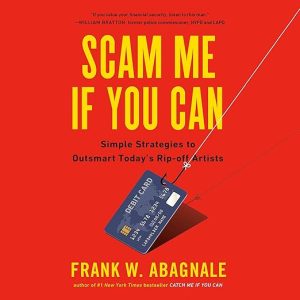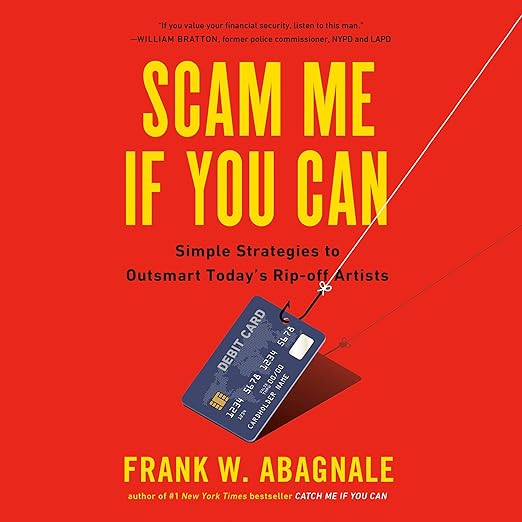
Frank Abagnale's reputation as a fraud expert is built on a foundation that has been contested in recent years. The accuracy of the exploits described in Catch Me If You Can, his earlier book, has been disputed by journalists who found significant gaps between the memoir account and verifiable record. That context is worth holding alongside this audiobook, Scam Me If You Can, narrated by Jason Culp. Because whatever the accuracy of Abagnale's biography, the consumer fraud and cybersecurity advice in this book is evaluated on its practical merits. On those merits, reviewer EricRod called it both comprehensive and accessible, the best of three cybercrime books he had read, with practical tips he took notes on for himself and his family. The content stands independent of the biographical framing.
The book's organizing principle is Abagnale's claim that he knows how scammers think because he thinks like one. Whether or not that framing is historically accurate, the psychological model it produces is useful. Scam Me If You Can proceeds through the major fraud vectors that affect ordinary consumers: phone scams, identity theft, credit card fraud, social media exposure, ATM skimming, and public WiFi vulnerabilities. Each section follows the same structure: how the scam works from the perpetrator's perspective, why people fall for it, and the specific, counterintuitive steps that reduce vulnerability. Culp's narration suits this didactic structure. He reads the tips lists with the clear, paced delivery of someone who wants the information to land rather than to impress.
Narrower Debit Card Rules Than Most Guidance Gives
The counterintuitive element is where the book earns its value over a basic security checklist. The section on debit cards, where Abagnale argues for a significantly narrower set of acceptable use conditions than most consumer guidance recommends, is the kind of specific, revisable recommendation that distinguishes practical advice from general caution. Similarly, the social media photograph guidance and the airport WiFi conditions section offer precision that generic security awareness training never provides.
Reviewer Alli R noted that some parts were obvious but remained good reminders, and also flagged the need for an updated version specifically to address AI scams. That last point is important for listeners in 2025 and beyond: the book was published before large-scale AI voice cloning and deepfake fraud became mainstream consumer threats. The psychological foundations of the advice remain valid, but some specific technical guidance predates the current scam landscape. Abagnale's framework for how to think about fraud remains useful. Specific technical details around phone security and digital verification should be cross-referenced with more recent guidance.
Culp's Modular Chapters Suit a Household Listen
At 9 hours and 11 minutes, this is a substantial audio commitment for a consumer protection book, but the structure makes it modular. Each fraud vector is largely self-contained, and the chapter organization means a listener who already feels confident about ATM security can move through that section quickly while spending more time on the digital fraud and phone scam chapters where the threat landscape has evolved most rapidly. Culp's pacing makes re-listening to specific sections practical, since the didactic style means the key information is stated clearly and retrievably rather than buried in narrative.
The book also works as a household listen. The sections on elder fraud, which describe how phone scammers specifically target older adults and what family members can do about it, are useful for listeners who want to share the guidance with relatives rather than just apply it to themselves. Culp's register is non-condescending throughout, which matters for material that could easily tip into making the listener feel foolish for having been unaware of the risks.
The Identity Theft Chapter's Most Surprising Reveal
The chapter on identity theft, specifically the section on what information is actually required to steal a credit identity versus what most people assume is the key data, is the most surprising and practically valuable part of the book. Abagnale's argument that the information most people think they are protecting is not the information that enables fraud is counterintuitive enough to require a second pass, and Culp's delivery is clear enough that the logic is followable in a single listen.
The section on phone fraud psychology is also worth particular attention. Abagnale describes the escalating commitment techniques that phone scammers use: getting small yeses before asking for the larger compliance, building urgency through manufactured authority. He describes these mechanisms with enough specificity that listeners who encounter them in practice should be able to recognize the pattern in real time. That pattern recognition is more durable than any specific technical advice, because the psychological mechanisms persist even when the specific scam format changes.
Better as Psychology Than as a Technical Manual
This works best for listeners who are aware they need to improve their personal security posture but want a narrative framework rather than a technical manual. Reviewer Safa described it as teaching you things you have never heard before, and for listeners who have not previously engaged with fraud prevention literature, the book delivers significant new information across most of its chapters. More technically sophisticated listeners will find some sections familiar but will still find value in Abagnale's psychological framing of fraud as a social engineering problem rather than a purely technical one. The pre-AI-scam publication date means anyone specifically researching voice-cloning fraud or AI-assisted phishing should supplement this audiobook with more recent sources. As a foundation for thinking about fraud psychology and consumer protection, Culp's performance of Abagnale's framework remains one of the more practically useful options available in the format.
Good to Know
How does Jason Culp's narration handle the tips-and-tactics sections compared to the more narrative fraud-psychology passages in the audiobook?
Culp shifts register slightly between the narrative and didactic sections. The storytelling passages are read with a slightly looser pace, and the specific tips lists are delivered more deliberately with the kind of clear enunciation that aids retention. The overall effect is a consistent, professional delivery that serves the informational content well.
Should the disputed accuracy of Abagnale's earlier memoir Catch Me If You Can affect how listeners assess the advice in this audiobook?
Listeners should be aware of the context, but the fraud-prevention advice in Scam Me If You Can is evaluated on its practical merits rather than biographical claims. Reviewers with independent cybersecurity backgrounds found the content accurate and useful. The specific fraud mechanisms described have been independently verified as real consumer threats regardless of whether Abagnale personally exploited them.