Quick Take
- Narration: Gina Daniels brings a focused, no-nonsense delivery suited to the evidence-heavy material, she handles the scientific terminology without stumbling and maintains good pacing through the denser physiology sections.
- Themes: Female physiology and athletic performance, hormonal cycles and nutrition timing, perimenopause and training
- Mood: Authoritative and empowering, research-backed
- Verdict: Stacy Sims’s core ROAR content is genuinely landmark for active women, but this listing bundles three separate UK print books in the synopsis, only one of which is by Sims, and the audiobook is ROAR alone.
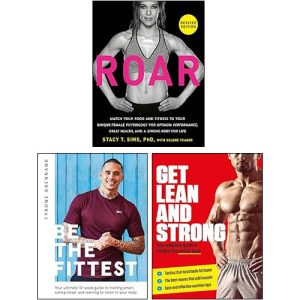
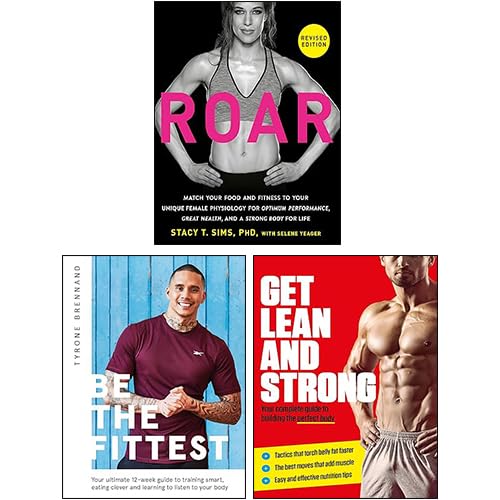
I want to be straightforward about something unusual with this listing before getting into the book itself. The synopsis here describes a three-book UK bundle, Stacy Sims’s ROAR Revised Edition alongside two unrelated fitness titles by different authors. The audiobook under review is, in practice, Stacy Sims’s ROAR narrated by Gina Daniels. The other titles in that print bundle are an artifact of how this listing was catalogued. I am reviewing what the audiobook actually is: Sims’s revised science-based guide to female physiology and athletic performance.
I first encountered ROAR in its original edition through a recommendation from a running coach who was frustrated that most exercise physiology research had been conducted on men. That complaint is the entire premise of Sims’s work, and the revised edition expands it with updated research that the original could not have included. The core argument remains: that women are not small men, that hormonal cycles fundamentally change how female bodies respond to training, nutrition, and hydration, and that athletic programming built on male-subject research is not just suboptimal for women but actively wrong in several respects.
The Research That Changes the Training Conversation
Sims does not traffic in vague empowerment language. The specific mechanisms she covers, why carbohydrate timing around the luteal phase matters differently than in the follicular phase, how estrogen affects protein utilization, why female athletes often do better with different hydration strategies than their male training partners, are grounded in exercise physiology research that was, until relatively recently, not being done at all. This revised edition incorporates more recent data on perimenopause and menopause, which were underrepresented in the first edition. That addition significantly extends the book’s useful audience. A listener in her late 40s training for her first marathon will find material here that simply did not exist in accessible form a decade ago.
Gina Daniels and the Demands of Scientific Narration
Exercise physiology is a demanding genre to narrate. The vocabulary is specific, cortisol curves, glycogen depletion, thermoregulatory response, and mispronouncing or flattening any of it erodes listener trust in the material. Daniels handles the technical language cleanly and maintains a pace that lets the science land without feeling rushed. She is not a performance narrator in the theatrical sense, but ROAR does not need performance; it needs clarity and authority, and Daniels provides both. The goal-specific sections, which shift into more practical prescription mode, benefit from her direct delivery.
What Audio Delivers and What It Loses
One honest limitation: the goal-specific meal plans and recipes that Sims includes do not fully translate to audio. You can absorb the nutritional principles, the emphasis on protein timing, the carbohydrate periodization framework, the hydration guidance, but following a specific recipe while listening is impractical. This is less a criticism of the audiobook than an acknowledgment that the print companion adds real value for listeners who want to implement the meal planning dimension. The science and training guidance translate cleanly; the recipe sections are harder to use in audio form.
Who Should Listen, Who Should Skip
Active women at any fitness level who want to understand why their bodies respond differently to training at different points in their cycle will find this genuinely useful. Coaches working with female athletes should treat it as required reading. Listeners looking for a general wellness book without interest in the underlying physiology may find the scientific depth more than they need. And anyone who encounters this listing while searching for the Tyrone Brennan or Get Lean and Strong titles, the other books in the print bundle described in the synopsis, should know those are separate publications entirely and not present in this audiobook.
Frequently Asked Questions
Does the revised edition cover menopause and perimenopause, or is it focused on younger athletes?
The revised edition significantly expands coverage of perimenopause and menopause compared to the original. Sims addresses how hormonal shifts during these life stages change training response, recovery needs, and nutrition requirements, making the revised edition substantially more useful for women in their 40s and 50s.
Is this audiobook useful for recreational athletes, or is it aimed at competitive performance athletes?
Both, though the original research context is elite and competitive athletics. Sims consistently translates the principles for recreational use, and the underlying physiology applies regardless of performance level. A woman training for her first half marathon will find the nutritional timing and recovery guidance as applicable as a competitive triathlete would.
The synopsis mentions a three-book bundle. Is this audiobook actually three separate books?
No. The synopsis reflects a UK print bundle product listing that was apparently used as the basis for this audiobook’s metadata. The audiobook is Stacy Sims’s ROAR Revised Edition only, narrated by Gina Daniels. The other titles in the print bundle are not included.
How practical are the meal plans and nutrition recommendations in audio format?
The nutritional principles, timing frameworks, and hydration guidance work well in audio. The specific recipes and meal plans are harder to use while listening, a print or ebook companion is recommended to actually cook from them. The science and training protocol sections are the most audio-friendly parts of the book.