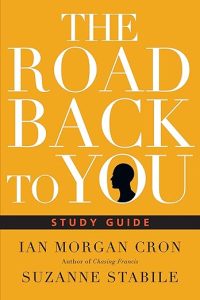
I should be clear about what Road Back to You in this audio format actually is. This is the study guide companion to Cron and Stabile's Enneagram resource of the same name, not the full narrative treatment of the Enneagram that many listeners may be expecting. At nine hours and seventeen minutes it runs long for a study guide, but it is structured around five sessions of discussion questions, reflections from individuals of each type, new material on triads, and the SNAP growth tool. It is meant to be used alongside the main book, paused and returned to, not consumed in a single sitting.
The Enneagram is a personality framework built around nine interconnected types, each defined not by what a person does but by the motivation behind what they do. This is the key distinction Cron makes that gives the Enneagram an analytical edge over typologies like Myers-Briggs or StrengthsFinder: it locates character in the why rather than the what. One reviewer puts it plainly, noting that this book focuses not on what you would do but on the motivations behind your choices, your strengths and weaknesses, where the human psyche lives on a normal day versus when stressed. That framing is accurate and explains why the material tends to produce recognition in readers even when they know themselves reasonably well.
First, the Big Picture
Cron narrates his own material with a pastoral warmth that is entirely appropriate for content that is essentially asking you to be honest about your own patterns and failures. He does not read like a professional audiobook narrator, which in this case is an asset. The conversational tone matches the discussion-guide format, and the pauses he leaves around the heavier reflection questions feel intentional rather than awkward. Listeners who want a polished performance will find this rougher around the edges than a produced audiobook, but the roughness is authentic to the material's purpose.
The new material on triads, groupings of three types that share common emotional orientations, is the most analytically interesting addition beyond the main book. Cron explains why certain types cluster in their stress and growth responses, which provides a structural framework that the main book gestures toward but this companion examines more directly. For readers who have found their type and want to understand it in relation to neighboring types, this section is genuinely useful.
Three reviewers mention using this material in group or friend contexts. Groups of women in their fifties are using it to reflect on patterns accumulated over decades of caregiving. Small groups at churches and organizations are working through the sessions together. This collective use reflects something true about the Enneagram that the Road Back to You approach cultivates: the framework is more useful when shared, because other people can often identify your type's patterns more clearly than you can.
Listening rather than reading the study guide has specific advantages for this use case. A group can play a session aloud and pause it for discussion at the question breaks, which the audio format enables more naturally than a text guide would. Cron's narration of the reflections from individuals of each type adds the specificity of human voice to what would otherwise be abstract descriptions.
What to Watch For in Road Back to You
The study guide is designed to be used after identifying your Enneagram type. Listeners who have not yet determined their type, or who are encountering the Enneagram for the first time through this companion rather than the main book, will find the material harder to apply. One reviewer specifically recommends reading the main Road Back to You first, and the structure of the companion assumes that recommendation has been followed.
The Enneagram also remains a contested framework. Unlike personality assessments backed by decades of clinical research, its origins are in oral spiritual tradition rather than peer-reviewed psychology. Listeners who want empirical validation for personality typing will find the Enneagram philosophically interesting but methodologically frustrating. This companion does not address that tension.
Is This One for You?
People who have already engaged with the Road Back to You main book and want a structured way to go deeper into their type and its implications for growth. Small groups working through personality and spiritual development together. Listeners curious about the Enneagram's more advanced concepts like triads and integration lines. Anyone seeking a standalone introduction to the Enneagram should begin with the main book first and return to this companion once they know where they sit on the system.
Key Details
- Narration: Ian Morgan Cron narrates his own study guide, and his pastoral warmth translates well to audio, though listeners seeking a formal audiobook performance will find this conversational and discussion-oriented.
- Themes: Self-knowledge through the Enneagram, motivation over behavior, growth and stress patterns
- Mood: Reflective and community-oriented, designed for pause and return rather than linear completion
- Verdict: A practical companion for existing Road Back to You readers, best used alongside the main book rather than as a standalone listen.
Good to Know
Is this the full Road Back to You audiobook or the study guide companion?
This is the study guide companion, not the full narrative book. It is structured around discussion questions, type reflections, and the SNAP growth tool, and is designed to be used alongside the main Road Back to You text rather than as a standalone listen.
Do I need to know my Enneagram type before listening to this guide?
Yes. The companion assumes you have already read or listened to the main book and have identified your type. Listeners who come to this without that foundation will find the material less applicable.
Can this audio guide be used in a group setting?
It is explicitly designed for group use. The five-session structure, discussion questions, and reflection prompts are all suited to small group or friend-group contexts. Several reviewers confirm using it this way.
Is Ian Morgan Cron's narration of his own material as strong as a professional audiobook narrator would be?
Different, not weaker. Cron's pastoral, conversational delivery suits the study guide format. Listeners expecting a polished audiobook performance will find it rougher, but the authenticity of an author narrating reflective personal-growth material has its own value.