The Short Version
- Narrator: Amanda Dolan works without a supporting cast, so every new Silver name has to stay distinguishable across twelve and a half hours of court intrigue.
- Subjects: Class division written as biology, concealed power, betrothal used as statecraft, rebellion from inside the palace
- Tone: Fast, cold and openly manipulative
- Bottom line: A strong genre engine on thin worldbuilding, worth twelve and a half hours if momentum matters to you more than texture.
Blood decides everything in the world Victoria Aveyard built, and the Red Queen audiobook gives you twelve hours and thirty-nine minutes inside the system. Reds do the serving and the dying. Silvers rule, equipped with abilities the description calls superhuman. Mare Barrow steals to eat in a poor rural village until a twist of fate throws her in front of the Silver court, where she discovers an ability of her own, gets handed a false identity as a lost Silver princess, and finds herself betrothed to one of the king's sons while quietly feeding a Red rebellion called the Scarlet Guard. HarperCollins released the recording in February 2015 with Amanda Dolan credited as the reader.
Mare Alone Carries a Thin Two-Tier World
Comparisons to George R.R. Martin sit right there in the description, setting up an expectation the novel has no intention of meeting. What arrives instead is a first-person survival story with a court plot bolted onto it, moving fast, holding its reveals close, and building toward a betrayal the copy openly promises in advance. A four-star posted on 23 May 2018 pins the trade-off precisely: descriptive, with advanced plot development but little character development, inside a segregated society whose corruption is drawn in broad strokes. That reader liked it anyway. So did I, on those same terms.
Mare carries the entire load. Everything the plot does happens to her across a few weeks, and Aveyard keeps the voice tight enough that the implausibility stops registering somewhere around the third chapter, which is the trick a debut of this kind either pulls off or dies on. Where the book strains is economics. A society running on this arrangement for generations would have more texture than the clean two-tier machine the story needs it to be, and of the power, intrigue and betrayal the copy promises, it is the third that gets the real craftsmanship.
Present Tense Keeps Dolan Inside One Head
Twelve hours and thirty-nine minutes is a reasonable commitment for a first volume, and the shape helps: short chapters, reveals spaced at regular intervals, and a present-tense narration that keeps a listener inside one head at all times. That last feature sets the real demand on this recording. Mare speaks in the immediate present, so every shift from private panic to a room full of nobles has to be audible without the white space and section breaks a printed page uses to signal it.
The genre furniture is unapologetic, and it is part of the pleasure. A court full of princes and nobles, a false identity that has to hold up in front of people who would kill her for it, a rebellion recruiting in the dark, and superhuman ability treated as an instrument of state. A five-star posted on 20 February 2015 filed the whole thing as X-Men meeting Hunger Games and meant it warmly, which is fair shorthand. The class allegory operates at the volume the book pitches it, which is loud.
One thing to settle before starting: the extra material the description advertises is not in this file. Broken Throne, the companion collection with its maps, flags, bonus scenes and journal entries, is a separate volume, and Realm Breaker is a separate series with a separate premise. The description bundles all three into one block of promotional text, which is a reasonable thing for a publisher to do and a confusing thing for a buyer to read. What you get here is the first novel, complete, and nothing beyond it.
Japan's Five-Star Praises a Well-Packed Parcel
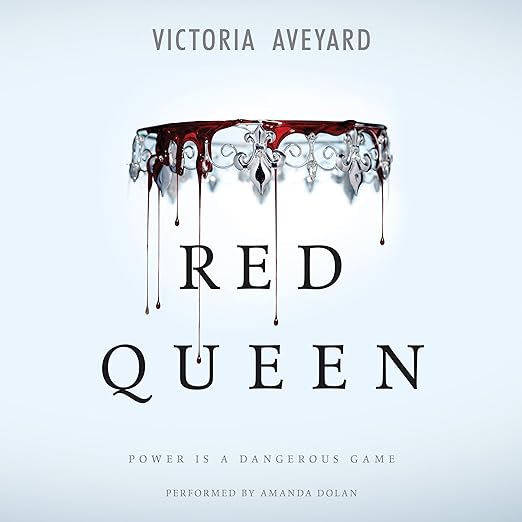
Something stranger than the book is going on in the comment column. Five written responses sit beneath a 4.4 badge assembled from thirty-six ratings, and they were filed from four countries: the United States, Germany, Japan and Mexico. Two are not in English. A five-star posted on 21 March 2021 from Mexico is a Spanish-language plot summary recommending the novel to first-time readers of the genre, and a five-star posted on 26 February 2015 from Germany spends most of its length on the cover design and on the symbols printed inside the jacket flap. Useful information, none of it about a recording.
One entry is not about the book at all. A five-star posted on 20 January 2019 from Japan says only that the buyer loves it, with thanks, under a headline announcing that it arrived in super good condition. That is a note about a delivered parcel, and it pulls the same weight in the average as the two substantive responses. Anybody who reads that 4.4 as a judgment on this edition is working from a figure assembled out of at least three different products, one of which is a cardboard box.
Age fit is the other caution. The record files this under teen and young adult while tagging it Literature and Fiction, and the content sits at the older end of that band. Death is a live threat from the opening chapters, the central romance is an instrument of state rather than a courtship, and the class cruelty is drawn with very little cushioning. Nothing is explicit, and no scene goes further than the genre's norm. The tone is simply colder than middle-grade fantasy, so twelve years old is early for it.
Twelve Hours in One Unbroken Perspective
Listeners arriving from dystopian YA rather than from epic fantasy will get exactly what they came for: propulsion, a protagonist who is never safe, a class allegory stated plainly, and a runtime that does not overstay its material. It suits a listening habit built from short sessions, since the chapters are brief and the reveals are spaced rather than hoarded for a final act. It also makes a decent bridge title for a teenager who has finished the obvious dystopias and is not yet ready for eight-hundred-page epic fantasy with a cast list in the front matter.
Adults hoping the Martin comparison signals Martin-scale politics should adjust downward before starting, and so should anyone who needs characters to change in ways the plot does not require. Readers who bounce off romance built on divided loyalty will find this one central rather than decorative. Sample the first ten minutes and decide whether the present-tense voice suits you, because across twelve hours and thirty-nine minutes it is the one element you cannot get away from.
Questions Listeners Ask
Does the Red Queen audiobook work for someone who has never read YA fantasy?
Yes, and possibly better than for a seasoned epic-fantasy reader. The world explains itself as it goes, the vocabulary stays small, and the class system is stated outright rather than implied. The Game of Thrones line in the description is a marketing frame, not a warning that you need prior reading.
What age group is this audiobook actually pitched at?
The filing is teen and young adult, and that fits the older half of the band. Death is an ongoing threat, the betrothal is coercive by design, and the class violence is not softened. Nothing is explicit, but the tone runs considerably colder than middle-grade fantasy.