Quick Take
- Narration: Sawyer Varvel reads competently and clearly, though the narration cannot compensate for the book’s thin content.
- Themes: LLC formation for real estate, asset protection, tax strategy basics
- Mood: Optimistic and motivational, leaning toward infomercial territory
- Verdict: Too surface-level for experienced investors, marginally useful as a first orientation for complete beginners, but frequent deferrals to professional advice undercut the book’s own utility claims.
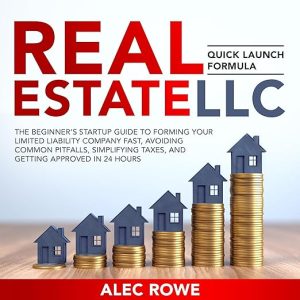
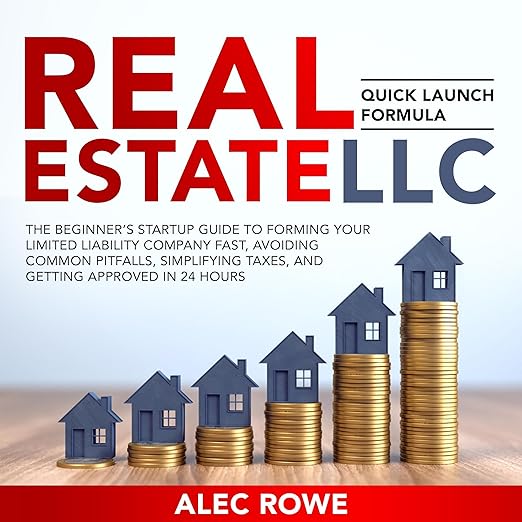
I listened to Real Estate LLC Quick Launch Formula with the specific question of whether it would be genuinely useful to a first-time real estate investor with no legal background. The answer is: partially, at best. Alec Rowe’s book describes a real problem with reasonable accuracy, the challenge of protecting personal assets from real estate liability exposure, and the LLC structure is genuinely one of the more accessible legal tools available to individual investors. But the book’s execution does not quite deliver on the promise its subtitle implies.
The premise is arresting: set up your LLC-protected real estate business in 24 hours. That is a marketing hook rather than a meaningful claim. Real LLC formation involves jurisdiction-specific filings, registered agent requirements, operating agreements, and sometimes banking relationships that vary considerably by state. None of these can be navigated in a day using this book alone, and that gap between the promise and the delivery shapes the listening experience from the first chapter.
Our Take on Real Estate LLC Quick Launch Formula
The book works through its topic systematically: an overview of LLC mechanics, tax advantages, a state-by-state setup guide, funding options, common beginner mistakes, stacking multiple LLCs for layered protection, and scaling strategies. This is a coherent structure, and Rowe explains the concepts in plain language. For a listener who genuinely does not know what an LLC is or why real estate investors use them, the first half of the book provides orientation. The state-by-state guide, which addresses how choosing your formation state affects fees and legal protections, is the most concretely useful section. The discussion of stacking multiple LLCs for stronger asset isolation is also worth listening to, as this strategy is less widely discussed in introductory finance content and applies meaningfully to investors holding multiple properties across different risk profiles.
Reader reviews divide sharply, which is itself diagnostic. One reviewer calls it detailed and helpful. Another says a simple Google search would outperform it. A third notes that most specific topics defer to professionals, which undercuts the book’s utility as a practical guide. These reactions are not irreconcilable. The book functions as an orientation to the concept of LLC protection for real estate, but it does not provide the granular, jurisdiction-specific guidance that would allow someone to actually complete the process without additional research and legal advice.
Why Listen to Real Estate LLC Quick Launch Formula
Sawyer Varvel’s narration is clear and professional, and the four-hour-and-twenty-two-minute runtime is appropriate for the content level. Varvel reads the motivational passages without overselling them, which is the right instinct for content that is already aspirational in tone. The audio format suits the introductory nature of the material, as the chapter structure is simple enough to follow without visual reference. At just over four hours, the time investment is modest enough that even listeners who finish disappointed have not lost much.
What to Watch For in Real Estate LLC Quick Launch Formula
The 3.5 average rating across 20 reviews reflects a genuine split between listeners who found it a useful starting point and those who expected more. Tom Powell’s two-star assessment, describing the book as quite general with lots of see a professional on most topics, is the clearest statement of what the book’s ceiling is. When a practical guide spends significant airtime advising you to hire specialists for the specific decisions you are trying to make, it raises a legitimate question about what the guide itself is contributing. The answer here is: conceptual orientation and motivational framing, which has value at the right price point for the right listener.
Who Should Listen to Real Estate LLC Quick Launch Formula
This book makes most sense for a listener who has zero exposure to LLC formation and wants a structured first conversation with the topic before pursuing actual legal advice. Experienced real estate investors or anyone who has already formed a business entity will find the content too basic to justify the time. Those hoping to use this as a substitute for legal counsel should note that the book itself frequently recommends consulting professionals, which is honest but also a sign that the content stays firmly at the introductory level throughout.
Frequently Asked Questions
Can I actually form an LLC in 24 hours using just this audiobook as a guide?
The 24-hour claim is marketing framing. The book provides orientation to LLC concepts and a state-by-state overview, but does not supply the jurisdiction-specific detail needed to complete the process without additional research, legal counsel, or official state filing resources.
Does the book cover how to fund a real estate LLC, or just the formation process?
It covers both, including loans, investor backing, and self-funding options. The funding chapters are more introductory than detailed, consistent with the book’s overall approach of orienting listeners to concepts rather than providing step-by-step implementation guidance.
Is this book part of a series, and does the first entry provide useful context?
Real Estate LLC Quick Launch Formula is book two in the Entrepreneur Launch and Client Conversion series by Alec Rowe. Each book addresses a distinct topic, and this one stands alone without requiring the first entry for comprehension.
How does this compare to more established real estate legal guides in audio?
More established titles in real estate legal strategy generally provide more jurisdiction-specific detail and practical implementation guidance. This book occupies an introductory motivational niche rather than serving as a comprehensive legal reference or practitioner’s manual.