Quick Take
- Narration: Robert Petkoff brings exactly the right balance of intellectual gravity and accessibility, his warmth keeps the technical blockchain material from feeling like a lecture.
- Themes: Internet history and control, blockchain as decentralized infrastructure, the tension between corporate and community networks
- Mood: Optimistic and historically grounded, more measured than the crypto boom-cycle literature it implicitly argues against
- Verdict: The most coherent and readable case for blockchain as infrastructure technology rather than speculation, though listeners skeptical of the technology will find the optimism less than fully earned.
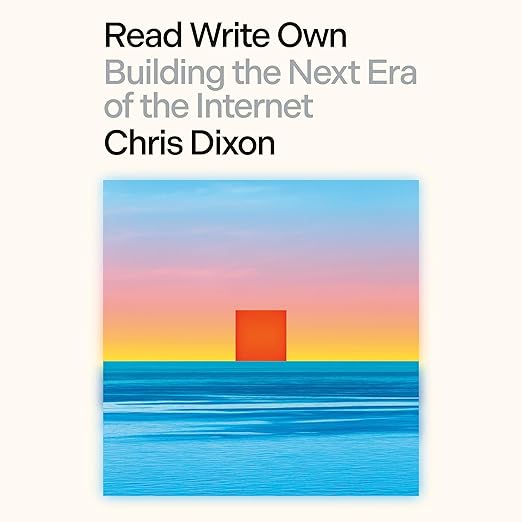
I was at a dinner table argument about cryptocurrency about two years ago when someone threw up their hands and said, “Can someone please write a book about the technology that isn’t also trying to sell me a coin?” Read Write Own is that book, or at least the closest thing to it that Chris Dixon has been able to produce given that he is, ultimately, a venture capital investor in the blockchain space. The attempt at intellectual honesty is genuine, and the result is substantially better than most of what the web3 moment produced.
I listened to this over two evenings, which is the right pace. It does not demand the kind of concentrated attention that Competing in the Age of AI requires, but it rewards sustained listening more than the kind of surface-level engagement that a fast read on a phone might produce. Robert Petkoff’s narration is a significant part of why, he has a quality of making reasoned argument feel like conversation, which is exactly what a book trying to rehabilitate a politically and culturally contested technology needs.
The Three Eras and the Problem They Identify
Dixon’s organizing framework divides internet history into three eras that give the book its title. The “read” era, roughly the early internet, democratized access to information. The “read-write” era, the Web 2.0 period, democratized publishing and creation, anyone could have a blog, a channel, a store. The current era, which he argues is arriving rather than arrived, is “read-write-own”: networks in which users have genuine property rights and economic participation in the platforms they contribute to.
The diagnosis that accompanies this framework, that the current internet has fallen under the control of an extremely small number of companies and that this concentration is bad for innovation, creativity, and user autonomy, is not particularly controversial. The interesting question is whether blockchain networks are the correct response, and this is where Dixon’s argument is at its most careful and at its most vulnerable.
The Computer Versus the Casino
The distinction Dixon makes between “the computer” and “the casino” is the rhetorical heart of the book. He argues that the speculative frenzy around cryptocurrency tokens is a distraction from, and sometimes a corruption of, the genuine technical achievement that blockchain networks represent: the ability to create protocols that are governed by code and community rather than by a single corporate entity. He wants to separate Bitcoin and Ethereum as infrastructure from the speculative instruments that have been built on top of them.
One reviewer describes this as “the definitive book on crypto as a technology” rather than as a political or monetary phenomenon, and that framing captures Dixon’s intent accurately. Another reviewer, more measured, notes that the future use cases presented, social networks, DAOs, tokenized assets, are “old narratives” that have been circulating in the web3 space for years and have not yet materialized at the scale Dixon implies they will. This is a fair criticism. Dixon is more convincing as a diagnostician of the current internet’s problems than as a prophet of what replaces it.
What Petkoff Adds to the Experience
I have heard Petkoff narrate business and finance books before, and he is one of the narrators who understands that his job is to serve the argument, not to perform it. He reads Dixon’s prose, which is genuinely good for a technology book, lucid and concrete without being dumbed down, with a steady warmth that makes the optimistic sections feel earned rather than promotional. The PDF companion with illustrations and charts is available in the Audible library and is worth downloading before you start, particularly for the diagrams mapping the corporate network dynamics in the read-write era.
Who Should Listen, Who Should Skip
Listen to this if you want the best-argued version of the case for blockchain as infrastructure, written by someone inside the investment community who is genuinely trying to separate technological merit from speculative excess. This is the book you need to read before you argue about web3. Skip it if you are looking for impartial analysis rather than a defense, Dixon is a partisan of a thoughtful kind, but he is a partisan. Readers who want a skeptical counterpoint should pair this with something like Tim Harford’s writing on technology and markets. The 4.6 rating from 775 listeners represents genuine broad consensus on the quality of the presentation, even among those who are unconvinced by the thesis.
Frequently Asked Questions
Do you need to understand cryptocurrency or blockchain technology before starting Read Write Own?
No prior technical knowledge is required. Dixon deliberately writes for a general audience and explains blockchain concepts from first principles. The book’s value is in the argument about internet architecture, which is accessible regardless of whether you have engaged with cryptocurrency before.
Is this book primarily about Bitcoin and Ethereum, or does it cover the broader blockchain ecosystem?
Dixon uses Bitcoin, Ethereum, and specific protocols as examples to illustrate structural principles rather than focusing on any particular asset or platform. The book is explicitly not an investment guide. Specific tokens are discussed in the context of the computer-versus-casino distinction.
Robert Petkoff is known for literary and historical nonfiction. Does his style work for a technology-focused argument?
Very well. Petkoff’s warmth and measured pacing suit a book that is trying to make a contested technical argument feel reasonable and grounded. Several reviewers specifically note the audiobook experience as strong, which reflects both the quality of Dixon’s writing and Petkoff’s performance.
Given that the web3 ecosystem has changed significantly since publication, are the specific use cases Dixon describes still relevant?
The structural argument about corporate control of internet infrastructure is more durable than the specific use case predictions. The DAOs, decentralized social networks, and tokenized asset examples Dixon discusses remain aspirational rather than realized at scale, which one reviewer notes as a limitation. The book is best read as an argument about what is possible rather than a forecast of what is imminent.