Quick Take
- Narration: Stephanie Barry delivers a clear, accessible performance that suits the practical instructional tone; nothing flashy, appropriately paced for a how-to listen.
- Themes: Permaculture principles and sustainable food production, small-space gardening solutions, working with natural systems rather than against them
- Mood: Practical and encouraging, with genuine environmental purpose running underneath the gardening advice
- Verdict: A solid introduction to raised bed gardening through a permaculture lens, strongest for beginners who are starting from scratch.
I started listening to this one on a Saturday morning in early spring, when I was half-seriously reconsidering my back garden situation and wondering whether raised beds were worth the construction effort. I am not a gardening expert. I can keep most things alive if I try hard enough, but I have never been particularly systematic about it. This audiobook is written for people exactly at that level of experience, and it delivers on that promise more consistently than a lot of gardening audio I have encountered.
Nydia Needham’s approach here is notable for something that most practical gardening guides miss: it connects the immediate, tactical decisions about bed construction and soil management to a larger philosophical framework. That framework is permaculture, and the book treats it with enough seriousness that a listener comes away understanding not just what to do but why.
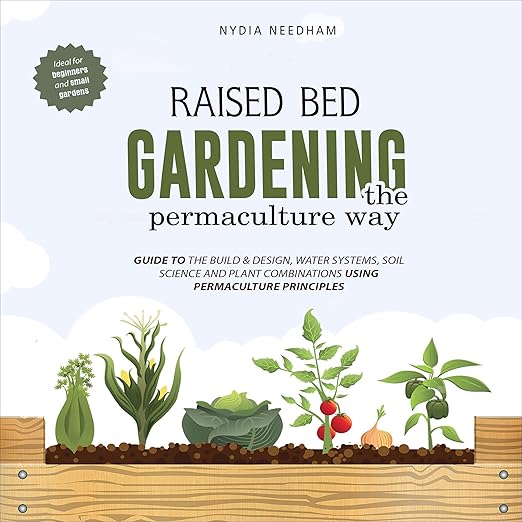
Our Take on Raised Bed Gardening the Permaculture Way
The core argument is straightforward: raised beds give you control over soil quality, drainage, and microclimate in ways that ground-level planting does not, and permaculture principles allow you to manage those beds in ways that reduce ongoing labor over time. If you feed the soil and build relationships between plants, the thinking goes, the garden starts doing more work for itself. Companion planting, beneficial insect attraction, natural pest management, water retention techniques: these are presented as a coherent system rather than a list of separate tips.
That framing is genuinely useful for the beginner listener. One reviewer described feeling empowered after years of gardening failures and overwhelm. Another, an experienced gardener, said the book added meaningfully to existing knowledge with tips they hadn’t encountered before. That range of useful readership, beginner through intermediate, is not nothing. Most how-to books in this space underserve one end of that spectrum.
Why Listen to Raised Bed Gardening the Permaculture Way
Stephanie Barry’s narration is straightforward and appropriately paced for instructional content. She is not a narrator who adds performance to technical material, which is exactly right here. The companion PDF referenced in the production notes is available alongside the audio for Audible library listeners, which somewhat addresses the limitation that visual content, plant directories, bed design diagrams, does not translate perfectly to audio. Listeners who purchase the print alongside the audio will get the most complete experience, but the audio holds up on its own for the conceptual and procedural content.
At five hours and five minutes, this is a listening commitment that fits inside a single productive Saturday. It is dense enough to require attention but not so technical that it demands repeated listens to absorb. For a beginner building their first raised beds, this is a practical companion for the planning and construction phase.
What to Watch For in Raised Bed Gardening the Permaculture Way
The book does lean toward the introductory end of the permaculture spectrum. Experienced practitioners of permaculture design will likely find the principles coverage too brief and the application too focused on raised-bed specifics to add much to their existing knowledge. The permaculture chapter is a primer, not a deep treatment. For listeners who already have a solid permaculture foundation and are looking for technical depth, there are more rigorous texts available.
Additionally, the plant directory and bed design sections are genuinely better experienced in a visual format. The PDF companion helps, but for the portions of the book that rely on spatial and visual information, audio alone is a limitation. Listeners planning to use this as an active reference during a building season would benefit from the print edition alongside the audio.
Who Should Listen to Raised Bed Gardening the Permaculture Way
Beginning and intermediate home gardeners who want to start growing food in an organized, low-chemical way will find this practical and encouraging. Listeners with no prior gardening experience who feel overwhelmed by the subject will particularly benefit from the beginner-friendly framing. Experienced permaculturists or advanced organic gardeners will likely find the content too introductory to justify the listening time. Companion print edition recommended for reference use during the building season.
Frequently Asked Questions
Do I need any prior knowledge of permaculture to benefit from this audiobook?
No. The book treats permaculture as a framework it introduces from the ground up, and the principles chapter is designed for readers who have never encountered the concept before. Prior knowledge helps but is not required.
How does the plant directory work as audio content, given that visual reference materials don’t translate well?
There is a companion PDF available through Audible for this title. For the plant directory and bed design sections specifically, the PDF is genuinely useful. The conceptual and procedural content works fine as audio; the reference sections are better in visual format.
Is this useful for urban or apartment gardeners with very limited space?
Yes, explicitly so. The synopsis addresses small-space gardeners directly, and the raised-bed approach is specifically designed for situations where a traditional garden plot isn’t available. Balcony and small-yard applications are discussed.
How does Stephanie Barry’s narration compare to other gardening how-to audiobooks?
She is a clear, unobtrusive narrator appropriate for instructional content. This is not a performance-driven listen; it is a practical guide delivered competently. That is exactly what this material calls for.