Quick Take
- Narration: Anissa Weimer delivers a calm, clear read that suits the instructional register; approachable without being patronizing.
- Themes: Soil science basics, container growing, beginner confidence-building
- Mood: Methodical and encouraging, with a practical focus throughout
- Verdict: A well-structured fundamentals listen that gives beginners a real foundation rather than just a checklist of what to plant.
I started listening to this one in early spring, when I was trying to talk myself into finally doing something productive with the narrow strip of south-facing fence I had been ignoring since we moved in. I am not a gardener by training or instinct, but I had become tired of buying tomatoes from people who clearly knew something I did not. Anissa Weimer has a steady, unhurried delivery that does not condescend, which matters more than you might expect when you are a complete beginner sitting with a lot of unanswered questions about drainage and light.
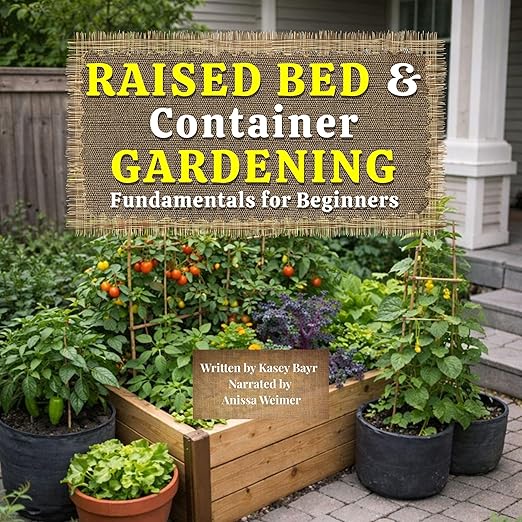
Kasey Bayr’s Raised Bed and Container Gardening Fundamentals for Beginners runs just under three and a half hours, which makes it one of the more compact practical audiobooks in the gardening space. That brevity is a deliberate choice, and mostly a good one: this is a fundamentals guide, not an encyclopedia, and it disciplines itself to stay focused on the foundations that actually determine success.
Our Take on Raised Bed and Container Gardening Fundamentals for Beginners
The book’s organizing argument is that most beginner failures in gardening trace back to the same handful of misunderstood factors: soil composition, drainage, watering frequency, light placement, and plant spacing in contained systems. Bayr addresses each of these methodically and explains not just what to do but why the mechanism works, which is the difference between a guide that actually builds understanding and one that produces a gardener who can follow instructions but cannot troubleshoot. Reviewer Monika 5 specifically praised the soil and plant selection explanations as simple and approachable, and that is the register the book consistently hits. Hugh C., who described himself as someone who loves the idea of growing fresh food but lacks a big yard or a lot of time, called it a total gem for that specific profile.
Why Listen to Raised Bed and Container Gardening Fundamentals for Beginners
The growing zone section drew particular praise from reviewer Adventure Girl, who noted that it saved her from planting vegetables that would not thrive in her specific zone. This is the kind of practical guidance that a generic gardening audiobook often skips in favor of crowd-pleasing plant lists that work for some climates and fail for others. The companion planting principles and troubleshooting strategies for preventing common problems before they impact your harvest are also well-handled. Bayr’s approach to companion planting avoids the folk-gardening mysticism that sometimes creeps into this topic and stays grounded in the functional reasons certain plants benefit their neighbors. The accompanying PDF noted in the publisher’s description presumably contains the visual references, charts, and plant lists that are genuinely difficult to convey in audio form, so downloading it before you start listening is worth doing.
What to Watch For in Raised Bed and Container Gardening Fundamentals for Beginners
Reviewer Adventure Girl noted that the vegetable coverage, while helpful, is limited to one hardiness zone and covers only a selection of plants within that zone. The lists of full-sun, partial-sun, and shade-loving vegetables are similarly limited. This is a real constraint for listeners in climate zones at the extreme ends of the spectrum, and for anyone hoping to find guidance on growing food in a very hot or very cold climate, the coverage may feel incomplete. The runtime of just over three hours also means this is genuinely introductory; experienced gardeners who already understand soil composition and drainage will not find much new here. The book is explicit about its scope, and the title does say fundamentals for beginners, so this is less a flaw than a design choice to be aware of before you press play.
Who Should Listen to Raised Bed and Container Gardening Fundamentals for Beginners
This is squarely aimed at people who have wanted to start a food garden but felt overwhelmed by the information landscape. If you have a patio, a small backyard, or even a balcony and have been wondering whether a few raised beds or containers could yield anything worth eating, this audiobook addresses that question directly and practically. It is also a good listen for people who have tried in-ground gardening without much success and are curious whether a contained system might perform better for their specific conditions. Experienced gardeners and anyone looking for advanced soil science or crop rotation strategies will want to look elsewhere.
Frequently Asked Questions
Does this audiobook cover specific vegetables or is it entirely about growing systems?
Both, though the growing systems get more emphasis. The book covers beginner-friendly vegetables and herbs, with guidance on which crops thrive in contained growing systems, and includes companion planting principles. However, one reviewer noted the plant coverage is limited in scope by hardiness zone, so very cold or very hot climate gardeners may find the selection guidance incomplete.
Is the accompanying PDF important for getting full value from this audiobook?
Likely yes, particularly for visual learners. The publisher notes a PDF is available in your Audible Library with the audio purchase, and gardening guidance often relies on charts, spacing diagrams, and plant lists that are awkward to convey verbally. Downloading the PDF before you start listening will give you a useful reference to pair with the audio.
How does Anissa Weimer’s narration handle the technical gardening terminology?
Weimer delivers the technical content clearly and without making it feel like a lecture. Her pacing is calm and approachable, which suits the instructional register well. For listeners who are completely new to gardening vocabulary, her unhurried delivery gives you time to absorb terms like soil structure, drainage, and nutrient management without feeling rushed.
Can this audiobook be used as a reference during the actual gardening season, or is it better as a pre-season listen?
Better as a pre-season listen. The fundamentals focus means you are learning principles that should inform how you set up your beds and select your plants before you start. The troubleshooting guidance is also more useful when you understand the underlying mechanisms, which takes some upfront listening time. Having the PDF alongside for in-season reference is probably more practical than replaying audio sections while you have soil on your hands.