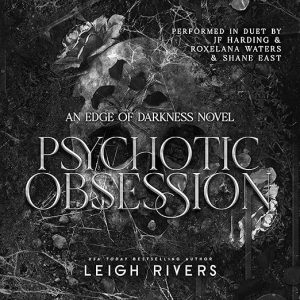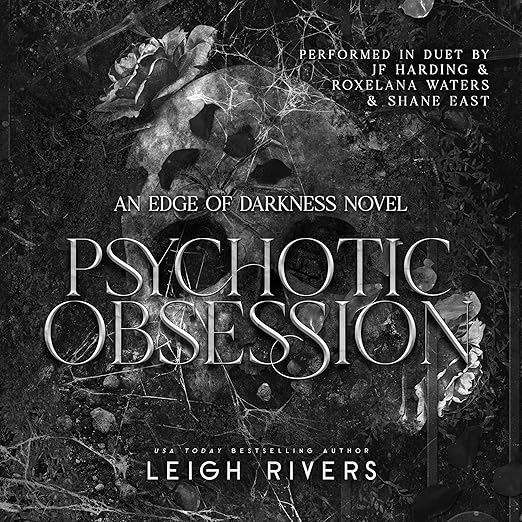
I came to Psychotic Obsession without having read the Edge of Darkness trilogy first, which is, I should tell you immediately, the wrong order. The reviews make this clear with considerable urgency, and the emotional architecture of Leigh Rivers's book depends on knowing who Tobias Mitchell eventually becomes. Reading it out of sequence is like watching the final act of a tragedy without knowing the characters' full history. The mechanics are clear, but the devastation does not have the same weight.
With that caveat on the table: Psychotic Obsession is a prequel to Rivers's trilogy, following Tobias before the events that shaped him into the terrifying figure readers of the main series already know. Aria Miller is a scientist, focused and professional, searching for the cure to a rare genetic disease. Tobias enters her world as her assistant, and his infatuation develops with the cold, methodical intensity that the title promises. When circumstances force Aria to leave the country, Tobias's mask slips, and the reader sees what has been beneath the surface the entire time.
Rivers works in the dark romance space with genuine craft, and this book demonstrates what distinguishes skilled writing in that genre from its more careless counterparts. The book is not trying to present Tobias as misunderstood or ultimately good. He commits violence in this narrative, he is genuinely dangerous, and Rivers does not soften that. What the book does instead is ask readers to understand how someone becomes this way, and to trace the specific shape of an obsession before it fully hardens into what it will become.
The primary tension, flagged by a perceptive reviewer who came in with high expectations, is that readers of the trilogy arrived knowing Tobias as genuinely terrifying, and the Tobias in this prequel is somewhat more human than his later reputation suggests. That gap is not a flaw in Rivers's conception. It is the point. This is the story of how the terrifying figure came to be, and that story necessarily involves showing the moment before he was what he would become. But readers who wanted the full brutality of the later Tobias may find this installment slightly less intense than they anticipated.
Why Listen to Psychotic Obsession
JF Harding narrates, and the performance is precisely calibrated for the material. Tobias's first-person sections require a narrator who can project surface control while conveying the internal chaos beneath it. Harding manages this with the kind of specificity that makes dark romance narration work when it works: the stillness is the tell. The scenes where Tobias begins to unravel, particularly in the final third where his mask drops entirely, are the audiobook's technical high point.
At eleven and a half hours, this is a substantial commitment. The pacing in the first half is deliberately slow, building the domestic tension of the lab environment and Tobias's escalating internal state. Listeners who need early momentum may find it a demanding sit. The reviewers who described being fully unwell and knocked flat are responding to a book that earns its emotional impact gradually before delivering it with force.
What to Watch For in Psychotic Obsession
The series order matters more than it does for most dark romance standalones. Rivers explicitly notes that this is an interconnected standalone set before the Edge of Darkness Trilogy, which is her way of saying: do the reading first. Reviewers who came in sequence describe the ending as wrecking them in ways that only work because they know what happens next in the trilogy. The emotional devastation is partially structural.
Content warnings apply with force here. This is dark romance with genuine violence, obsessive possession framing, and content that some readers will find distressing. Rivers is not working with fantasy danger. The darkness is real within the story's logic, and listeners who prefer their romance without these elements should look elsewhere.
Who Should Listen to Psychotic Obsession
Read the Edge of Darkness trilogy first. That is the primary instruction. Readers who have done so and want to understand Tobias Mitchell's origin story will find this one of the more psychologically rigorous entries in the dark romance prequel subgenre. JF Harding's narration and Rivers's structural intelligence make it a genuinely affecting listening experience.
Readers who have not read the trilogy and are simply curious about the dark romance genre would be better served starting with the main series. And readers who are not within the target audience for dark romantic fiction, those who find the obsessive possession framework harmful rather than fictional, should approach this category with full awareness of what it contains.
Good to Know
How does JF Harding handle the morally compromised first-person male POV?
The performance is one of the audiobook's specific strengths. Harding projects Tobias's controlled surface convincingly while allowing the internal disorder to surface in the audio texture of the delivery. The scenes where the mask slips are technically demanding and Harding executes them with precision.
What content warnings apply to Psychotic Obsession?
Violence, obsessive and possessive relationship dynamics, psychological manipulation, and content that readers in the dark romance community describe as emotionally devastating. This is not metaphorical darkness. The book is explicit about what Tobias is and what he does. Rivers writes within the dark romance genre's established conventions, which require full awareness from readers before they begin.