The Short Version
- Voice: Matt Furey narrates his own updated commentary alongside Maltz's original 1960 text
- Big ideas: self-image and achievement, visualization, the origins of modern self-help
- Atmosphere: Earnest and foundational
- Worth it?: A genuine classic worth hearing in its source form, not just through the books it influenced
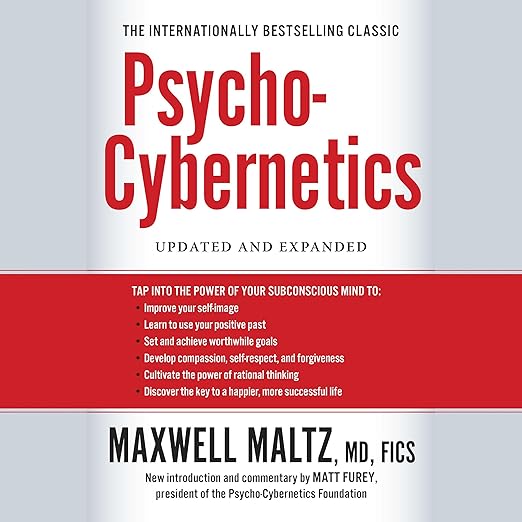
Can a self-help book written in 1960 still reprogram how a listener sees themselves? Psycho-Cybernetics has apparently been answering yes for more than 30 million readers since its first publication, and this audiobook edition, updated with a new introduction and editorial commentary from Matt Furey, president of the Psycho-Cybernetics Foundation, tries to make Maxwell Maltz's original argument land for a listener who's never heard of cybernetics, or plastic surgery, the medical field Maltz actually practiced before turning to psychology, at all.
One Reader Kept This Book Since 1961
Reviewer Lee Gillette offers the single most compelling piece of longevity evidence in the whole review set: 'one of the first copies of Maxwell Maltz's book, Psycho-Cybernetics is still, to this day, on my bookshelf,' a copy she's had since 1961, one year after original publication. That's more than six decades of a single reader keeping the same book within reach, crediting it with being the first to connect 'the mind to the body' in a way Gillette says nothing had quite done before.
Reviewer Nate brings a comparative credential worth noting: three years of studying psychology, NLP, hypnosis, and 'destructive patterns' before finding this one the most 'treasured possession' on his shelf. That's a notable verdict from someone who had already surveyed adjacent, more contemporary self-improvement frameworks before landing on a 1960 text as the standout, suggesting the original ideas have held up against decades of newer competition rather than being superseded by them.
The origin story behind Psycho-Cybernetics is worth knowing, since it explains why a plastic surgeon ended up writing one of the best-selling self-help books of the twentieth century: Maltz noticed that some patients felt transformed by cosmetic surgery while others, despite objectively successful procedures, still saw the same flawed self they'd always seen. That observation, that an operation could change a face without changing the internal self-image behind it, became the entire foundation for a theory that self-image, not external circumstance, is the actual lever controlling behavior and achievement.
Furey Layers Commentary Over a 1960 Original
Matt Furey narrates this specific updated edition rather than a straight reading of the 1960 original, guiding listeners through Maltz's core ideas, self-image as the master switch controlling achievement, alongside his own added introduction and commentary as the Foundation's current president. That structure gives the audiobook a dual voice: Maltz's original mid-century case studies and metaphors, filtered through a contemporary framing that connects them to modern goal-setting and sports psychology language.
Reviewer George Betts kept his assessment simple: real, ongoing personal impact, describing continued work 'to live a better life and to also help others along the way.' That kind of durable, applied response, still working the ideas rather than having read them once and moved on, is a meaningful signal for a 65-year-old self-help text specifically, since ideas that don't actually change behavior tend not to generate that kind of long-term engagement.
The book's title itself rewards a close look: cybernetics, borrowed from the Greek word for helmsman, someone who steers a ship to port, reframes self-improvement as active navigation rather than passive hope. That etymology isn't just wordplay, it's the whole argument in miniature; Maltz's core claim is that the mind can be deliberately steered toward a goal the same way a helmsman steers toward a harbor, rather than drifting and hoping to arrive somewhere good.
The synopsis's own verbs are worth noting: the original text has been 'annotated and amplified,' not simply updated or modernized, which signals Furey's intent is to intensify and expand on Maltz's ideas rather than merely translate them into current vocabulary. That's a meaningfully different editorial approach than a typical 'updated edition' label usually implies.
Steering Toward Technique Takes Patient Listening
The 1960s framing shows in places the modern annotation can't fully smooth over: Maltz's original case studies, examples, and cultural references reflect his own era, and Furey's added commentary works to bridge that gap rather than eliminate it entirely. Listeners sensitive to dated language or examples in older self-help texts should know this is a genuinely 65-year-old book with a contemporary layer added on top, not a full modern rewrite.
At just over 12 hours, this runs considerably longer than most contemporary self-help audiobooks in the same category, and the original text's cybernetics-and-goal-setting metaphor, steering your mind toward a target the way a ship's helmsman steers toward port, requires some patience with extended metaphor before Maltz gets to concrete, actionable technique. Listeners wanting a fast, bullet-pointed modern self-help book should know this leans more toward sustained argument than quick takeaways.
Furey's own voice and framing throughout the added commentary reflects his specific background running the Psycho-Cybernetics Foundation, and listeners should know his interpretation of Maltz's ideas, connecting them to goal-setting and mental-rehearsal language now common in sports psychology, represents one particular reading of the material rather than a neutral, purely historical presentation. That's not a criticism, every updated edition of a classic text involves some interpretive framing, but it's worth listeners knowing the commentary carries a specific point of view rather than simply annotating dates and terms.
The synopsis's own definition of the term is worth taking seriously as the book's actual thesis, not just etymology: psycho-cybernetics means 'steering your mind to a productive, useful goal so you can reach the greatest port in the world, peace of mind.' That destination, peace of mind rather than wealth, status, or achievement for its own sake, distinguishes Maltz's framework from the more hustle-oriented self-help that followed in its wake; the visualization and goal-setting techniques serve a calmer end than the achievement-at-all-costs framing they sometimes get reduced to in later, secondhand summaries.
This Historical Origin Predates Modern Self-Help
Readers interested in the actual historical origin of modern self-image and visualization concepts, ideas that go on to shape decades of later sports psychology and motivational writing, are the clear audience, especially anyone who wants the source material rather than a contemporary book citing it secondhand. Longtime self-help readers curious how a 1960 bestseller holds up against everything it influenced will also find real value here.
Listeners specifically interested in the roots of visualization and mental-rehearsal technique, now standard practice across competitive sports and performance coaching, will find real value in encountering the concept in its original, pre-diluted form rather than through a modern coach's secondhand summary. Anyone who has previously tried a more contemporary self-help book and found the advice oddly familiar may find this recording clarifies exactly where that familiar advice actually originated.
Listeners who prefer strictly contemporary language and examples, without a decades-old text as the foundation, should know the modern commentary supplements rather than replaces Maltz's own decades-old voice. Anyone wanting a short, quick-hit self-help listen should also budget real time; at over 12 hours, this asks for more patience than most current entries in the genre.
Questions Listeners Ask
Does Matt Furey narrate the original 1960 text or just his own commentary?
He narrates this updated edition as a whole, guiding listeners through Maltz's original ideas alongside his own added introduction and editorial commentary as president of the Psycho-Cybernetics Foundation.
How long is the Psycho-Cybernetics audiobook?
It runs 12 hours and 16 minutes.
Does this audiobook feel dated given it was written in 1960?
In places, yes. The original examples and cultural references reflect their era, though the added commentary works to connect the ideas to more contemporary language.