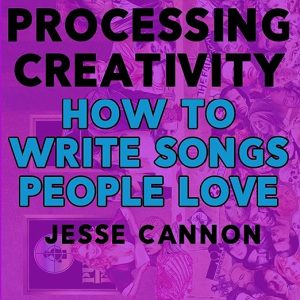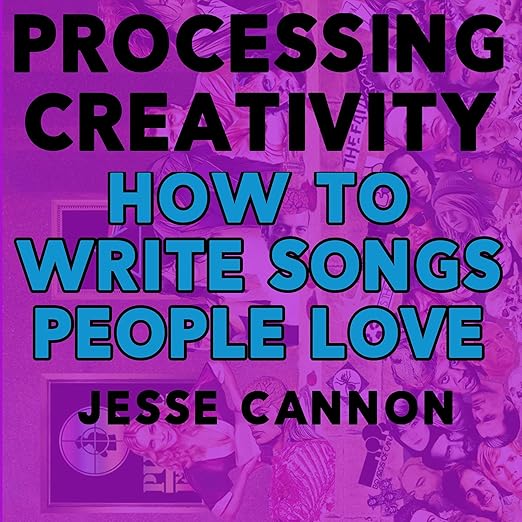
Jesse Cannon has spent more than a decade in recording studios with bands as different as The Cure, Weird Al, and the Dillinger Escape Plan, and the Processing Creativity audiobook is his attempt to explain what he's actually learned from that whiplash of genres. Rather than another guide to chord progressions or home-studio gear, Cannon spends seven hours on the psychology underneath the music: why certain records connect and others don't, why collaborators clash, and what separates bands who make an album they're happy with from bands who make a bad one. Four years of research, scientific studies, interviews with top creators, his own studio experience, went into building the argument.
Unlike The War of Art, It Explains Why
Cannon already has a foothold in music-business writing with Get More Fans, but Processing Creativity is a different kind of book, less about marketing and more about the internal obstacles that keep musicians from finishing work they're proud of. The synopsis frames the core question sharply: every musician says creativity matters most, but almost none of them examine what's actually blocking their own creative process, because no YouTube tutorial or college course exists to walk through it. Cannon's answer draws on collaboration dynamics, the hidden reasons certain music connects emotionally, and the specific patterns that let creativity flourish rather than stall out.
Reviewer Anthony Hunsche, who describes spending his entire adult life trying to self-produce music he's happy with, calls the book 'incredible' and describes it as unlike anything else he's read on the subject, explicitly contrasting it with general creativity books like The War of Art that tell you to just push through resistance without addressing why the resistance exists in the first place. That distinction, general creative-motivation advice versus something built specifically around music-making's particular pitfalls, is the book's clearest value proposition.
Three specific pitfalls recur throughout: the psychological reasons certain songs connect emotionally with listeners even when they break supposed rules of good songwriting, the interpersonal friction that derails collaborations before a single note gets recorded, and the daily habits and patterns, some counterintuitive, that separate musicians who finish strong records from those who don't. Cannon treats all three as connected rather than separate chapters, arguing that creative dysfunction usually traces back to one of these same root causes no matter how differently it shows up on the surface.
That range of collaborators, hardcore, indie folk, pop-punk, experimental, is itself part of the book's argument: creative dysfunction isn't genre-specific, the same handful of psychological traps show up whether a band is chasing radio play or making noise music for forty people in a basement.
His Own Unrehearsed Voice as Proof of Concept
Cannon narrates his own book, and because the subject is creative process rather than technical instruction, his delivery functions as a kind of quiet proof of concept: a producer known for shepherding wildly different artists through their own creative blocks explaining, in his own unrehearsed voice, how he thinks about that work. Reviewer Mary Flagstad, a newer artist still developing her sound, says the book helped her 'put creating resonant art at the center of my life' and that she felt inspired to work every time she sat down with it, exactly the kind of response a producer's own voice, rather than a hired narrator's, is positioned to earn.
Seven hours is a substantial runtime for a creativity book, longer than the typical music-business title, but that length reflects genuine range: bands as far apart as Animal Collective and Limp Bizkit, Saves the Day and NOFX, all show up in Cannon's frame of reference, and the book earns its runtime by drawing on that breadth rather than repeating the same three examples. Listeners who've read Rick Rubin's The Creative Act will find a complementary, more nuts-and-bolts counterpart here: less philosophical, more concerned with the specific mechanics of finishing a record you won't regret.
Cannon's other platforms, the Noise Creators and Off the Record podcasts, his writing for Alternative Press, Tape Op, and Hypebot, all point toward the same skill this book depends on: distilling technical, insider studio knowledge into language a working musician without an engineering background can actually use. That translation skill, built across years of writing for a general music-industry audience rather than only for other producers, shows up directly in how accessible Processing Creativity stays even when discussing genuinely psychological material.
Designed for Revisiting During a Creative Rut
This is written for musicians specifically, people actively making records, dealing with collaborators, and facing their own creative blockages, rather than for a general audience interested in creativity theory. Listeners outside music who want broader lessons on the creative process, applicable to writing, visual art, or other disciplines, will find plenty of the psychology transfers, but the concrete examples and case studies stay rooted in studio and band-dynamics scenarios throughout.
Reviewer Ian E. Baldwin's note that he's revisiting the book after reading it once already is a useful signal about how the material is meant to be used: less a single linear read and more a reference to return to during an actual creative rut. That structure is a strength for musicians mid-project, but listeners wanting a single tidy takeaway rather than a book built for re-engagement at different creative stages should adjust their expectations accordingly.
As a self-published, independently produced title rather than a major-house release, the production doesn't have quite the same studio polish some listeners expect from big-name business or psychology audiobooks; the tradeoff is a more direct, less filtered connection to Cannon's actual working process, credits that read like an actual discography rather than a curated highlight reel.
Less for Solo Producers Working Alone
Working musicians, especially anyone currently stuck mid-album or mid-collaboration, are the clearest audience, along with producers and engineers curious how one of their own thinks about the psychology behind a session rather than just the gear.
Music teachers and college songwriting instructors may also find real value here, since Cannon's framework for diagnosing why a piece of music isn't working gives language to intuitions that are often hard to teach directly.
Solo bedroom producers working without any collaborators at all may find some sections less directly applicable, since a meaningful share of the material addresses interpersonal friction specifically, but the chapters on personal creative blocks and daily habits still translate cleanly to a solitary workflow, where the obstacles are entirely internal rather than social.
Anyone outside music entirely, or wanting a shorter, more purely motivational creativity book rather than a case-study-heavy deep dive, will likely find this more specific and more demanding than they bargained for.
Is the Processing Creativity audiobook only useful for musicians, or does it apply to other creative fields?
It's written specifically for musicians and its case studies stay in studio and band-dynamics territory, though some of the underlying psychology may transfer.
How long is the Processing Creativity audiobook?
Seven hours and five minutes.