Quick Take
- Narration: Catherine Gilbert Murdock narrates her own novel, and her intimacy with the material is audible; her delivery captures Ben’s sardonic first-person voice with a naturalness that hired narrators rarely match.
- Themes: Self-determination and unlikely competence, political necessity versus personal desire, the cost of becoming who you need to be
- Mood: Wry and atmospheric, with genuine dark undercurrents beneath the fairy-tale surface
- Verdict: A subversive fairy tale with a fully realized protagonist who makes mistakes and earns her growth; Murdock’s self-narration gives it an intimacy that elevates an already strong text.
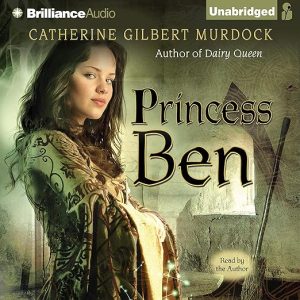
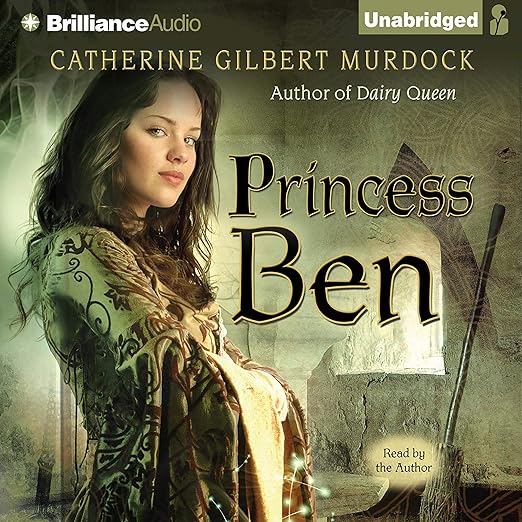
I finished Princess Ben on a long flight, somewhere over the Atlantic, which turned out to be exactly the right context. There is something about being suspended between places that suited the experience of following Benevolence, orphaned princess and accidental witch, through a story that is fundamentally about finding your footing when the ground has been pulled from under you.
Catherine Gilbert Murdock narrates her own novel, which is either a gamble or an obvious decision depending on the material. For Princess Ben, it is emphatically the right call. Murdock’s first-person narration has the quality of a woman telling a story she has already survived, which gives even the most desperate scenes a particular kind of dramatic irony. We know Ben makes it out. The pleasure is in watching how.
Our Take on Princess Ben
Ben is not a typical princess in any of the ways that phrase usually promises. She is overweight, she has authority problems, she is prickly, and she makes genuinely questionable decisions. One reviewer noted appreciatively that Ben is human, meaning she makes mistakes, she isn’t always very nice, she has vices, and she isn’t a perfect little adult at age fifteen. That precision of characterization is what separates Princess Ben from the broad category of fairy-tale retellings that promise a subversive heroine and deliver an idealized one with a different aesthetic.
The locked-tower arc, where Ben stumbles upon an enchanted room and begins secretly teaching herself magic, is the novel’s most satisfying stretch. Murdock has a gift for the small details of an unglamorous learning process: the obstinate broomstick, the accidentally set fire, the elaborate schemes to raid the castle pantries. Ben’s magic is hard-won and practical rather than heroic, which makes her eventual competence feel genuinely earned.
Why Listen to Princess Ben
Murdock’s self-narration is the production’s defining choice and its greatest asset. She knows exactly where Ben’s dryness should come through and where to let the genuine fear or grief of a scene land without armor. The slipper-hurling moment that one reviewer singled out as sending her into fits of giggles is delivered with the precise timing of someone who wrote that line knowing exactly how it would feel to say it aloud.
The political dimensions of the story, the assassination of Ben’s parents, the conniving Queen Sophia’s agenda, the threat of invasion, give the fairy-tale frame real stakes without becoming a political thriller. Murdock keeps the focus on Ben’s personal transformation while maintaining the external pressure that makes that transformation necessary. Reviewers who compared it favorably to Gail Carson Levine and Shannon Hale are identifying the right shelf: this belongs in the company of fairy-tale revisionism that takes its own heroine seriously.
What to Watch For in Princess Ben
One reviewer found the narrative style, Ben telling the reader what is happening rather than dramatizing it through dialogue, less engaging than more conventionally constructed fiction. That observation is fair. Murdock is writing in the voice of a narrator looking back, which creates distance that some readers experience as a limitation. For listeners who prefer character-driven interior narration, this will feel natural. For those who want plot delivered primarily through action and dialogue, the approach may occasionally chafe.
The romance, present but restrained, will satisfy readers who want a love story to emerge organically from character rather than function as a plot driver. Ben and the prince have a relationship that develops from mutual annoyance through something more honest, and Murdock does not rush it. Listeners expecting a conventional romantic fantasy should adjust their expectations accordingly.
Who Should Listen to Princess Ben
Readers aged twelve and up who want a fairy-tale protagonist defined by character rather than chosen-one status will find exactly what they are looking for here. Princess Ben works for both younger YA readers and adults who enjoy the genre. Fans of Ella Enchanted, The Goose Girl, or Shannon Hale’s Bayern series will find a natural companion here. Listeners who need fast-moving action and dialogue-driven plotting should be aware that Murdock’s retrospective narration approach prioritizes interiority over incident.
Frequently Asked Questions
Does Catherine Gilbert Murdock’s self-narration work, given that she is primarily a novelist rather than a professional voice actor?
Remarkably well. Her intimacy with Ben’s first-person voice gives the narration an authenticity that compensates for any technical differences from professional narrator delivery. The retrospective framing suits her natural storytelling approach.
How does Princess Ben handle the question of Ben’s weight, given that it is mentioned by reviewers?
Murdock treats Ben’s body as part of her character rather than her defining trait. The social pressures Ben faces are real and affect her circumstances, but the story is about her competence, choices, and transformation rather than her physical appearance.
Is there a sequel to Princess Ben?
Princess Ben is a standalone novel. The story reaches a complete resolution and does not require or prompt continuation. If you want more from Murdock, her Dairy Queen series is a different genre entirely but demonstrates the same gift for interior character work.
How does Princess Ben compare to other fairy-tale revisionist novels marketed toward similar readers?
Reviewers have specifically compared it to Ella Enchanted by Gail Carson Levine, The Goose Girl by Shannon Hale, and Mercedes Lackey’s 500 Kingdoms series. The comparison is apt: Princess Ben belongs in that tier of fairy-tale fiction that takes female agency seriously while maintaining the pleasures of the genre.