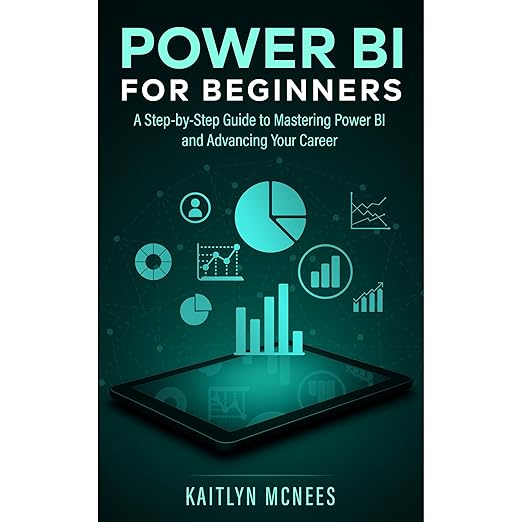
Quick Take
- Narration: Virtual Voice narrates this beginner Power BI guide, creating a significant mismatch for a tool-based tutorial where the listener needs to follow along with a real interface rather than hear synthetic prose.
- Themes: Data visualization, dashboard design, Power Query and DAX fundamentals
- Mood: Introductory and structured, though the format undermines the hands-on intent
- Verdict: The written content is well-organized for Power BI beginners, but this is among the stronger cases for buying the print or digital edition instead: a tool tutorial narrated by a synthetic voice with no companion PDF is a difficult listen-to-learn experience.
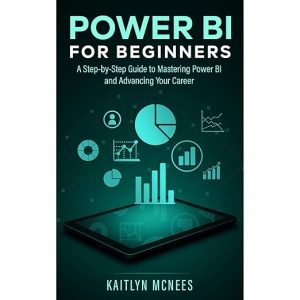
I want to be fair to Kaitlyn McNees’ actual work here before I get into the format problem, because the two are genuinely separable. There is a real, well-structured Power BI beginner’s guide inside this audiobook. The coverage of Power Query for data cleaning, DAX formula basics, data modeling essentials, and dashboard design best practices is organized sensibly and pitched at the right level for someone transitioning from Excel spreadsheets into more powerful reporting tools. Reviewers describe it as well organized and helpful for beginners, which aligns with the material’s structure.
The format problem is this: Power BI for Beginners is a step-by-step tool tutorial narrated by a Virtual Voice, Audible’s AI-generated synthetic narrator, with no companion PDF listed in the product description. That combination, synthetic voice plus no supplementary visual reference, represents one of the more challenging audiobook configurations for a specific, hands-on software genre.
What the Synthetic Narration Actually Costs You Here
Virtual Voice narration is a known variable in Audible’s catalog. For certain kinds of content, structured nonfiction with clear chapter logic and no emotional register requirement, it performs acceptably. But for a tool tutorial, the limitations compound. A human narrator reading step-by-step instructions builds implicit pacing cues: a slight pause before a new step, an emphasis that marks the difference between a label and a value, a vocal tone that signals you’re moving from explanation to action. Virtual Voice provides none of these cues, flattening the distinction between instructional prose and the procedural instructions you need to actually follow. One reviewer specifically noted that the book functions more as an overview than a step-by-step guide, which may partly reflect the content but is at least partly a function of how the narration fails to differentiate procedural from explanatory passages.
The DAX and Power Query Material in Audio Form
DAX formula syntax is particularly unforgiving in this format. When McNees writes a formula or explains a function parameter, reading it aloud in synthetic voice without a visual reference produces the kind of ambiguity that creates errors in actual use. This is not a failure of McNees’ writing but of the medium. The best technical reviewers of data tools have long noted that audio is a reasonable way to understand what a tool does and why, but an unreliable way to absorb how to do it step by step. Power BI requires both kinds of understanding, and the audio version delivers the first more reliably than the second.
What This Book Genuinely Teaches Well
Stripped of the format concerns, McNees’ conceptual framing is sound. Her coverage of data modeling essentials, particularly the star schema principles that underpin efficient Power BI models, is one of the sections where conceptual understanding, the kind audio can reasonably deliver, matters most. The sections on dashboard design best practices and common mistakes to avoid are also well-suited to audio because they’re about principles and judgment rather than specific UI navigation steps. A listener who approaches the audio version as conceptual orientation and then moves to the print or digital edition for actual practice is going to get more from the material than someone trying to follow along in the Power BI interface while the synthetic voice reads the steps.
There is genuine value in this book for the target audience. The decision to release it through Virtual Voice narration without a PDF companion is a content packaging choice that works against the book’s core purpose. Power BI beginners who have never worked with a business intelligence tool before need both understanding and practice, and this audio version is better positioned to provide the former than the latter.
Frequently Asked Questions
Is there a companion PDF included with this audiobook?
No companion PDF is listed for this edition, which is a meaningful limitation for a step-by-step software tutorial. The print and digital editions are better suited to hands-on learning, where you can reference screenshots and follow procedures alongside a live Power BI environment.
Can complete beginners learn Power BI from this audiobook alone?
Conceptually, yes, you’ll understand what Power Query does, why DAX formulas matter, and how dashboards are structured. Procedurally, the audio format without a visual reference makes it difficult to follow specific steps. Treat this as conceptual orientation and supplement it with hands-on practice in the actual Power BI interface.
How much does the Virtual Voice narration affect the listening experience for this kind of content?
More than for most genres. Tool tutorials depend on pacing cues and emphasis that human narrators provide naturally. Virtual Voice’s flat delivery makes it harder to distinguish between explanatory passages and procedural instructions, which is exactly the distinction a beginner needs to learn effectively.
Who would benefit from the audio version despite the format limitations?
Listeners who already have some Power BI or business intelligence background and want a refresher on best practices, or those who want to understand the conceptual framework before diving into the tool itself. Complete beginners without any prior BI experience will find the audio-only format frustrating for the hands-on sections.