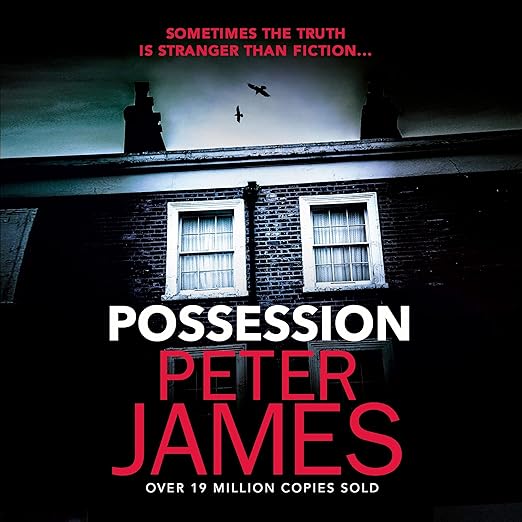
- Narration: Charlotte Strevens handles the psychological deterioration of Alex's grief with measured restraint, keeping the supernatural ambiguity alive rather than pushing the horror register too hard.
- Themes: Grief and the afterlife, maternal love and denial, the horror of unresolved secrets
- Mood: Slow-building and unsettling, with a domestic dread that grows stranger as it deepens
- Verdict: A supernatural thriller that works best as a portrait of grief and guilt rather than outright horror, though listeners wanting strong plot momentum may find the pacing uneven.
Possession is the kind of audiobook that makes more sense when you accept that its real subject is not the supernatural at all. The central question - what does a grieving mother do with something she cannot explain? - sits at the heart of this novel, and the strange events surrounding the death of Fabian Hightower are less interesting as plot mechanics than as external manifestations of Alex's internal collapse. Charlotte Strevens narrates with the controlled quality that the material needs, giving Alex's emotional state room to breathe rather than rushing toward the horror that the synopsis promises. The combination of a restrained narrator and genuinely unsettling source material creates a listening experience that is more psychologically textured than most supernatural fiction allows.
The setup is stark: Alex is told her son Fabian has died in a car crash. She does not believe it because she saw him that morning, at a time when he must already have been dead. The novel builds from that impossible contradiction, moving from denial into something darker when a medium refuses to continue contact because of what she encounters. The fear is effective precisely because it is channeled through a character whose judgment we already distrust - not because she is unreliable in the conventional thriller sense, but because she is a mother who has lost a child and will not let go.
More Interesting After Page Two Hundred
The novel takes its time. Listeners who came to this audiobook expecting the pacing of a conventional thriller will likely find the first half slow - reviewer Tony Mayston's observation that the book became more interesting after page 200 is an honest calibration. The character work in the early sections is deliberately deliberate, building Alex's psychology before disrupting it. For listeners who find that kind of slow accumulation rewarding, Possession delivers a particular atmosphere that faster supernatural fiction cannot quite replicate. The compression of dread that builds across the early chapters pays off specifically because it has been earned rather than engineered.
The medium sequence is the book's strongest passage. The refusal to return, the terror that has no explanation given to the reader, the way Alex is left alone with what she knows but cannot share - that structure creates genuine unease. The secret that only Alex holds about Fabian is withheld with discipline, and the novel's tension depends on the reader not knowing whether what is happening is real, grief-induced, or something morally more complicated. The story is constructed to keep all three possibilities open simultaneously, which requires a particular kind of patience from both the author and the narrator. Strevens delivers that patience consistently, never signaling an answer through her vocal choices.
Strevens Plays Alex Under Psychological Pressure
Strevens's narration makes this audiobook more accessible than the source material might otherwise be. She does not lean into the horror trappings - she plays Alex as a woman under enormous psychological pressure, which keeps the ambiguity intact longer than a more performance-heavy approach would allow. The question of whether the supernatural is real or whether Alex's mind is playing strange tricks on her stays genuinely open because Strevens never telegraphs an answer.
Jean Stead's review describes the book as "quite spooky and really makes you think there may be more than we think about the afterlife," which captures the experience well for the patient listener. This is not a novel that wants to frighten you with spectacle. It wants to unsettle you with the idea that love and guilt might have consequences that survive the body. Stead also notes it is "a book that you will not be able to put down" - an enthusiasm that Big Al's review tempers somewhat by calling it "a bit scary" but solid. The divergence between those assessments and Mayston's more measured response maps accurately onto the divide between readers who respond to atmosphere and those who need momentum. Audio listeners in the first camp will find the nine-plus-hour runtime feels shorter than it is.
Fabian's Unfinished Business Implicates More Than Grief
The narrative does carry some of the roughness that comes with older supernatural fiction - the pacing belongs to an era before thriller readers were conditioned to expect constant forward pressure, and some listeners will feel that as a drag rather than atmosphere. The ambiguity that is the novel's main strength can also read as a structural irresolution, particularly in the later chapters where it can be difficult to determine what is happening within Alex's psychology versus what the novel intends as objective event. Strevens navigates this carefully, but the source material does leave those questions deliberately unresolved.
The book also carries a secret at its center that reshapes everything once revealed, and the nature of that secret has a moral weight that the novel does not entirely process. It is a more uncomfortable read than a standard supernatural thriller because the horror is partly ethical, not just atmospheric. Fabian's unfinished business, and why it drives him to return, implicates more than just grief. That dimension rewards close listening and distinguishes the book from supernatural fiction that keeps its moral universe simple.
Grief and Denial That Happens to Be Haunted
Possession works well for listeners drawn to supernatural fiction that prioritizes psychological texture over plot velocity. If you appreciated the slow-burn domestic dread of novels like Shirley Jackson's We Have Always Lived in the Castle, or the grief-inflected horror of more recent literary supernatural fiction, this audiobook offers something in that register. Listeners who need strong momentum and clean resolution may find the pacing frustrating. It is best approached as a study in grief and denial that happens to be haunted, rather than a haunted-house story that happens to have emotional depth. The nine-and-a-half-hour runtime is proportional to the novel's deliberate pace, and Strevens sustains the atmosphere throughout.