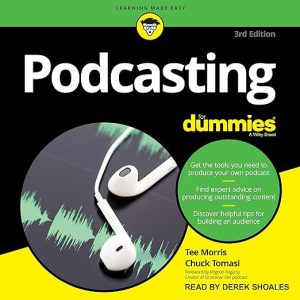
A blank recording app and a half-formed show concept is where most new podcasters actually start, which is exactly the gap this audiobook edition of Podcasting for Dummies tries to close across eleven hours and twenty-four minutes. Tee Morris, credited here as sole author even though the synopsis itself describes work from a pair of podcasting pioneers, built this fully updated edition around the boom that mobile and streaming listening created, and narrator Derek Shoales reads the whole technical walkthrough solo, microphone specs, editing software, distribution platforms, without a second voice to break up the instructional stretch.
Straightforward Advice With a Little Comic Relief
The strongest thing this guide does is resist the temptation to make podcasting sound more complicated than it needs to be for a first attempt. Reviewer HappyHiker specifically praised the book for being straightforward while still working in, in her words, 'a little comic relief so as to not stress you out,' and that balance matters in a technical guide. A listener staring down microphone specifications and audio editing terminology for the first time needs reassurance as much as information, and a guide that only lectures without ever lightening the tone tends to lose nervous first-timers before they hit record.
Structurally, the book earns its For Dummies branding honestly rather than treating the format as an excuse for padding. It moves through gear selection, finding a podcasting voice, and audience-building as three distinct, sequential problems rather than blending them into a vague pep talk about following your passion. KS, another reviewer, called it plain language and easy to understand for someone who knew absolutely nothing about podcasting going in, which lines up with what the synopsis promises: a fast, practical route from zero technical knowledge to a distributed show, not a theoretical treatise on audio production.
Derek Shoales's Narration Becomes the Real Lesson
Reviewer Erikleads offered the most concrete endorsement available here, crediting the book directly with helping produce a real, named show, The Erik Williamson Show, which is about as practical a proof point as a how-to guide can get. That kind of real-world application matters more for this genre than polished prose does. A podcasting guide succeeds or fails on whether a listener can close it and actually launch something, and a reviewer pointing to their own finished product as evidence is a stronger endorsement than any amount of praise for the writing style alone.
The audio format has a specific advantage for this particular subject that a printed edition cannot easily match: listening to a guide about audio production, delivered as audio, lets a listener absorb tone, pacing, and vocal delivery choices while the book itself is actively modeling some of what it teaches. Derek Shoales's narration becomes an unintentional case study in microphone presence and pacing simply by existing, a small but real bonus for anyone trying to develop their own on-air voice rather than just their editing skills.
Free podcasting advice exists scattered across video tutorials, blog posts, and forum threads, and it is worth asking directly why a structured, paid guide still earns its place against all that free content. The answer this book offers is sequencing: rather than a listener piecing together gear advice from one source, marketing tips from a different blog, and voice-finding guidance from a third, Podcasting for Dummies compresses that entire scattered research process into one deliberately ordered path, which matters enormously for someone who does not yet know which questions to even start asking before launching a show.
Software Walkthroughs Described Instead of Shown
HappyHiker's review also flags something worth setting expectations around: guidance on how to market and brand a show without spending a lot of money on equipment. That framing is honest about where this book's real value sits, budget-conscious, beginner-focused advice rather than a professional studio buildout guide. Anyone already running a podcast with existing gear and an established audience will likely find large stretches of the eleven-plus hours covering ground they have already crossed, since the book is explicitly positioned for people getting a show off the ground for the first time or fixing one that never quite took off.
Audio also creates one unavoidable friction point for a book this technical: screenshots, software interface walkthroughs, and gear comparison charts that a print or ebook edition can show directly have to be described in words here instead. Derek Shoales handles the verbal translation of technical steps clearly enough that a listener can follow along without a screen, but anyone planning to actively configure recording software while listening may want the print or digital edition open alongside the audio for the moments that genuinely benefit from a visual reference rather than a spoken description.
Any technology guide runs the risk of specific software recommendations or platform details aging faster than the underlying advice around them, and a podcasting guide is no exception given how quickly hosting platforms, recording apps, and distribution tools shift in this space. The strongest material here is likely the durable craft advice, finding a voice, structuring an episode, building an audience gradually, rather than any single named tool or service, and listeners should expect to verify specific software recommendations against current options rather than assuming every named tool remains the best choice available today.
Made for Someone Starting With No Gear
This fits someone standing at the exact starting point the synopsis describes: a show idea, no gear knowledge, and no sense of where to even begin. It also suits an existing podcaster whose show has stalled and needs a structured refresh on marketing and branding rather than technical basics. The commute-length runtime works in the book's favor here, eleven hours breaks naturally into daily driving-length sessions, which mirrors the same kind of consistent, scheduled habit a new podcaster needs to build to actually finish and launch a show instead of abandoning the idea halfway through production.
This also suits someone approaching podcasting purely as a creative hobby rather than a monetization strategy, since the book's tone, per HappyHiker's review, leans toward comic relief and accessibility rather than aggressive growth tactics. Listeners whose goal is simply getting a personal project onto a feed and inviting friends to listen will find the pacing and expectations here more welcoming than a guide written primarily for entrepreneurs chasing sponsorship deals from episode one.
Skip this if a show is already established with a loyal audience and professional-grade equipment, since the beginner-focused chapters on gear selection and basic voice-finding will cover little new ground. It is also a weaker fit for anyone who learns technical software steps better by watching a screen than by hearing them described, given how much of modern podcast production happens inside an editing interface. For that specific need, a video tutorial series will likely outperform even a well-narrated audio guide, no matter how clearly Derek Shoales walks through the process verbally.
Before You Press Play
- Performance: Derek Shoales delivers technical instruction clearly enough to follow without a screen in hand.
- What it covers: Podcast production basics, gear and budget, audience building
- Feel: Encouraging and hands-on
- Our call: A genuinely useful launchpad for total beginners, less essential for anyone already running a show.
A Few Questions About Podcasting for Dummies
Does this Podcasting for Dummies audiobook cover marketing as well as technical setup?
Yes. Alongside gear selection and recording basics, the audiobook covers finding a podcasting voice and building an audience without a large equipment budget, per the synopsis and multiple reviewer accounts.
Can a complete beginner follow this audiobook's technical steps without looking at a screen?
Mostly yes, since Derek Shoales narrates software and gear walkthroughs clearly in words, but interface-heavy steps benefit from having the print or digital edition open for visual reference alongside the audio.
Is this audiobook still useful for someone who already has an established podcast?
Less so. The content is built for total beginners or stalled shows needing a restart, so an established podcaster with a loyal audience will find much of the material already familiar.