Quick Take
- Narration: Dennis Winterholler delivers a clean, professional read, clear pacing, no distracting vocal tics, well-suited to instructional material where comprehension matters more than atmosphere.
- Themes: Podcast launch strategy, audience building, content monetization
- Mood: Practical and encouraging, like a competent workshop you can replay in the car
- Verdict: A solid entry-level bundle for anyone who has never touched a microphone and wants a structured walkthrough, though more experienced creators will outgrow it quickly.
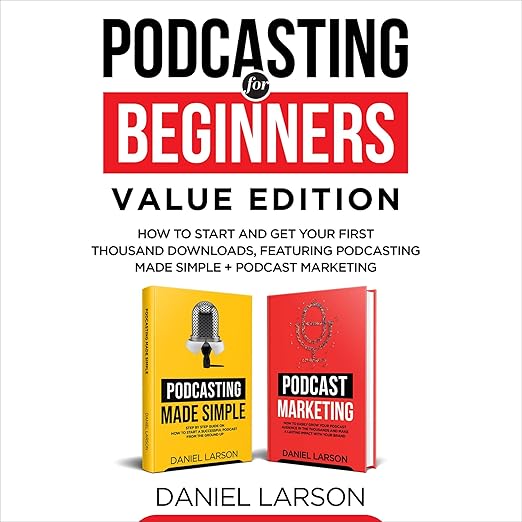
I was halfway through a Tuesday morning run when I started this one, which seemed appropriate. Podcasting for Beginners Value Edition has the same energy as a couch-to-5K program: it promises to meet you exactly where you are, asks nothing of your prior knowledge, and builds incrementally. Whether it delivers on that promise depends almost entirely on where you’re actually starting from.
Daniel Larson’s book arrives as a bundle, the core Podcasting for Beginners content paired with a second title on podcast marketing and audience growth. Ten hours is a reasonable commitment for what amounts to two books in sequence, and Winterholler’s narration holds up across the length without fatigue setting in. This is not a production that tries to be more than it is, which is both its virtue and its limitation.
The Bundle Logic and What It Buys You
The decision to package the technical launch guide with the marketing companion is smart structuring. The first half covers setup, recording, editing fundamentals, and the basics of finding your voice on mic. The second half addresses what happens after you publish: how to attract listeners, grow a subscriber base, and use social media as a distribution mechanism rather than an afterthought. These two halves naturally belong together, and most beginner resources treat them as separate problems when they’re actually a single continuous challenge.
The core advice in the launch section is sound even if it doesn’t break new ground. Larson covers equipment considerations, hosting platform choices, episode structure, and the practical mechanics of recording without a studio. The instruction to avoid monetizing incorrectly before establishing a real audience is worth hearing early, even if the rationale could be developed more fully. One reviewer noted some material felt dated and oriented toward larger operations, this is a fair observation, particularly in sections where the advice assumes a team or a budget that solo creators rarely have at the outset.
What Winterholler’s Narration Does for the Material
Instructional audiobooks live or die on pacing. Too fast and the listener can’t absorb sequential steps; too deliberate and it becomes soporific. Winterholler finds a middle pace that works well for the content’s structure. He does not perform enthusiasm where it isn’t warranted, which is the right call for a technical walkthrough. When Larson’s prose is competent but unremarkable, the narration doesn’t oversell it. There are no dramatic pauses before revealing that you should define your niche, no inspirational swells on points that are really just common sense. It is a workmanlike performance that serves the material honestly.
The marketing companion in the second half benefits from the same approach. The advice on crafting a compelling message and growing organically through social platforms is fairly conventional, nothing here will surprise anyone who has spent time in the creator economy. But for a genuine beginner, conventional wisdom delivered clearly is exactly what’s needed. The promise that the book will take you from confused and doubtful to clear and confident is overstated; it will take you from uninformed to basically informed, which is a more useful and realistic goal.
The Datedness Problem and How Much It Matters
One reviewer flagged that some content had aged, and this is worth engaging with honestly. Podcasting strategy advice has a shelf life, particularly anything touching platform algorithms, discovery mechanics, or promotional tactics tied to specific social channels. The book’s core content on audio quality, audience targeting, and consistency is more durable, but chapters that reference specific platform features or audience behavior patterns from a few years back will feel less precise than they once did.
This is not unique to this book, it’s a structural problem with instructional audio content in a fast-moving medium. If you’re using this as a reference you return to, some sections will need to be supplemented with current research. If you’re using it as a single-pass orientation before launching, the fundamentals hold up well enough to serve their purpose.
Who Should Listen and Who Should Skip
Listen if you have never started a podcast and want a structured beginning-to-launch framework delivered in audio form. Listen if you’re the kind of learner who absorbs instructions better through listening than reading, and who wants to cover both technical setup and basic promotion in a single resource. Skip if you’ve already launched and are looking to optimize or solve specific growth problems, this book operates below that level of specificity. Skip if you want platform-specific granularity on current algorithm behavior. For the genuinely uninitiated, this bundle delivers what it promises; for anyone with a few episodes already published, the value drops quickly.
Frequently Asked Questions
Is this book actually two separate books bundled together, or one continuous text?
It is presented as two books in one audio production: the core Podcasting for Beginners content, followed by a separate Podcast Marketing companion. The total runtime of just over ten hours reflects both. They flow sequentially without a hard stop between them, so the listening experience is continuous.
How dated is the content, and does it still apply in 2026?
The foundational advice on audio setup, episode structure, and audience targeting holds up reasonably well. Sections covering specific platform features or social media tactics may reference older mechanics. Treat the strategic principles as durable and verify platform-specific guidance against current documentation.
Is Dennis Winterholler’s narration suitable for listening at 1.5x speed?
Yes. Winterholler’s pacing is clear but not artificially slow, which means accelerating it slightly still produces intelligible listening. The instructional format benefits from the extra compression since most of the content is explanatory rather than emotionally nuanced.
Does the book address monetization, and is that advice practical for solo creators?
Yes, monetization is covered, primarily through the warning to build an audience before attempting it. The specific monetization strategies discussed, sponsorships, affiliate arrangements, listener support, are realistic options for independent podcasters, though some examples assume a scale that beginners won’t reach immediately.