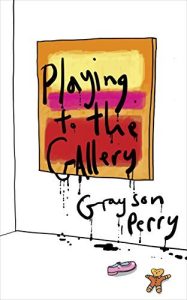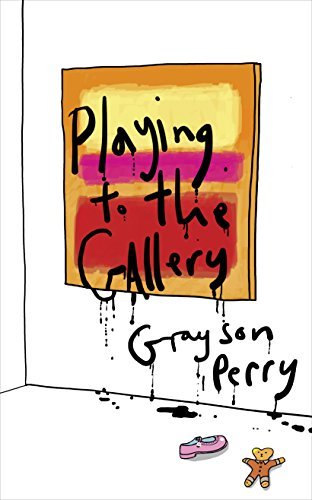
Grayson Perry opens Playing to the Gallery by telling you exactly what kind of book you are not in for. The title, he explains, is not Sucking Up to the Academic Elite. That sentence is his manifesto in miniature: a Turner Prize-winning ceramicist, cross-dresser, and fully paid-up member of the British art establishment telling you that the establishment's self-regard has always been the problem with how art is taught, explained, and defended. The audiobook, at 2 hours and 47 minutes with Perry narrating himself, is the closest thing to sitting in on a Perry lecture without being in the room, and the intimacy of that experience is the book's central pleasure and its primary argument for existing in audio form.
Perry takes questions seriously that most art criticism treats as beneath consideration. Can good art and bad art be meaningfully distinguished, and does the distinction matter once you strip away the institutional apparatus that generates those judgments? Is art still capable of shocking anyone after a century that has produced Duchamp's urinal, Hirst's shark, and whatever the most recent art-fair sensation was by the time you encounter this review? And what happens, Perry asks in a question he does not treat as rhetorical, when you place a piece of art in a rubbish dump? These are genuine inquiries into the sociology and psychology of aesthetic experience, and Perry is unusually qualified to conduct them because he inhabits both sides of the line between insider and outsider simultaneously.
An Essex Potter Delivers the BBC Reith Lectures
Perry came from a working-class background in Essex. He makes ceramic pots that the art world has sometimes struggled to categorize within its existing hierarchies. He wears women's clothes to his own openings under the persona of Claire. He has watched his own work move from the margins to the center of the British art world without quite understanding how that happened, which gives him a more honest account of the process than artists who have always been central to that world can provide. This biographical position makes him an unusually credible guide to the questions that most people are too embarrassed to ask in galleries, because he was asking them himself before he had any institutional permission to do so.
The book originated as the 2013 BBC Reith Lectures, the most prestigious public lecture series in British intellectual life, and the lecture-hall energy is fully present in the audiobook. Perry is always aware that he is addressing an audience rather than writing for an abstract reader, and that awareness keeps the material alive across the full runtime in a way that art writing often fails to do. The questions he structures each lecture around, whether art can still shock us, how to tell good art from bad, what happens to meaning when context changes, are the questions his audience actually had, and he answers them with the combination of personal anecdote, art historical reference, and frank admission of his own bewilderment that makes him one of the most trustworthy voices currently working in this territory.
Perry's Own Timing Lets You In on the Joke
The self-narration here is not merely a production convenience; it is the audiobook's essential argument for its own existence. Perry's voice carries his class background, his timing, his genuine delight in puncturing pretension, and his willingness to say things that other art world figures would couch in more protective language. A professional narrator could not replicate any of those qualities, because they are not qualities of the text alone but of the person who wrote and lived the text. When Perry describes standing in front of a piece of contemporary art and not knowing whether he was allowed to say what he actually thought, his voice carries the genuine memory of that experience rather than performing it from the outside.
For listeners who found art history or art criticism alienating in school or in gallery settings, Playing to the Gallery offers the rare experience of being let in on the joke. Perry is not pretending that contemporary art is simple or that all aesthetic judgment is equally valid, but he is insisting that the social anxiety surrounding art, the fear of saying the wrong thing, of revealing that you do not know the right vocabulary or the right references, is manufactured and unnecessary, a protection mechanism for institutional authority rather than a genuine requirement of genuine engagement. That argument is most persuasive when Perry delivers it himself.
Under Three Hours, More Starting Point Than Survey
The audiobook is short, and listeners should understand what that means for its ambitions. At under three hours, it cannot be the comprehensive art education its premise might imply, and listeners expecting a systematic account of how to understand and evaluate contemporary art will find it more suggestive than instructive. Perry covers enough to establish his key arguments, that gatekeeping is real and often arbitrary, that shock value has been largely exhausted as an artistic strategy, that context determines meaning in ways that make pure formalism inadequate, but he does not linger long enough to make any of these arguments fully airtight. This is a limitation of the lecture format from which the book derives rather than of Perry's thinking, which is sharper and more extended in his television documentary work and subsequent longer-form writing.
Think of Playing to the Gallery as the starting point of a longer engagement with Perry's ideas rather than as the complete version of them. The audiobook is an excellent entry point: it identifies the right questions, establishes the right irreverent tone, and gives you enough of Perry's analytical framework to know whether you want more. For many listeners, two hours and 47 minutes of this will be precisely enough to permanently change how they feel standing in front of something in a gallery they are not sure they understand.
For Anyone Who Feels Lost in a Gallery
This audiobook is ideal for anyone who has ever felt the specific social discomfort of standing in a contemporary art gallery without knowing whether they are allowed to express what they actually think. Perry's project is to make art appreciation feel like something you can do in your own voice rather than in the borrowed language of criticism, and at under three hours, the investment is low enough that there is no barrier to testing whether his approach works for you. Art professionals will find it entertaining and possibly illuminating: Perry writes from inside the system he is critiquing, which gives his observations more bite than outside commentary usually achieves. Skip it if you are looking for deep art historical grounding or sustained aesthetic theory, since this is a short, witty, personally grounded argument that is better experienced than summarized.
Before You Listen
Is the Playing to the Gallery audiobook suitable for people with no background in art history or contemporary art?
Specifically designed for them. Perry's stated aim is to address the questions about art that people are too embarrassed to ask in galleries, and he assumes no specialist knowledge throughout. The book originated as BBC Reith Lectures aimed at a broad public audience, and the audiobook retains that accessibility completely.
Does Grayson Perry narrating the audiobook himself make a significant difference compared to reading the print version?
Most listeners would say yes. Perry's voice, his class background, his comedic timing, and his genuine irreverence come through in ways that a professional narrator could not replicate. The book began as lectures, and listening to Perry deliver it restores that original format in a way that adds meaningful value to the content.
At under three hours, is the Playing to the Gallery audiobook substantive enough to be worth the time investment?
For its particular purpose, yes. It is not attempting to be a comprehensive art education but to dissolve the social anxiety that prevents people from engaging with art honestly. At that more focused ambition, it succeeds. Think of it as an extended, entertaining introduction to a larger conversation rather than a complete treatment of its subject.
Is Playing to the Gallery relevant to people interested in making art as well as those who want to understand it better?
Yes, though more for understanding the cultural context than for technique. Perry's analysis of how institutional gatekeeping works, how context shapes meaning, and why shock value has diminished is useful for anyone navigating the art world as a maker, a viewer, or a professional whose work intersects with contemporary art.