I was not expecting this book to reach me the way it did. I queued it up on a Sunday afternoon mostly out of curiosity, I had watched Paula Deen's Food Network show occasionally and knew the broad contours of her public persona, and found something considerably more raw than I anticipated. By the time she was describing her battle with agoraphobia, the years of not leaving the house, the fear that swallowed her life after the deaths of both parents and the collapse of her first marriage, I had stopped doing anything else and was simply listening.
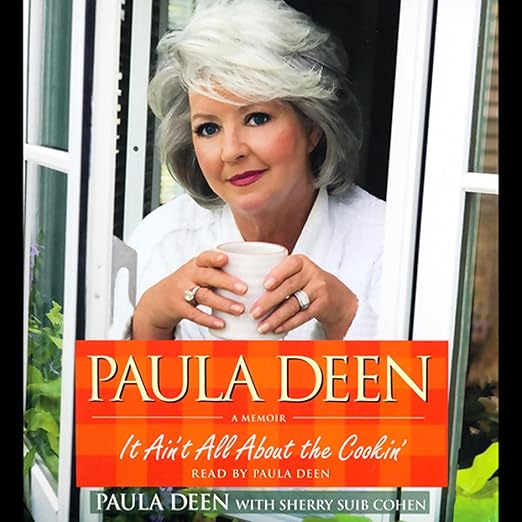
Paula Deen: It Ain't All About the Cookin' is the autobiography she narrates herself, and that self-narration is the key that unlocks the whole project. Her Georgia accent carries decades of Southern cooking shows and personal history, and when she describes starting her business at forty-two with $200 and a determination she can only describe as faith, you hear a woman who lived it rather than a performer rendering someone else's story. The book spent more than three months on the New York Times bestseller list with over six million books in print, numbers that reflect something real about how the memoir landed with readers.
Twenty Years of Agoraphobia, Told Without Softening
What distinguishes this audiobook from standard celebrity memoir is how much time Deen spends on the years before success. The agoraphobia she battled for two decades is not treated as a brief obstacle on the way to triumph; she describes it with the detail of someone who genuinely lived inside that fear, who could not leave her home, whose children sometimes went without because she could not make herself walk to a store. One reviewer, who had spent years watching Deen's cooking show without full appreciation of her backstory, described coming away with a "new found admiration" for her, and that reaction is common among listeners who approached this without strong preconceptions.
The specificity is what makes it work. She describes a cockroach-infested place she slept in, a married man she stayed with for years out of economic necessity, the moment she looked at what was left of her resources and decided to sell food from a basket. There is no softening of the more uncomfortable details, and that honesty carries a weight that memoir often sacrifices for likeability. One reviewer specifically praised the "brutally honest, down-to-earth account" and noted it included actual recipes alongside the grit. It does, the food is present throughout not as decoration but as the thread that runs from her childhood kitchen through her poverty years to the Lady and Sons restaurant that eventually made her famous.
Deen Narrates Her Own Fear With Real Precision
I want to linger on the agoraphobia sections because they are doing more than providing dramatic backstory. Deen describes anxiety and agoraphobia with a precision that suggests she has spent time trying to understand what happened to her, not just survive it. The panic that kept her confined is presented as something that arrived with reason, grief, financial terror, the weight of single parenthood, and that she escaped not through professional treatment alone but through a gradual, effortful decision to face what terrified her. For listeners who have experienced anxiety disorders or know someone who has, these sections carry a recognition that the more triumphant chapters around her restaurant success do not.
Her voice modulates across the emotional range of the material without losing its essential character. When she describes difficult years, there is no performed pathos; when she describes pride in her sons or the early days of the restaurant, the pleasure in her voice is genuine. This is what self-narrated memoir does at its best, it closes the distance between the writing voice and the living person in a way that hired performance cannot fully replicate.
Even a Skeptical Baker Comes Around to Deen
The book does follow a fairly conventional memoir arc in its later sections, the rise of the restaurant, the Food Network breakthrough, the romance with Michael Groover that the publisher describes as having "captured the hearts of fans across the country." These chapters are warm and readable, but they carry less surprise than the earlier material. The fairy-tale element is real but familiar; what is not familiar is the twenty years of confined, frightened life that preceded it.
One reviewer who identified as a professional baker and had always found Deen's recipes "brassy and over the top" described being corrected by the memoir, coming away with genuine appreciation for the person behind the public persona. That movement, from skepticism to respect earned through specific honest detail, seems to be the book's signature effect on listeners who approach it without prior devotion to Deen.
Specific Survival Outranks Motivational Slogans Here
This memoir rewards listeners who are drawn to stories of survival through specific circumstance rather than motivational generality. Deen does not tell you that you can achieve anything if you believe hard enough; she tells you what it was actually like to be afraid of her own front door for twenty years and then not be. That is a different kind of story, and a more useful one for anyone navigating a version of the same experience.
Listeners who want a straightforward food memoir or a behind-the-scenes look at television cooking will find elements of both here, but they are supporting characters rather than the main event. The cooking is present; the food industry is present; the Southern comfort aesthetic is very much present. But the book is primarily about a person, not a career, and at its best it earns the distinction.
Quick Take
- Narration: Paula Deen reading her own memoir is the only way this book could work, her voice carries the warmth, humor, and Southern cadence that no hired narrator could replicate.
- Themes: Reinvention after rock bottom, agoraphobia and survival, food as identity and purpose
- Mood: Warm and bracingly honest, the Southern kitchen as confessional
- Verdict: An unexpectedly candid memoir that earns its inspiration through specificity rather than sentiment, best enjoyed for the life story rather than any celebrity context.
Good to Know
Is this audiobook a cooking memoir or a personal life story, how much of it is actually about food?
It is primarily a personal life story. Food runs throughout as a thread, it is how Deen understood herself and eventually built her career, but the memoir focuses heavily on the years before her public success, including her agoraphobia, her first marriage, and the poverty she navigated as a single mother. There are some recipes included, but this is not a culinary memoir in the traditional sense.
Does Paula Deen's self-narration make the difficult personal sections feel authentic or performed?
Authentic, in the judgment of most listeners. Her voice carries the emotional weight of the material without theatrical embellishment, and the difficult sections, the agoraphobia years, the financial desperation, are delivered with the matter-of-fact honesty of someone describing something they actually lived through rather than performing retrospective drama.
The book was published in 2007, does it address any of the controversies that emerged later in Deen's career?
No. This memoir was written and recorded well before the public controversies of 2013, and those events are entirely absent. The book covers her life up to the period of her early fame and Food Network success. Listeners looking for reflection on those later events will not find it here.
At just under seven hours, does the audiobook feel rushed given the span of life it covers?
Not particularly. Deen's storytelling is direct and unsentimental, and the runtime reflects a memoir that respects the listener's time. The years before her business success receive proportionate attention, and the later success chapters move efficiently. Six hours and fifty-four minutes is a comfortable single weekend listen without feeling abbreviated.