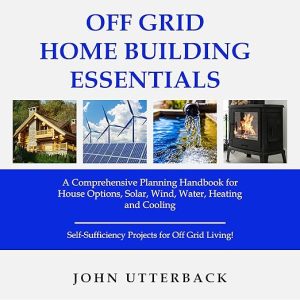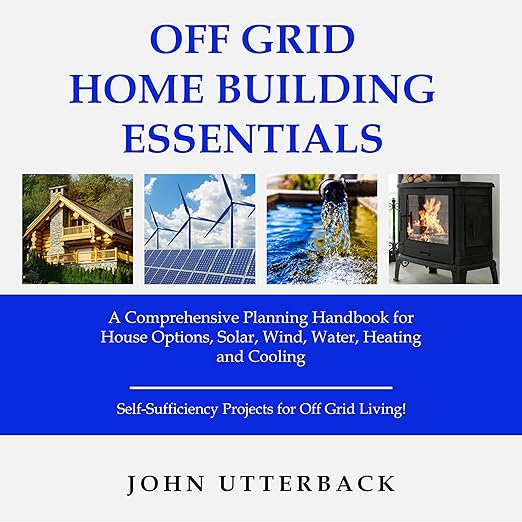
- Read by: Brian Morrow delivers a clear, practical reading that suits the handbook format, professional without being stiff, and well-paced for listeners taking notes or pausing to cross-reference the companion PDF.
- At its heart: Off-grid construction planning, renewable energy systems, self-sufficient water and climate management
- Vibe: Practical and reassuring, like a knowledgeable friend walking you through a planning checklist
- Short version: A solid entry-level overview of the decisions facing anyone planning an off-grid build, better at breadth than depth, but honest about its own scope and useful for exactly the planning phase it targets.
I don't have plans to build off the grid, but I've spent enough time reading about people who do to understand why the planning phase is so paralyzing. The gap between wanting to live self-sufficiently and knowing what that actually requires, which house type, which energy system, which water source, which heating approach for which climate, is enormous, and most people trying to cross it end up either overwhelmed or misinformed. John Utterback's Off Grid Home Building Essentials is designed specifically for that planning gap, and it fills it with the kind of organized, comparative overview that most introductory off-grid books fail to provide.
I came to this audiobook after several conversations with a friend who was deep in exactly the situation Utterback describes: enough conviction to start, not enough information to choose. The book was on her reading list, and I listened alongside her notes. What struck me first was the structure: four clear sections covering home building types, electrical systems, water sources, and heating and cooling. Each section follows the same comparative logic, here are your options, here are the tradeoffs, here is what they cost.
Eighteen House Types, Plus an Underused Hydro Option
The comparison of eighteen different house types by construction method and cost per square foot is the book's most immediately useful contribution. This is the decision that has the most downstream consequences for everything else on the list, the house type determines the insulation approach, which affects the heating and cooling system, which affects the energy load, which affects the size of the solar or wind installation. Utterback presents these connections clearly, and his cost-per-square-foot tables give readers something concrete to work with rather than vague estimates.
The electrical systems section covers solar, wind, hydroelectric, and generator options with enough specificity to be useful and enough humility to acknowledge the limits of a general overview. The hydroelectric section, which one reviewer found particularly surprising and enjoyable, is a genuine highlight, most off-grid books skim it, and Utterback's treatment of small hydroelectric systems as a viable and often underconsidered option is the kind of information that could significantly change a reader's planning if their property has a suitable water source.
Brian Morrow Explains Rather Than Performs
Brian Morrow's narration is well matched to the material. He reads with the cadence of someone explaining rather than performing, which is exactly right for a handbook that its listeners are likely to engage with actively, pausing, rewinding, cross-referencing. The companion PDF, which Audible makes available in the listener's library alongside the audio, is a meaningful addition: the cost tables and schematics are genuinely useful in visual form, and Utterback and Morrow both seem to know that listeners will move between the two formats.
The book is honest about being an overview rather than a complete guide. Multiple reviewers noted this transparency approvingly, Utterback isn't pretending to give you everything you need to break ground, he's helping you understand the landscape of decisions so you can make informed choices about where to go deeper. For someone at the start of the planning process, that's more valuable than premature depth.
Real Enough for Planning, Too General for Building
One reviewer left a three-star note saying "not enough information in it," which is accurate only if the reader came expecting a comprehensive technical manual. This is genuinely an overview, and listeners who arrive hoping for detailed engineering specifications or installation instructions will find it insufficient. The book is explicit about its scope in the synopsis, it targets the "planning and strategizing phase", but the mismatch between expectation and delivery is real enough to be worth flagging.
The geographic specificity is also limited. Off-grid planning is heavily location-dependent: climate determines heating and cooling load, topography determines water source viability, local regulations determine what you can build and how. Utterback gives principles and ranges rather than location-specific guidance, which is the only practical approach for a general audiobook, but listeners should supplement with local expertise for anything beyond the planning overview stage.
Vocabulary and Comparisons for First-Time Researchers
This works best for people at the beginning of the off-grid research process: curious, committed in principle, but not yet sure what they don't know. Utterback's overview gives you the vocabulary and the comparative framework to have better conversations with contractors, energy consultants, and real estate professionals who specialize in off-grid properties. More experienced preppers and homesteaders who already have a working understanding of solar systems and water wells will find the material familiar. The four-hour runtime makes it an efficient investment for anyone who wants a structured orientation before diving into more specialized resources.