Key Details
- Read by: Melchiore narrating his own memoir is entirely the right decision. His voice carries the unpretentious, practical quality of someone who learned everything he knows by doing it wrong first, and the occasional roughness in the delivery only adds credibility.
- At its heart: Off-grid self-sufficiency, wilderness survival, authentic lifestyle divergence
- Vibe: Grounded and adventurous
- Short version: One of the more honest off-grid memoirs available in audio, carried almost entirely by the authority of someone who has actually done what he's describing for more than four decades.
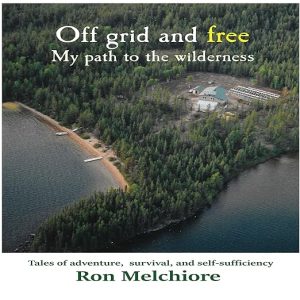
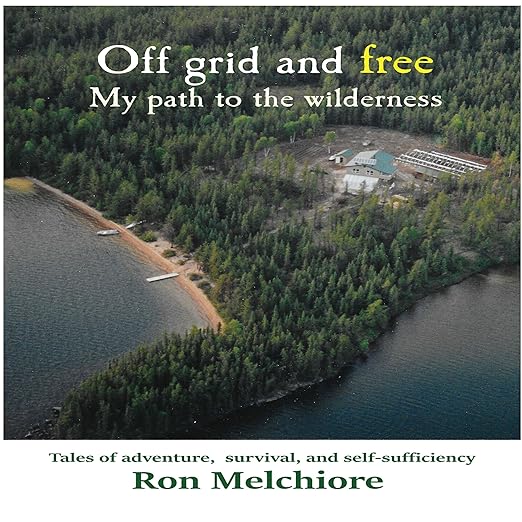
Ron Melchiore has lived off the grid since approximately 1980, which means he was doing it before off-grid became a genre, a YouTube category, or a lifestyle aspiration sold through homesteading influencer accounts. Off Grid and Free: My Path to the Wilderness, narrated by Melchiore himself in this audiobook, tells the story of how he got there: from a city upbringing, to hiking the full Appalachian Trail in winter, to bicycling across the United States, to homesteading in northern Maine, and finally to a remote life in the bush of northern Saskatchewan. The result is a memoir with the specific credibility of someone who has earned every observation through direct experience and has no particular interest in making it sound more romantic than it was.
From a Winter Trail to a Maine Homestead
The Appalachian Trail in winter deserves its own chapter because it almost certainly should not be attempted, and Melchiore's account of it is among the more bracingly specific sections of the audiobook. The AT in summer is a grueling walk through the eastern states with reliable resupply points and the company of thousands of other hikers. In winter, it becomes a different undertaking entirely, with frozen water sources, collapsed shelters, and weather that doesn't observe the comforting seasonality of trail guides. Melchiore did it, and he describes it the way someone who survived an extreme experience tends to describe it: with humor at his own expense and clinical precision about what he got wrong.
The homesteading sections are where the book finds its deepest material. Melchiore's time in northern Maine introduces the practical rhythms of off-grid life: how to manage water when there's no municipal supply, how to heat a home through a northern winter without connecting to a utility grid, how to grow and preserve food in a climate that doesn't reward optimism about growing seasons. Reviewer awildlife wrote about being "swept away in amusing anecdotes, vivid descriptions, and Ron's philosophy on life." The philosophy part is real but modest. Melchiore doesn't position himself as a visionary or a prophet of the off-grid movement. He's a practical person who made unconventional choices and is honest about both the cost and the reward of those choices.
Wildfire, Bears, and Prose With Real Roughness
The wildfire chapter is the centerpiece of the second half of the audiobook. Being surrounded by a wildfire while living in a remote location without the infrastructure that protects most people in such situations is the kind of event that either ends badly or generates the kind of story that stays with a listener for a long time. Melchiore tells it without dramatization, which makes it more frightening rather than less. The bear encounters, by contrast, are often genuinely funny, and the audiobook's tonal variety between harrowing and comic is one of its better qualities.
Reviewer M. Erik Matlock noted that "there are some passages that don't flow perfectly" and that Melchiore is "a pretty solid writer" for an outdoorsman. This is accurate. The prose occasionally has the rhythm of someone who learned to write by doing rather than studying, and there are moments where the narration and the underlying text share the same unpretentious roughness. For listeners expecting polished literary memoir, that roughness may grate. For listeners who find the genre's polish suspicious, it will feel like a feature.
Melchiore's Steady Voice Skips the Performance
Self-narration is the defining choice here, and it's the right one. Melchiore's voice is the voice you'd expect from someone who spent decades in remote wilderness: steady, unhurried, and comfortable with silence. He doesn't perform the material. He reports it, and the distinction between those two modes is audible within the first few minutes. A professional narrator reading this text would likely smooth out the idiosyncrasies that make the memoir feel authentic. Melchiore's own narration keeps the rougher edges intact, and at eight hours and twenty-one minutes, the delivery sustains its credibility across the full length.
The audiobook is also a useful corrective to the aspirational version of off-grid life that dominates most content on the subject. Melchiore is not trying to sell you on a lifestyle. He's describing what it actually cost him and what it gave him, and he doesn't inflate either side of that accounting. Reviewer MS noted that "realism means more than thrill" as a reader ages, and that Off Grid and Free "provides an enormous dose of realism." That realism is the audiobook's core value proposition.
Anecdotes Over Arc, Observation Over Doctrine
The narrative is largely chronological but not rigidly structured, and some sections feel more like a collection of related anecdotes than a sustained through-line. Listeners who need a strong narrative arc to stay engaged may find the middle sections of the audiobook less propulsive than the opening Appalachian Trail sequence or the wildfire chapters. Melchiore is a reliable storyteller but not always a compelling one in the literary sense of that term.
The book also dates from an era before the off-grid movement had its current vocabulary and community. Melchiore doesn't reference permaculture principles, food forest design, or the broader sustainability discourse that has grown up around the lifestyle he practices. This can make the audiobook feel slightly isolated from the contemporary conversation about self-sufficiency, but it also means his practical advice comes from direct observation rather than received doctrine, which is ultimately a more valuable quality in a book about actually doing the thing.
Foxfire and Paulsen Fans Will Feel at Home
This audiobook is right for listeners with a genuine interest in wilderness self-sufficiency and sustainable living who want an honest account rather than a promotional one. Readers who have spent time with books like the Foxfire series or Gary Paulsen's wilderness fiction and want a real-life adult counterpart will find Melchiore's voice a good match. It also works for adventure readers who want survival content without the adrenaline-maximizing framing of most outdoor memoir. Listeners who want polished literary prose, a conventional narrative arc, or an ideological argument for off-grid living will find better options elsewhere. But those who want to know what it actually looks and feels like to build a life at that kind of distance from conventional infrastructure will find Melchiore a patient and credible guide.
Questions Listeners Ask
Does Ron Melchiore narrating his own audiobook affect the listening experience?
Significantly and for the better. His delivery has the unpolished authority of someone who earned everything he describes through direct experience. The occasional roughness in the narration adds to the memoir's credibility rather than detracting from it. A more polished narrator would likely make the material feel less real.
Is this audiobook more about the adventure of off-grid life or the practical realities of it?
Both, in roughly equal measure. The Appalachian Trail and bicycle cross-country sections are adventure-focused. The homesteading chapters in Maine and Saskatchewan are primarily practical, covering water, food preservation, heating, and self-sufficiency logistics. The wildfire sequence is survival writing. The balance across the eight-plus hours shifts between all three registers.
Does the audiobook contain practical off-grid guidance, or is it purely memoir?
It's structured as memoir rather than a how-to guide, but practical observations are embedded throughout. Melchiore describes specific problems and how he solved them with the detail of someone who actually lived it. It's not a systematic manual, but experienced homesteaders will find useful observations alongside the personal narrative.
Is this audiobook suitable for listeners who are considering off-grid living but haven't started yet?
Yes, and it may be more useful than most aspirational content because Melchiore is honest about what the lifestyle costs in terms of labor, isolation, and missed conventional comforts. He's not trying to recruit you. He's telling you what happened to him, which is more useful information for someone making a real decision.