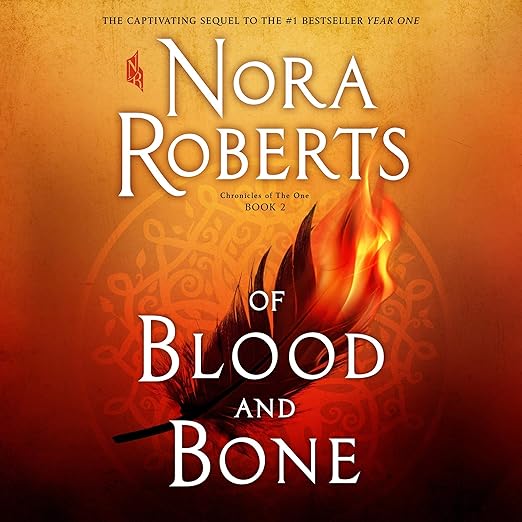
I came to Of Blood and Bone having spent time with Year One, Nora Roberts' previous entry in the Chronicles of The One, and I will say upfront what every devoted Roberts reader seems to agree on: Year One is exceptional, possibly the best thing Roberts has ever written. Of Blood and Bone is good. The distinction matters, and it is worth sitting with, because understanding what the second book is trying to do explains why it makes the choices it does.
Where Year One was propulsive and catastrophic, built on the immediate horror of the Doom and the scramble for survival, Of Blood and Bone is an origin story. Fallon Swift is approaching her thirteenth birthday. She barely knows the old world. She is going to spend this book learning what she is and what she is supposed to become, under the tutelage of Mallick, a figure whose skills have been honed over centuries. This is a training arc, deliberately paced, intentionally developmental.
Our Take on Of Blood and Bone
Roberts makes a significant structural choice here: she trades the ensemble cast of Year One for a much more focused narrative centered on Fallon. The farm outside the ruins, the faeries and elves and shifters Fallon encounters, the old ways of healing she learns under Mallick's guidance, these are drawn with the patient attention Roberts brings to character development when she decides that is the book's primary work. Some readers found that the action and constant danger of Book One takes a back seat here. That is accurate, and it is not a flaw.
What Roberts delivers in exchange is a heroine built from scratch in front of the reader. Fallon is not simply told she is The One; she is shown, over nearly fourteen hours of audio, what that inheritance actually costs and what it requires. The sword she will eventually take up means something because we have watched her learn to deserve it.
Why Listen to Of Blood and Bone
Julia Whelan is the reason to choose the audio format for this book. She is among the most technically skilled narrators in commercial fiction, and Of Blood and Bone's slower, more interior pacing plays to her strengths. She can sustain a quiet scene without losing the listener, can build tension through a training sequence without over-dramatizing it, and brings genuine warmth to the moments of magical discovery that could easily tip into whimsy. At nearly fourteen hours, Whelan's consistency is not incidental to the experience; it is foundational to it.
The world Roberts has built continues to reward attention. The Purity Warriors, the Raiders, the network of survivors, the system of gifts and how they are hunted: Of Blood and Bone develops these elements further without interrupting Fallon's training arc. Roberts is patient with her world in a way that commercial popular fiction rarely allows itself to be.
What to Watch For in Of Blood and Bone
Readers who loved Year One's pace and ensemble scope may find the shift to Fallon's more contained narrative less immediately gripping. One reviewer who gave this four stars specifically noted that the action takes a back seat to character development, calling it more typical of Roberts' previous books with magical references. That is an honest assessment. If what drew you to Year One was its apocalyptic momentum, Book Two asks for a different kind of patience.
This is also the middle of a trilogy, and it ends without resolving the full arc. Roberts avoids a cliffhanger, but the series clearly has further to go. Readers who prefer completed series before diving in may want to wait.
Who Should Listen to Of Blood and Bone
Fans of Year One who are willing to follow Fallon's coming-of-age arc with the patience the book requests. Julia Whelan's narration makes the audio format the ideal way to experience this entry, and listeners who engage with character development over plot acceleration will find Roberts' choices here satisfying. Skip it if you have not read Year One, if you need the action register of the first book sustained throughout, or if training-arc narratives generally frustrate you. For listeners who want to understand how Fallon Swift becomes who she becomes, this book does that work carefully and well.
Before You Listen
Is Of Blood and Bone as action-driven as Year One, and should I expect the same pacing?
No. Roberts consciously shifts from the propulsive survival momentum of Year One to a more measured character-development arc centered on Fallon's training. Multiple reviewers note this shift explicitly. It is intentional and serves the series arc, but it requires different expectations from the listener.
How does Julia Whelan's narration handle the coming-of-age elements specific to Fallon's arc?
Very well. Whelan excels at quiet interiority and the kind of slow build that a training arc requires. She brings gravity to Fallon's sense of destiny without making her sound self-important, which is a tricky balance for a character described as The One.
Does Of Blood and Bone end on a cliffhanger, or does it provide a satisfying stopping point?
It provides closure on Book Two's specific narrative arc while leaving the series open. One reviewer specifically praised Roberts for avoiding a cliffhanger ending, noting that Book Two's storyline resolves properly even though the overall series has further to go.