Quick Take
- Narration: Virtual Voice handles the structured, chapter-by-chapter format adequately, the content is reference-oriented enough that synthetic narration doesn’t actively undermine it, though a human voice would have added texture to the troubleshooting sections.
- Themes: Network fundamentals, hands-on skill building, IT career foundations
- Mood: Methodical and reassuring, like a patient lab partner explaining things at your pace
- Verdict: A solid starter guide for anyone building home or small-office network skills, best used as a companion to hands-on practice rather than a standalone listen.
I picked this one up on a Tuesday evening after spending an afternoon trying to figure out why two of my home computers refused to talk to each other over a shared folder. I am not an IT professional, but I have enough curiosity to want to understand what was actually happening under the hood rather than just clicking through a wizard. That kind of listener is exactly who James Bernstein had in mind when he wrote this, and it shows in nearly every chapter.
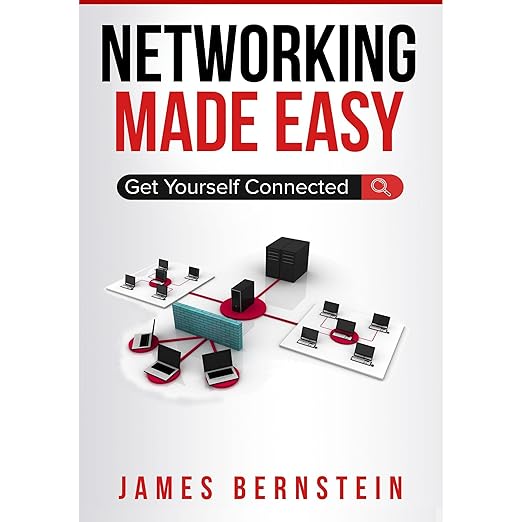
Networking Made Easy is the second volume in Bernstein’s Computers Made Easy series, updated through 2024. The series is built around the idea that foundational IT knowledge should not require a certification prep course to acquire, and this volume delivers on that premise with a ten-chapter structure that runs from the very definition of a network all the way through cloud computing and troubleshooting. It is a modest 3 hours and 48 minutes long, which is honest packaging for what it actually covers.
A Curriculum That Earns Its Sequence
What distinguishes this guide from the pile of lookalike IT primers is how carefully Bernstein sequences the material. You do not encounter IP addressing until you have spent time with physical hardware and cabling. You do not touch the cloud until you have built up a mental model of what local networking actually does. That sequencing matters enormously for retention. A reviewer who used the book to set up a Workgroup connecting three desktops, three laptops, and a pair of printers noted that the guide made the process feel straightforward rather than intimidating. That is not a trivial outcome for someone approaching home networking for the first time.
The 2024 revision adds updated coverage of cloud computing and virtualization, which sit in Chapter 9. Bernstein does not try to make that chapter a deep-dive into AWS or Azure. He gives you just enough to understand what virtualization means, why cloud services exist in the form they do, and how they relate to the on-premises concepts you just spent eight chapters learning. For someone who is preparing to eventually read something like Learn Azure in a Month of Lunches, this chapter serves as useful scaffolding.
Where the Format Creates Friction
The honest caveat here is that a networking primer contains material that benefits enormously from visual support. Subnetting, cabling standards, the OSI model, IP address classes, these concepts click faster with a diagram than with narration alone. The accompanying PDF referenced in some editions does help, and Bernstein writes clearly enough that the absence of visuals is not catastrophic. But you will want a notepad nearby, and you should expect to pause the audio and sketch things out if you are truly new to the subject. One reviewer described this as a good starter book and suggested doing the exercises at home to cement the abbreviations and terms. That is the right approach.
The Virtual Voice narration is another point worth addressing directly. For content that is this procedural and structured, synthetic narration sits closer to the tolerable end of the spectrum than it would for, say, a memoir or a narrative nonfiction title. The chapter-by-chapter format means transitions are predictable, and the writing itself is plain and declarative. You will not mistake it for an exceptional listening experience, but it is not actively disruptive in the way Virtual Voice can be with emotionally inflected content. Think of it as reading from a screen at a steady pace.
Who This Is For and Who It Is Not For
Bernstein has been clear about his target audience across the Computers Made Easy series, and the networking volume is no exception. This is for someone who knows roughly what a router is but could not explain subnetting with confidence. It is for the home user who wants to set up a small Windows network, the IT support professional who needs a refresher before pursuing a certification, or the career-changer who wants to understand the conceptual landscape before investing in formal study materials. One reviewer who described herself as having bought other books that her husband never finished made this the one that finally got used. That endorsement carries weight.
If you already hold a CompTIA Network+ or similar certification, this is not your book. If you are preparing for the CCNA specifically, you will need something with substantially more depth on Cisco-specific technologies. And if you need to configure enterprise routing protocols or manage VLANs at scale, this is an introduction to the territory, not a map of the full landscape. Within its stated scope, though, it does exactly what it promises.
The Bernstein Formula in Practice
James Bernstein has built a quietly respectable catalog at OnlineComputerTips.com and through this series, and the formula is consistent: practical over theoretical, accessible over comprehensive, structured over exhaustive. That formula has real value for a large audience that is underserved by both the oversimplified YouTube tutorial and the dense textbook. Networking Made Easy sits comfortably in the space between those two extremes, and the 2024 update keeps the cloud and virtualization content from feeling stale. At under four hours, it is a reasonable investment of time for the knowledge it delivers.
Frequently Asked Questions
Do I need any prior networking knowledge to follow this audiobook?
Bernstein targets listeners with basic familiarity rather than complete beginners. If you know roughly what a router and a switch are, you will follow the material comfortably. Complete newcomers may want to look up a few foundational terms alongside the audio.
Is there a PDF companion included with the audiobook version?
Some editions include an accompanying PDF in your Audible Library. Given the visual nature of networking concepts like subnetting and cabling diagrams, having that companion document open while you listen will substantially improve retention.
Does the 2024 update make earlier editions obsolete?
The core networking fundamentals covered in earlier editions remain valid, but the 2024 revision adds updated cloud computing and virtualization content in Chapter 9. If cloud infrastructure is relevant to your goals, the updated edition is worth choosing over an older one.
Is this suitable as preparation for the CompTIA Network+ or CCNA certification exams?
It provides useful conceptual grounding but is not a certification prep course. For the Network+, you will need significantly more depth on OSI model layers, routing protocols, and network security. For the CCNA, you will additionally need Cisco-specific content that this book does not cover.